

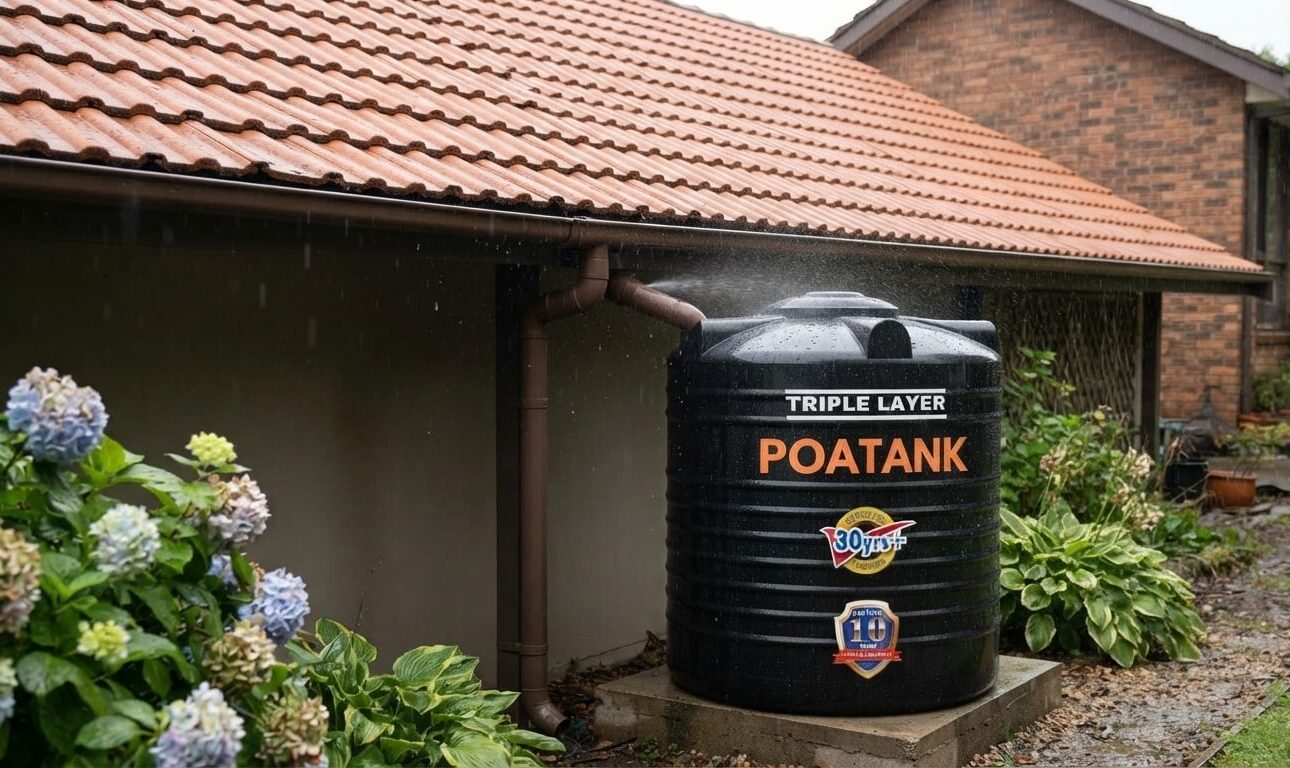
A roof is already collecting water every time it rains, the only question is whether it’s going anywhere useful or just running off into the yard. Rainwater harvesting in Kenya is a straightforward way to reduce dependence on mains or borehole supply, provided the storage side is sized and set up properly.
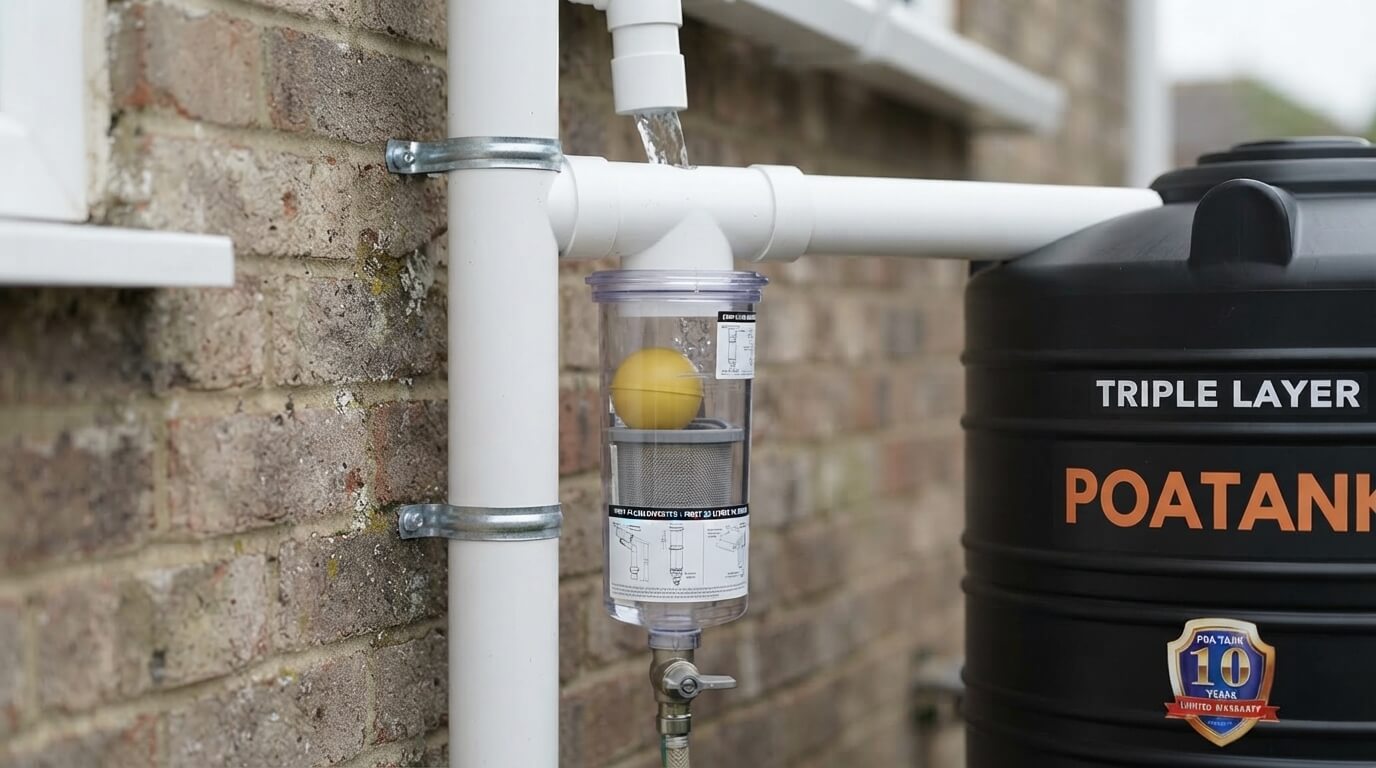
How much water your roof can collect
Roughly speaking, one square metre of roof catches about one litre of water per millimetre of rainfall, so a 100 square metre roof in an area getting 20mm of rain in a session could theoretically collect around 2,000 litres, before accounting for losses through gutters, overflow, and the first-flush water you deliberately divert away.
Regional rainfall varies a lot across Kenya, so this is a starting estimate to size around, not a guaranteed number every time it rains.
Rough Tank Sizing by Roof Area
| Roof catchment area | Illustrative capture per good rain event | Suggested tank starting point |
|---|---|---|
| 50 sqm | ~800-1,000L | 1000L-2000L |
| 100 sqm | ~1,500-2,000L | 2500L-3000L |
| 150+ sqm | ~2,500L+ | 4000L-5000L |
The basic setup that makes it work
Gutters channel roof runoff into a downpipe, a first-flush diverter sends the initial, dirtiest water from a rain event away from the tank rather than into it, and a simple mesh filter at the tank inlet keeps leaves and debris out. None of this is complicated, but skipping the first-flush diverter is the most common reason harvested water ends up smelling off or picking up roof debris.
From there, storage is just a standard cylindrical tank, sized to your roof area and rainfall pattern rather than to household headcount the way a mains-backup tank would be.
Sizing and installing it properly
Because harvested rainwater arrives in bursts rather than a steady trickle, sizing slightly generous is usually the better call, an undersized tank overflows during a heavy rain event rather than storing more of it. The installation guide covers positioning the tank close to a downpipe and keeping the base level, both of which matter more for a rainwater setup than a mains-fed one.
Components of a simple rainwater harvesting system
A basic system has five parts, and each one has a job. Understanding them helps you avoid the usual shortcuts that lead to dirty water or blocked pipes.
- Roof catchment: the surface that collects the rain. Clean, smooth roofing sheets or tiles work best.
- Gutters and downpipes: these channel the runoff. They need a consistent slope and should be cleaned before the rains begin.
- First-flush diverter: sends the first, dirtiest portion of each rain event away from the tank.
- Inlet filter or mesh: catches leaves, insects and grit before they enter the tank.
- Storage tank with an overflow: holds the water and safely discharges the excess during heavy rain.
Using harvested water safely
Rainwater is naturally soft and relatively clean when it falls, but it picks up whatever is on your roof and in your gutters on the way to the tank. Bird droppings, dust, leaves and roofing materials all end up in the water. For that reason, many households use harvested water for laundry, cleaning, flushing and the garden, and treat it further before drinking.
If you do intend to drink it, use a suitable filter and disinfection method, and keep the tank clean, covered and dark to prevent algae. The do’s and don’ts guide has useful pointers on keeping tanks in good condition, and the annual clean is even more important for rainwater storage.
Sizing and choosing a tank for your roof
The sizing table above gives a starting point, but the right tank also depends on your usage and the pattern of rainfall where you live. In places with two clear rainy seasons and long dry spells between, a larger tank lets you store more from the wet months to carry you through the dry. In areas with frequent but lighter rain, a smaller tank refills often enough that size matters less.
Poa Tanks’ cylindrical tanks suit most rainwater setups. A 3000 litre tank is KSh 26,354.90, a 5000 litre tank is KSh 47,385.00, and larger sizes are available if your roof and demand are big. Position the tank as close to the downpipe as you sensibly can, on a level, solid base, following the installation guide. And use the water usage calculator to check that the tank you choose matches what you’ll use, so the water you collect doesn’t go to waste.
Getting the most from your system through the seasons
Before each rainy season, clean the gutters, check the downpipes for blockages, empty and rinse the first-flush diverter, and inspect the inlet mesh. It takes an hour and prevents most of the problems that show up later. During the rains, keep an eye on the overflow to make sure surplus water drains away from the tank base rather than pooling around it.
In the dry months, use stored water thoughtfully, prioritising essential uses first. Keeping the tank covered and the lid closed protects the water in storage, and the do’s and don’ts guide has more advice on general care. A system that’s looked after in this way can quietly cut your reliance on other supplies for many years.
Costs and savings: is rainwater harvesting worth it?
The economics depend on what you’re replacing. If you pay for bowser deliveries or buy water in the dry season, every litre you harvest saves you that cost. A 3000 litre tank at KSh 26,354.90 or a 5000 litre tank at KSh 47,385.00, plus gutters, a diverter and a base, is a real outlay, but it can pay back over a few seasons if it displaces regular purchases. If your mains water is cheap and reliable, the financial case is weaker, though the resilience benefit remains.
There are non-financial reasons too. Harvested rainwater reduces pressure on other supplies, lets you keep gardens and livestock watered in dry spells, and gives you a reserve if the mains fails. Set a realistic expectation: a system rarely covers all your needs, but it can cover a meaningful share. Work out your annual demand with the water usage calculator, estimate what your roof can collect, and decide how much of the gap you want the tank to fill.
Related Reading
For catchment storage, see cylindrical water tanks in Kenya and quality water tanks in Kenya.
FAQs
How much rainwater can I realistically harvest in Kenya?
Roughly one litre per square metre of roof per millimetre of rainfall, before losses. A 100 sqm roof might capture 1,500-2,000 litres in a good rain event.
Do I need a first-flush diverter?
Yes, it’s a small addition that diverts the dirtiest initial runoff away from your tank, and it makes a noticeable difference to water quality.
What size tank should I get for rainwater harvesting?
Size to your roof area and local rainfall pattern rather than household headcount, and lean slightly generous since rain arrives in bursts.
Is harvested rainwater safe to drink?
It can be with proper filtration and treatment, but most households use it for non-drinking purposes like laundry, cleaning, and garden use unless treated further.
Start Harvesting Rainwater Properly
Size your storage to your roof, then browse the cylindrical range for the right capacity.
Rainfall capture figures are illustrative estimates for planning. Actual yield depends on local rainfall, roof material, and system losses.