

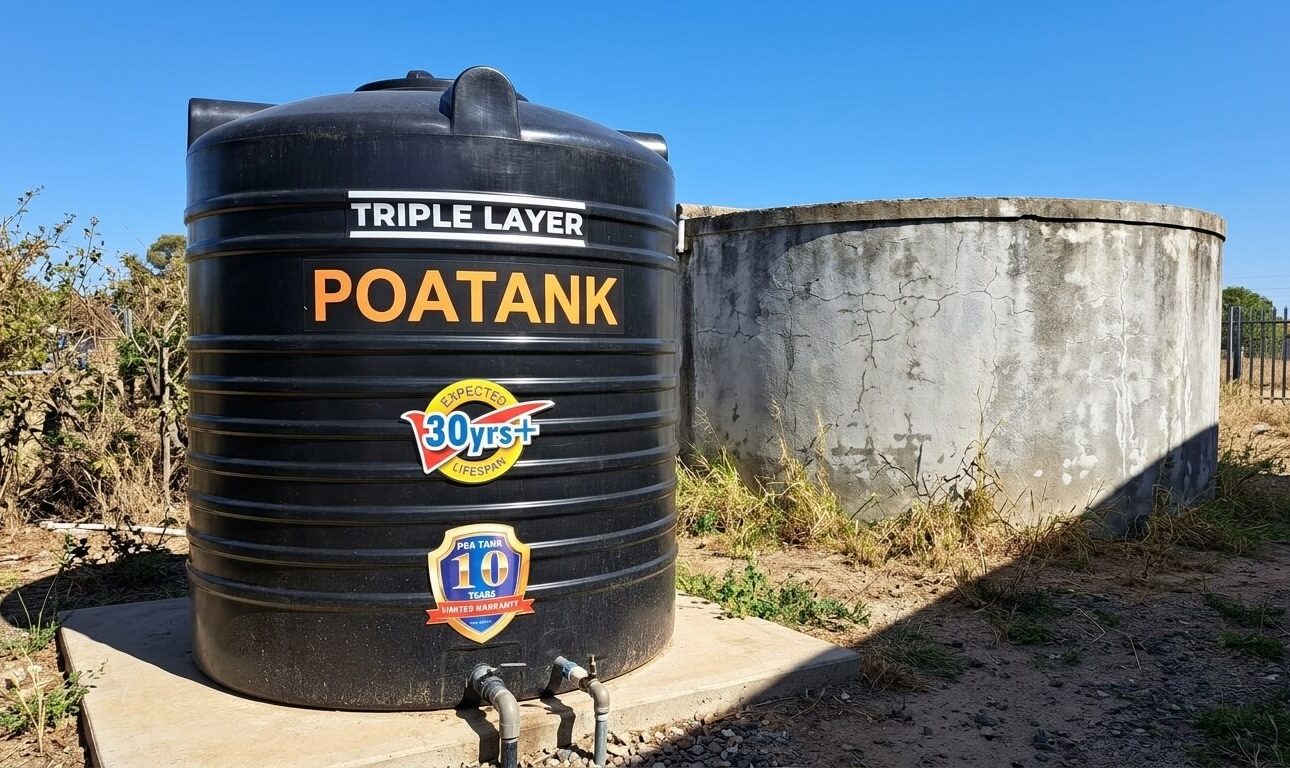
The plastic-versus-concrete argument used to lean concrete’s way by default, mainly on the assumption that heavier automatically means more durable. That’s worth re-examining against what Kenya’s climate, specifically constant, strong equatorial sun, does to each material over time, before deciding between plastic vs concrete water tanks.
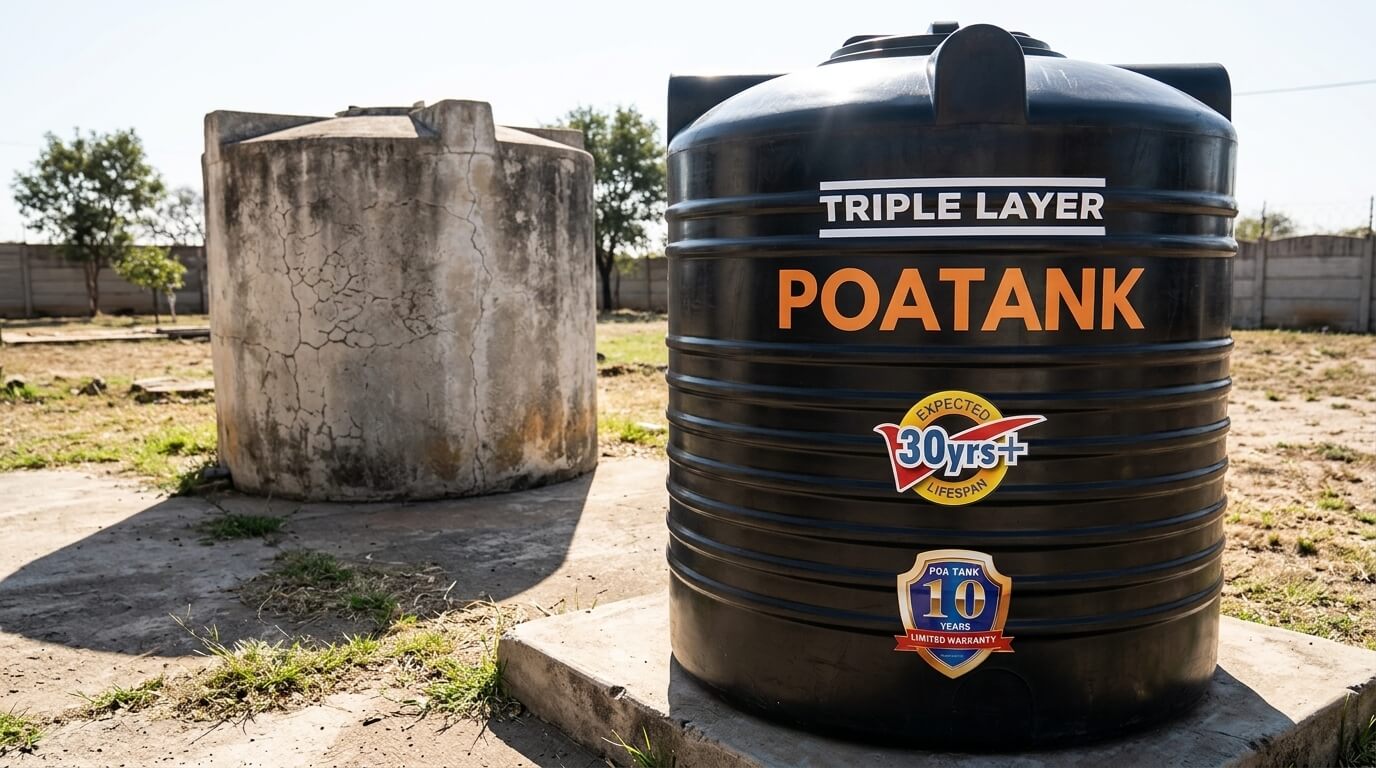
How Each Material Handles the Sun
A modern rotomoulded plastic tank built with UV-stabilised, multi-layer construction is specifically engineered to handle constant direct sunlight without the material breaking down, cracking, or leaching. That matters enormously in Kenya, where a tank isn’t shielded by seasons the way it might be further from the equator, it’s under strong sun essentially year-round.
Concrete doesn’t degrade from UV exposure the way untreated plastic can, but it’s vulnerable to a different set of problems, hairline cracking as it ages and shifts slightly with ground movement, and a rougher internal surface that’s more hospitable to algae and sediment build-up over time.
Plastic vs Concrete, Side by Side
| Feature | UV-stabilised plastic (e.g. Poa Tanks) | Concrete |
|---|---|---|
| Weight | Light, movable by a small crew | Very heavy, needs on-site construction |
| Installation time | Delivered ready, installed in hours | Built on site, takes days to weeks |
| UV resistance | Engineered for direct sun exposure | Not UV-sensitive, but prone to cracking over time |
| Internal surface | Smooth, food-grade, less algae build-up | Rougher, more prone to sediment and algae |
| Typical lifespan claim | 15+ years, some ranges 30+ with warranty | Can last decades if well-built, but repairs are harder |
What This Means for Cost Over Time
Plastic tanks generally cost less upfront and install faster, no formwork, no curing time, no skilled masonry labour required. Poa Tanks’ cylindrical range, for instance, is KEBS-certified and quotes 15-plus years of expected life with a stated warranty behind it, which gives you a documented lifespan rather than a rough assumption.
Concrete can outlast a plastic tank if built well and maintained, but repairing a cracked concrete tank is a bigger, messier job than replacing a fitting on a plastic one, and there’s rarely a manufacturer warranty attached to a site-built concrete structure the way there is with a manufactured tank.
Which Makes More Sense for Most Kenyan Homes
For most residential situations, a UV-stabilised plastic tank is the simpler, faster, better-documented option, and it’s why the plastic cylindrical, loft, and underground ranges dominate the residential market over poured concrete. Concrete still has its place for very large, custom underground installations where a manufactured plastic tank doesn’t scale, covered in more detail in our guide to 10,000 litre underground tank pricing.
Lifespan and What Shortens It
Both materials can last a long time, but what shortens their lives is different. For plastic, the main threats are UV degradation in poorly formulated material, physical impact, and poor installation on an uneven base. A tank built with UV-stabilised, multi-layer material is designed to resist the first, and a proper base handles the last. Poa Tanks’ cylindrical range is described as KEBS-certified and built for 15-plus years, and the stated warranty gives that claim something to stand on.
For concrete, the threats are cracking, seepage and internal surface deterioration. Concrete is porous unless it’s properly sealed, and hairline cracks from ground movement or thermal expansion can develop over the years. Once water gets through a crack, it can corrode the reinforcing steel inside and make the damage worse. Regular inspection and maintenance of the sealing layer are essential, and repairs are typically specialist work.
Water Quality, Taste and Hygiene
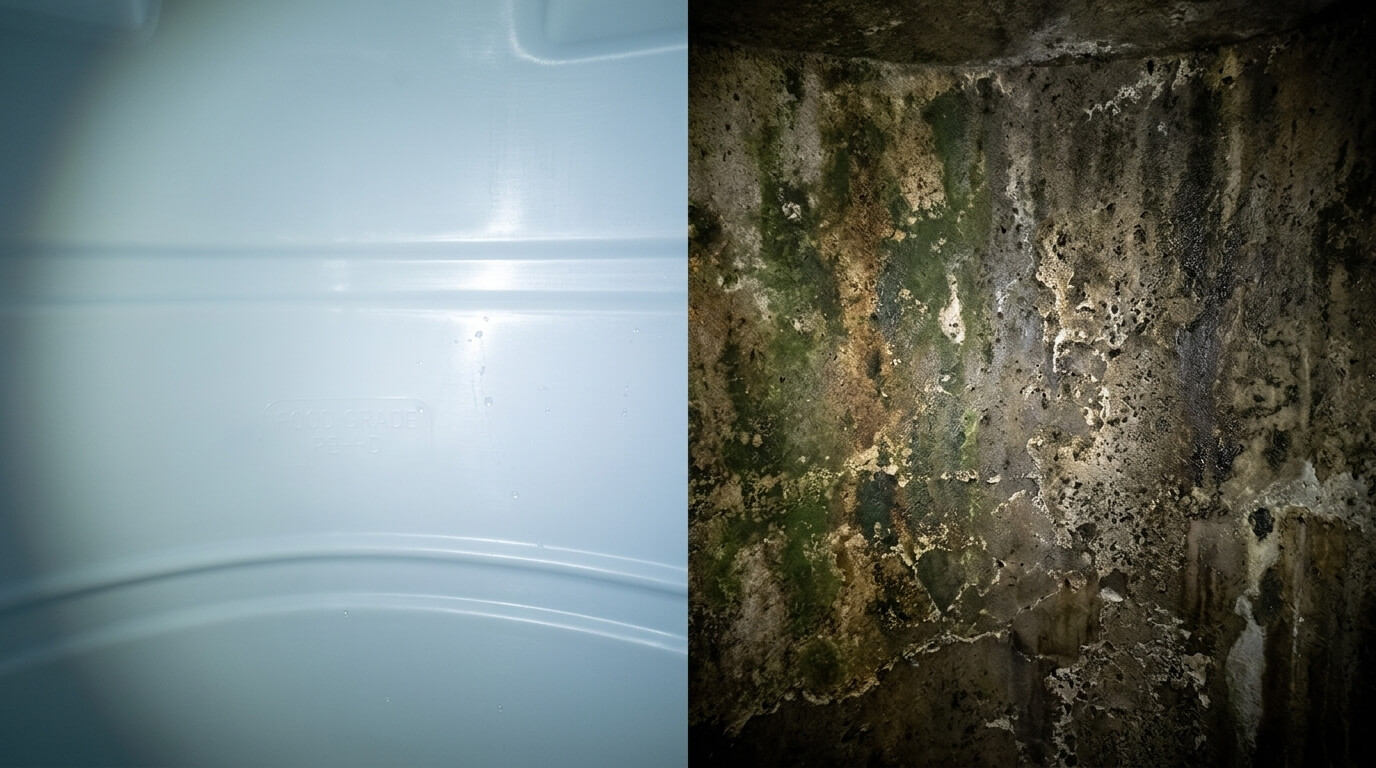
The inside surface of a tank affects the water it holds. Food-grade polyethylene is smooth and non-porous, which makes it easy to clean and less likely to harbour algae or sediment. Concrete’s rougher surface gives biofilm and algae more to grip, especially if the sealing has worn, and new concrete can also raise the water’s pH for a while until it cures fully.
That doesn’t make concrete unusable for drinking water, and plenty of well-built concrete tanks serve homes and communities well. It does mean concrete needs more careful commissioning and regular cleaning to keep water quality consistent, whereas a plastic tank arrives ready to use and needs only routine care.
Cost, Speed and Flexibility Compared
Plastic wins on speed. The tank is delivered complete, and once the base is ready, it can be in service the same day. Concrete needs formwork, reinforcement, pouring and curing, and the timeline is measured in weeks. Plastic also has a predictable price, for example KSh 26,354.90 for a 3000 litre cylindrical tank or KSh 47,385.00 for a 5000 litre tank, while concrete quotes vary with labour, materials and site conditions.
Concrete wins on flexibility at very large sizes and unusual shapes, since it can be built to fit awkward plots or integrated with other structures. If you’re weighing a very large underground tank, our guide to 10,000 litre underground storage covers the alternatives in detail.
For most households, the practical choice is plastic, and the sensible next step is to browse the cylindrical range, check the warranty terms, and follow the installation guide so the base matches the tank you choose.
What Installers and Owners Should Check Either Way
Either material you choose, a handful of checks apply. Confirm the base is level and strong enough for the full weight of the water. Make sure the overflow discharges safely away from the tank and buildings. Check that the lid or cover seals properly so insects, debris and light stay out. And make sure you can reach every fitting for cleaning and repair without dismantling anything.
For a plastic tank, also confirm the material is UV-stabilised and that a warranty is documented in writing. For a concrete tank, ask about the waterproofing method, the reinforcement and the curing time, and get all of it in the contract. It’s also worth thinking about what happens in ten or fifteen years. Can the tank be repaired, relocated or replaced without major disruption? A plastic tank can usually be swapped in a day; a concrete tank is a much bigger undertaking. If you’d like to see the plastic options and current prices, browse the cylindrical range.
The Bottom Line for Most Kenyan Properties
If you want a tank that arrives ready to use, carries a written warranty and copes with year-round equatorial sun, a UV-stabilised plastic tank is the simpler and better-documented choice for most homes. Concrete still earns its place for very large or awkwardly shaped underground storage, provided it is built and sealed properly. Compare your real needs, get written specifications, and choose the option you can maintain comfortably for the next decade or more.
Related Reading
To see what the plastic option looks like in practice, browse plastic water tanks in Kenya and cylindrical water tanks in Kenya.
Frequently Asked Questions
Do plastic water tanks degrade in Kenya’s sun?
A UV-stabilised, multi-layer plastic tank is specifically built to resist this. Cheaper, non-stabilised plastic can degrade faster under constant direct sun.
Is concrete more durable than plastic long-term?
It can be if well-built and maintained, but it’s prone to cracking over time and repairs are more involved than replacing a fitting on a plastic tank.
Which is cheaper, plastic or concrete?
Plastic tanks are generally cheaper upfront and much faster to install, since there’s no on-site construction or curing time involved.
Does a plastic tank come with a warranty?
Reputable manufactured plastic tanks, including the Poa Tanks range, come with a stated warranty. A site-built concrete tank typically doesn’t.
Plastic vs Concrete Water Tanks: Built for Kenya’s Climate
UV-stabilised, triple-layer construction with a documented warranty, browse the full range before you decide.
Lifespan figures are general manufacturer and industry estimates. Actual durability depends on installation quality, maintenance, and site conditions.