

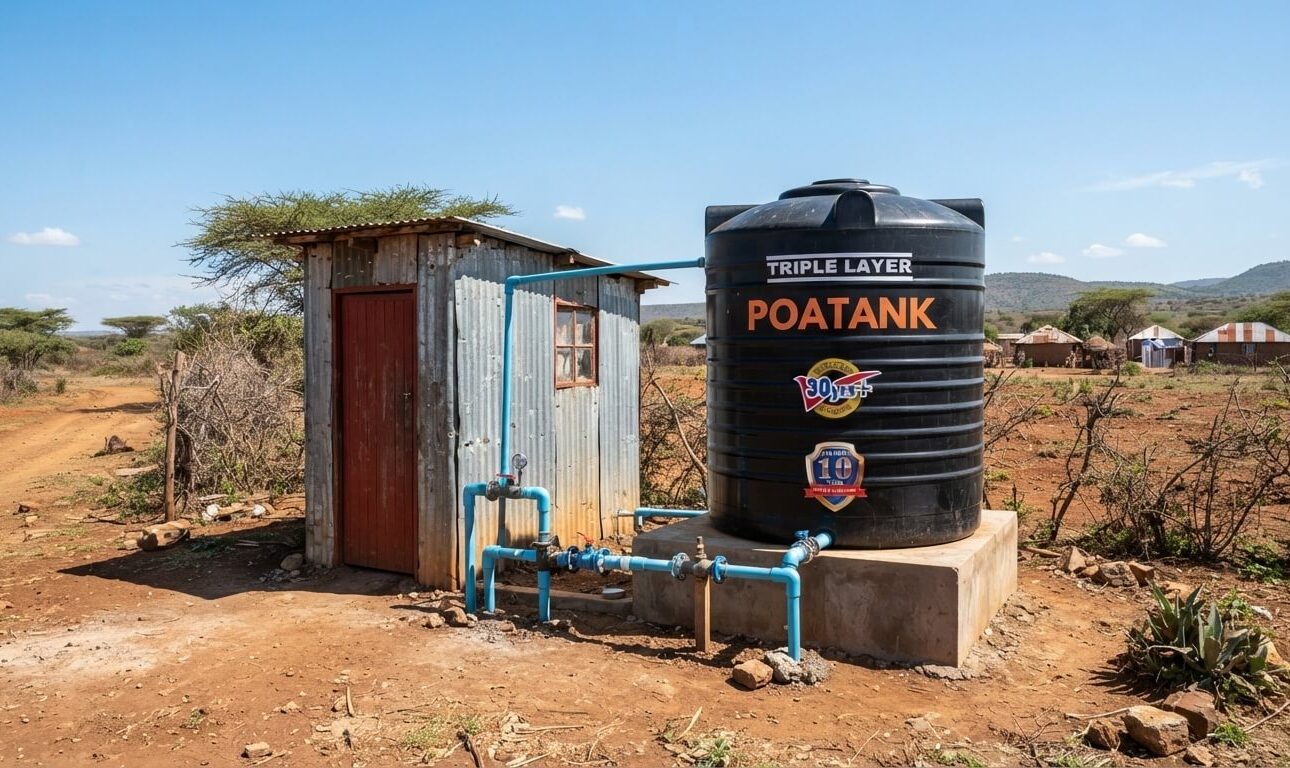
Comparing borehole vs water tank storage is a bit like comparing a well to a bucket, they’re not solving the same problem, and framing it as a choice between the two usually leads to skipping something a household ends up needing anyway.
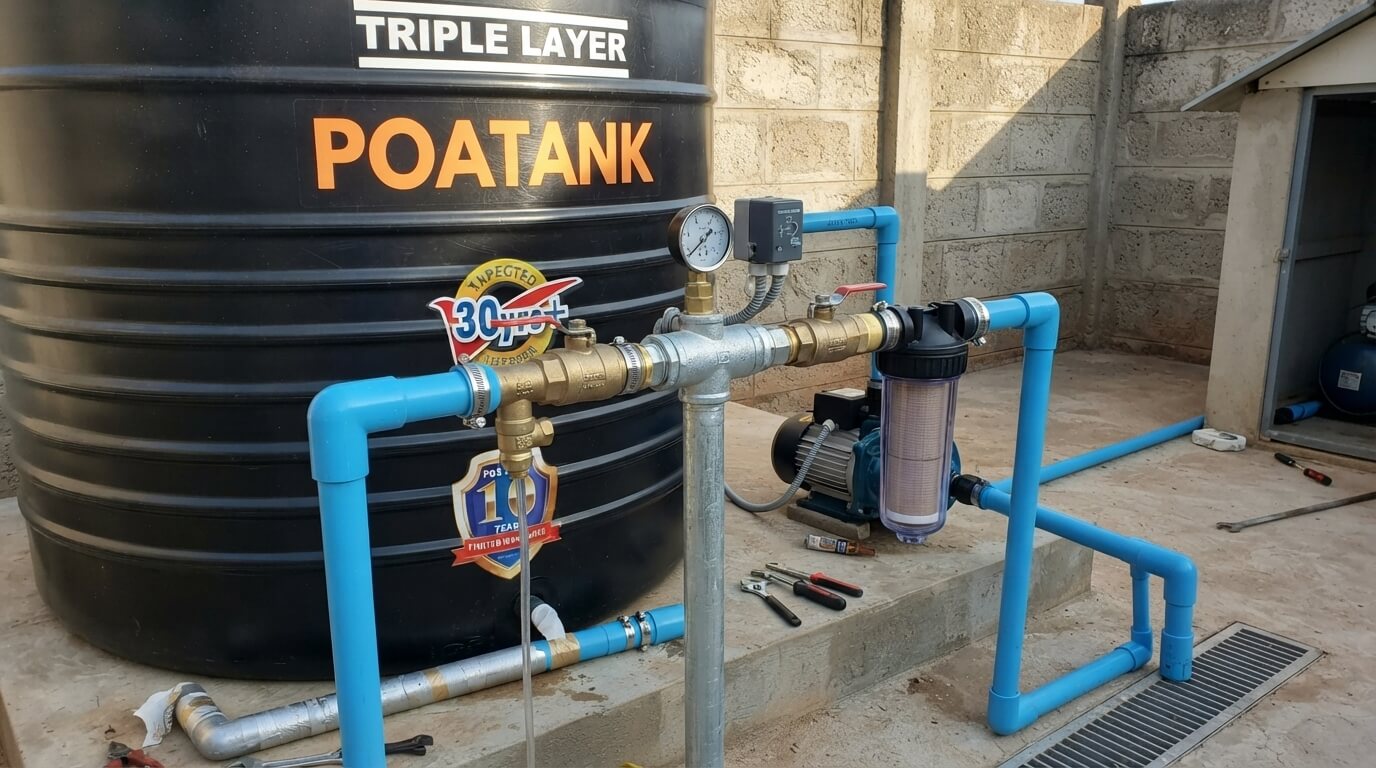
A borehole is a source, not storage
A borehole gives you a supply of water, drawn from underground, generally independent of municipal interruptions. What it doesn’t give you is buffer, if the pump fails, the power goes out, or the borehole is being serviced, a household with a borehole and no storage has no water at all during that gap.
That’s the detail that catches people out. A borehole solves the “where does my water come from” question, but it doesn’t answer “what happens when that source is briefly unavailable.”
Borehole vs Tank vs Both
| Setup | Reliability | Upfront cost |
|---|---|---|
| Borehole only | Vulnerable to pump or power failure | High, drilling and pump costs |
| Water tank only, mains-fed | Vulnerable to mains interruptions | Moderate, tank and installation only |
| Borehole + water tank | Strong, storage covers source gaps | Highest combined, but most reliable |
Why most borehole owners still need a tank
Pairing a borehole with a properly sized cylindrical tank gives you the reliability of the borehole and the buffer of stored water, so a pump issue or a power cut doesn’t mean no water at all, just a draw-down on what’s already stored. Sizing that tank correctly matters more here than in a mains-only household, since the tank is covering genuine source gaps, not just topping up during short interruptions.
Underground storage is also worth considering for a borehole setup specifically, since it keeps stored water cooler and out of the way if the compound is already busy with a pump house and piping.
Sizing the tank around a borehole
Because a borehole-fed household is leaning on stored water more heavily during outages, it’s worth running your numbers through the water usage calculator and sizing slightly larger than you would for a mains-only home with the same headcount.
What a borehole really costs to own
A borehole is often described as a one-off investment, but that undersells the ongoing side. Drilling, casing, a pump, a controller and the electrical supply are the visible upfront costs. After that, there’s electricity or fuel to run the pump, periodic servicing, occasional pump replacement, and the possibility that yield drops or water quality changes over time.
Water quality deserves particular attention. Groundwater can carry minerals, salts or contaminants that affect taste, staining and health, and the only way to know is to have it tested. If you’re relying on a borehole for drinking water, a test and appropriate treatment are part of the real cost, not an optional extra. None of this is a reason to avoid a borehole, only a reason to budget for it honestly.
How storage protects a borehole household
Storage smooths out the gaps. A pump doesn’t need to run every time someone opens a tap; it can fill the tank during off-peak hours, and the tank supplies the house by gravity or a smaller booster pump. That reduces wear on the pump from constant starting and stopping, which is one of the common causes of early failure.
Storage also gives you a reserve when something goes wrong. A power cut, a pump fault or a scheduled service no longer means an immediate loss of water; you draw on the stored volume while the problem is fixed. For a household or business that can’t afford to be without water, that buffer is the difference between an inconvenience and a crisis.
Choosing and placing a tank for a borehole setup
Start by sizing. Because the tank is covering source interruptions rather than just short mains cuts, size it on the generous side, and use the water usage calculator to ground the number in your real usage. For most homes, the cylindrical range offers the right mix of price and simplicity, with a 5000 litre tank at KSh 47,385.00 or a 10,000 litre tank at KSh 99,988.85 available for larger demand.
Then think about placement. If the pump house and piping already take up space, an underground tank can keep the compound tidy and the water cooler. If you’d rather keep everything accessible and simple, overground is easier to inspect and cheaper to install. Either way, follow the installation guide for the base, and protect the tank inlet from any sediment carried by the borehole water, since sediment is a common cause of blocked fittings.
A simple decision guide for borehole owners and planners
If you already have a borehole, add storage before anything else, since it protects the investment you’ve already made. If you’re still deciding whether to drill, price the whole system rather than the borehole alone: drilling, pump, power, treatment, and a properly sized tank. If you’re on reliable mains water and only need backup, a tank on its own is likely the more economical option, and a borehole may not be justified at all.
In every case, base the tank size on real usage rather than a guess, keep the tank clean, and check the warranty terms so you know what’s covered. The combination of a dependable source and adequate storage is what turns a water supply from something you worry about into something you rarely think about.
Power cuts, pumps and planning for failure
The weakest point in most borehole systems is the pump and its power supply. A power cut stops the pump, a fault stops it, and a dry spell that lowers the water level can stop it too. Storage buys you time in each of those cases. Plan for it by asking how many hours or days you’d want to run without the pump, then size the tank to cover that period at your normal usage.
Consider a backup power option if outages are frequent, such as a generator or a solar setup sized to run the pump for a few hours a day, and add simple protection like a float switch so the pump doesn’t run dry. None of this needs to be elaborate, but it’s cheaper to plan for failure than to react to it. A tank that holds several days of water turns most pump problems into a scheduled repair rather than an emergency.
Related Reading
To pair storage with your borehole, browse cylindrical water tanks in Kenya and the wider water storage tanks in Kenya.

FAQs
Do I still need a water tank if I have a borehole?
Yes, almost always. A borehole is a source, not storage, so a pump failure or power cut still leaves you without water unless you have a tank as backup.
Is a borehole more reliable than mains water?
Generally more independent of municipal supply issues, but it has its own failure points, pump problems and power outages being the main ones.
How big a tank do I need if I have a borehole?
Slightly larger than a mains-only household of the same size, since the tank is covering genuine source interruptions, not just short gaps.
Should a borehole-fed tank be underground or overground?
Either works. Underground keeps water cooler and frees up space if the compound already has pump infrastructure; overground is simpler to install and inspect.
Size Your Storage Around Your Borehole
Pair reliable storage with your borehole supply, browse the full cylindrical range or use the usage calculator to size correctly.
This guide offers general planning information. Borehole drilling and yield vary by location; consult a licensed driller for site-specific advice.