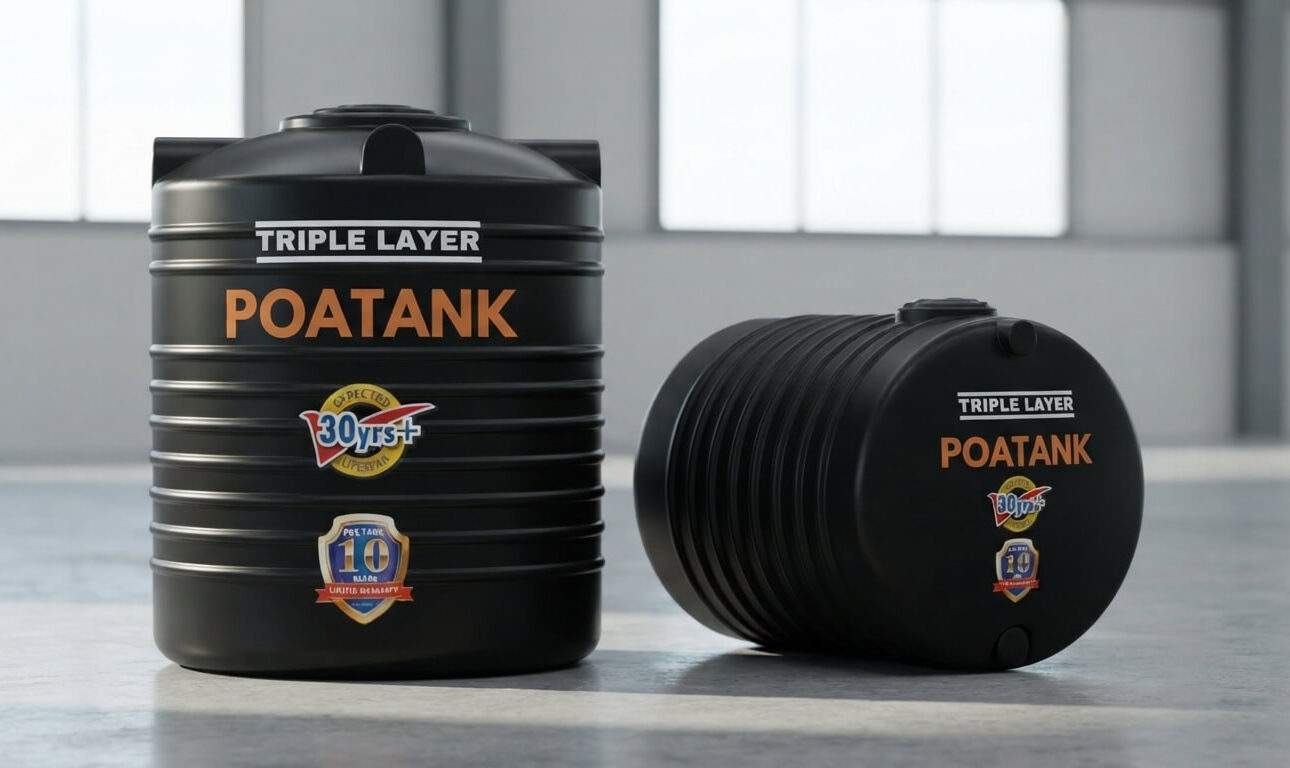
Most people default to a tall, standing tank without really considering the alternative. Weighing up horizontal vs vertical water tanks properly comes down to what your site allows, height overhead, or floor space around it, rather than which shape looks more like a “normal” tank.
What each shape is built for
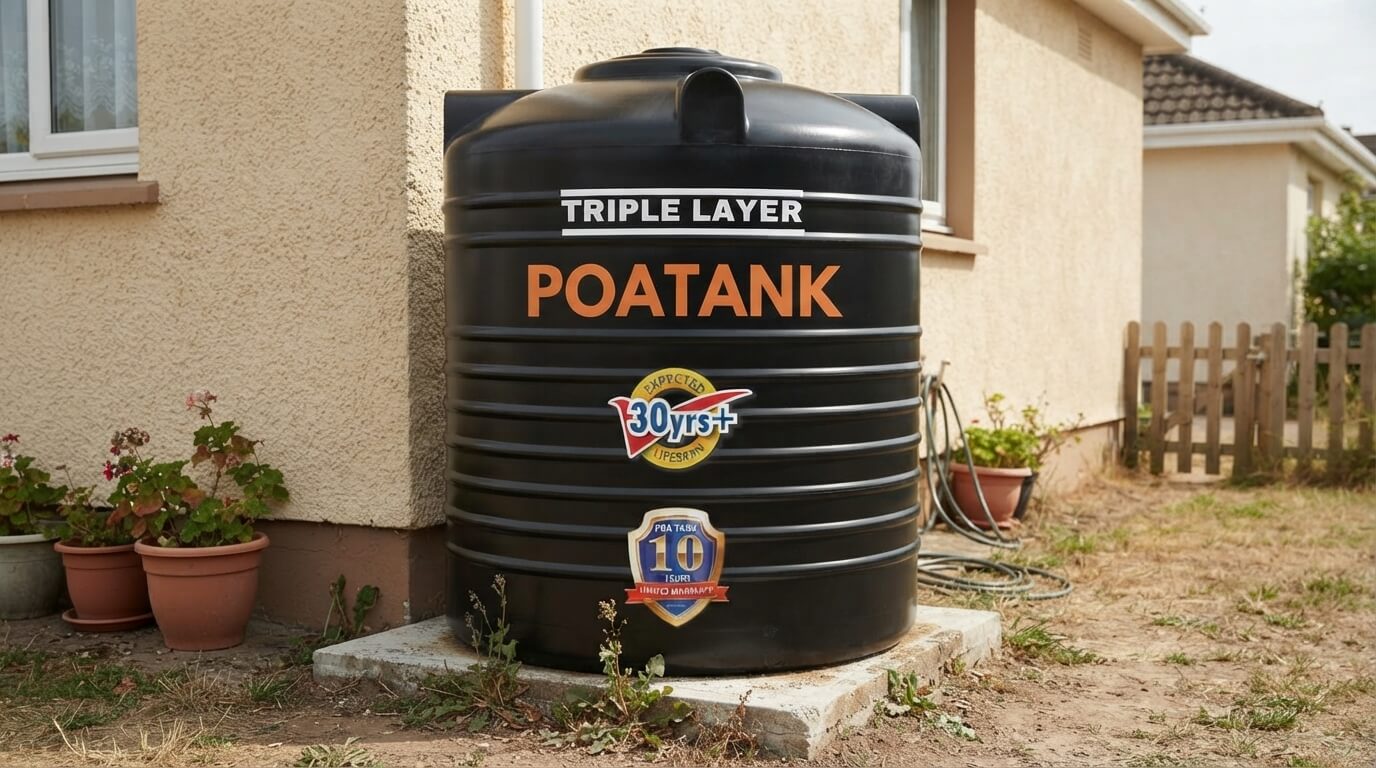
Vertical, cylindrical tanks are the default for general household water storage, standing tall with a smaller footprint, which suits most compounds with a bit of clear ground space and no overhead restriction. Horizontal tanks lie low and long, a shape more commonly used for septic tanks and situations with limited height clearance, such as under a raised structure or in a shallow excavation.
Horizontal vs Vertical at a Glance
| Vertical (cylindrical) | Horizontal | |
|---|---|---|
| Footprint | Smaller base, taller profile | Larger base, low profile |
| Best for | General household water storage | Septic tanks, low-clearance sites |
| Typical price range | KSh 4,579 – 160,218 across sizes | KSh 50,378 for the 2000L septic tank |
| Installation | Ground level, minimal groundwork | Often underground or low-clearance |
Vertical: the general-purpose choice
For everyday water storage, the cylindrical tanks range covers sizes from 230 litres up to 12,000 litres, and this shape is almost always the right starting point unless your site has a specific reason to consider otherwise.
Horizontal: built for a different job
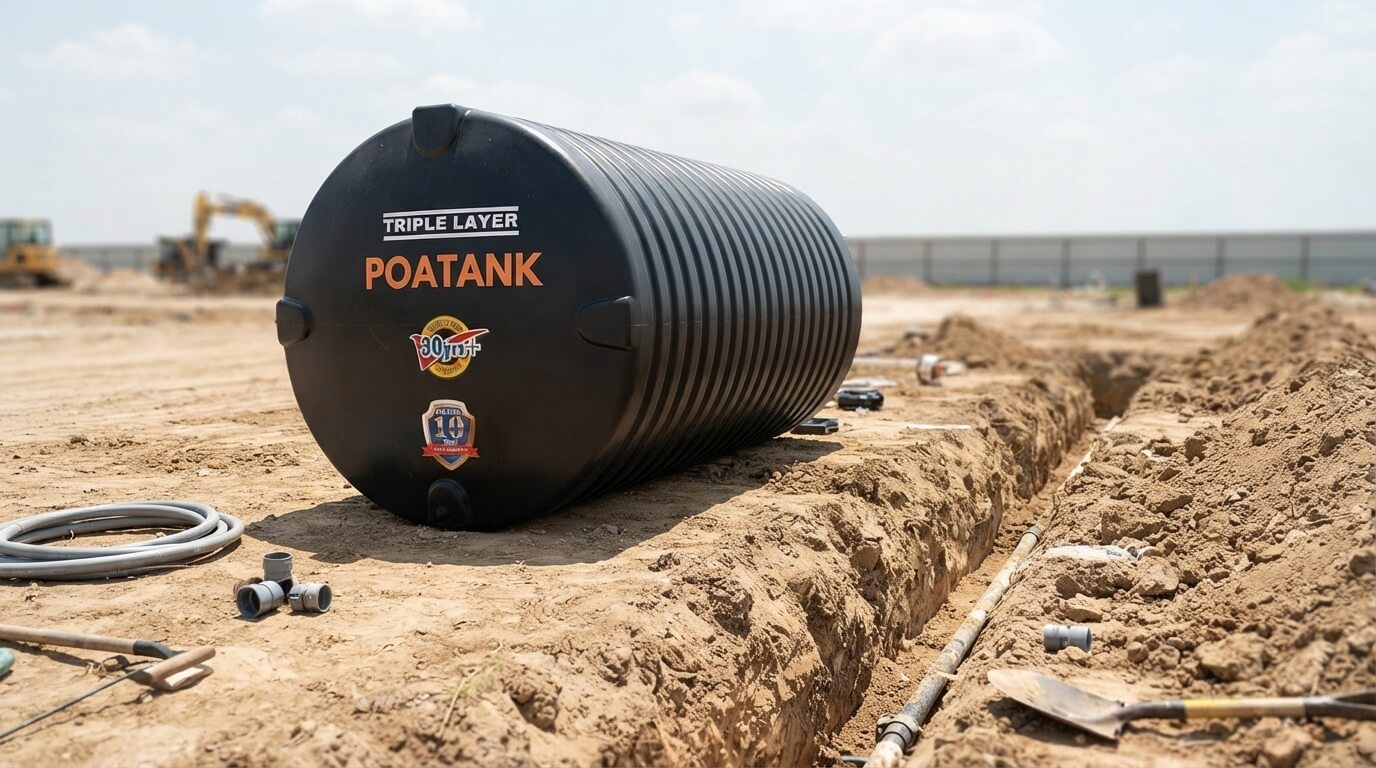
The horizontal septic tank is the clearest example of this shape’s purpose, low and long, designed to sit underground rather than stand visibly in a compound. If you’re weighing horizontal purely for a low-clearance water storage need rather than a septic application, it’s worth discussing your specific site with a supplier before assuming it’s the better fit, since the vertical range covers most general storage needs more simply.
The physics: why shape matters for water storage
Shape affects how a tank handles the load of its own contents. Water pushes outward on the walls with a pressure that increases with depth, so the lower part of a tall vertical tank carries more pressure than the top. Manufacturers deal with that by making the walls thicker or by using multiple layers where the stress is highest, which is part of why build quality matters more for large vertical tanks.
A horizontal tank spreads the same volume over a longer, shallower profile, so the pressure at any one point is lower. That’s one reason the shape suits septic tanks and underground installations, where the surrounding soil also supports the walls. It’s not a case of one shape being stronger, but of each being designed for a different set of conditions.
Practical questions to ask about your site
Rather than starting with the shape, start with the site. The answers to a handful of questions usually point clearly to one or the other.
- How much clear height do you have? A low roofline or an overhead obstruction may rule out a tall tank.
- How much ground area can you spare? A wide, low tank needs more of it.
- Is the tank going above or below ground? Below ground usually favours horizontal or bell-shaped designs.
- Is it for clean water or wastewater? Wastewater points to a septic tank, which is horizontal in the Poa Tanks range.
- How will you access the fittings and lid for cleaning and inspection?
Where the current Poa Tanks range fits each shape
In the current range, vertical tanks dominate general water storage. The cylindrical tanks range offers sizes from 230 litres at KSh 4,579.25 up to 12,000 litres at KSh 160,217.85, and it covers almost every household and commercial need. If you’re short on ground space but have height, this is the natural choice. For a rooftop position, the loft tanks are the compact alternative.
The horizontal option is the 2000 litre septic tank at KSh 50,378.25, designed for underground wastewater treatment rather than clean water storage. If your need is clean water below ground, look at the underground BELL range instead. Either way, check the base and installation requirements in the installation guide, since each shape needs different groundwork to perform properly and to stay within warranty conditions.
Common myths about tank shape
One myth is that horizontal tanks are automatically stronger because they’re lower. In reality, strength comes from the material, the wall thickness and the construction quality, not just the shape. Another is that vertical tanks always waste ground space. A tall tank uses less floor area per litre than a wide one, which is why it suits smaller plots.
A third is that you can swap shapes freely. Because installation, fittings and load paths differ, a tank designed for one orientation shouldn’t be used in another without checking with the supplier. When in doubt, contact the team with your site details, and they can point you towards the right product and confirm what the warranty requires.
A short summary to help you decide
If you need clean water storage above ground, choose a vertical cylindrical tank and match the capacity to your household using the calculator. If you need to treat wastewater underground, choose a horizontal septic tank and plan the soakaway as carefully as the tank itself. If you need clean water below ground, look at the underground bell-shaped range rather than trying to bury an overground tank.
Whatever you choose, remember that the tank is only one part of the installation. The base, the plumbing and the access all need planning, and a few minutes of preparation will save you far more time and money than you spend on the tank itself.
Planning the installation for either shape
Before choosing a shape, sketch the site. Mark the tank footprint, the clearance around it, the route of the pipes and the path someone will walk to inspect it. For a vertical tank, check the height against roof edges, overhead cables and tree branches. For a horizontal tank, check the length and the depth of the excavation, and whether a vehicle or heavy load will pass over it.
Then think about the ground. A vertical tank concentrates its load on a circular base, so that surface must be flat and strong. A buried horizontal tank is supported by the surrounding soil, so the backfill and compaction matter more than a slab. Both are simpler when you follow the installation guide from the start rather than adapting it afterwards. A tidy plan on paper is the cheapest insurance you can buy for any tank.
Related Reading
To see the vertical options in detail, browse cylindrical water tanks in Kenya or loft tanks in Kenya.
FAQs
Is a horizontal tank cheaper than a vertical one?
It depends on capacity and use, not shape alone. Compare the specific sizes you need rather than assuming one shape is inherently cheaper.
Can I use a horizontal tank for household water storage?
It’s possible, but vertical cylindrical tanks are the standard choice for general storage. Horizontal tanks are mainly used for septic applications in the current range.
Which shape needs less ground space?
Vertical tanks have a smaller footprint for their height, making them better suited to compounds with limited floor space.
Does tank shape affect installation cost?
Yes, horizontal tanks are often installed underground or in low-clearance spots, which typically involves more groundwork than a ground-level vertical tank.
Find the Right Shape for Your Site
Browse the full cylindrical range for general storage, or the septic range for underground needs.
Prices shown are correct as of the publish date and are subject to change. Confirm current pricing and stock directly with Poa Tanks before ordering.