

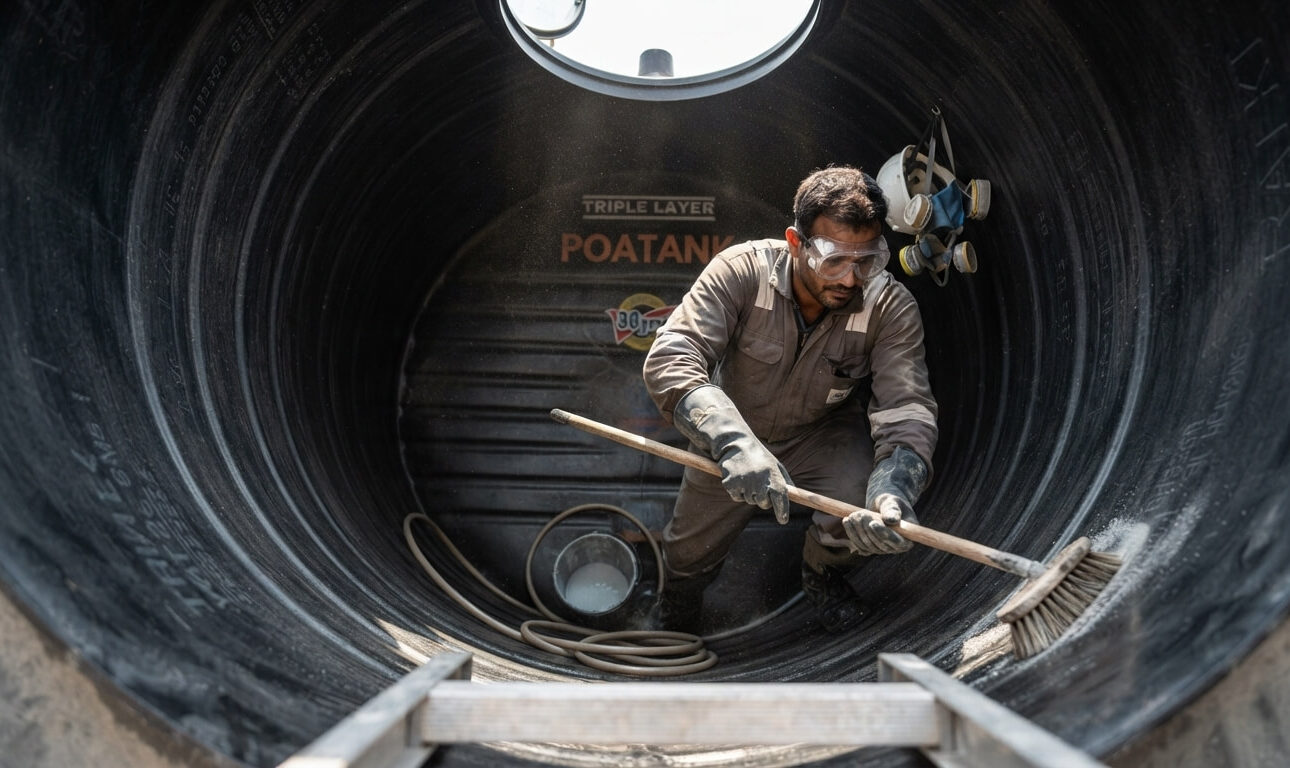
A tank that never gets looked at doesn’t announce a problem until it’s already a mess, an algae bloom, a slow leak at a fitting, or water that starts tasting slightly off. A basic water tank maintenance routine catches most of that early, and none of it takes very long.
A simple annual cleaning routine
Once a year is the general rule for a full clean, more often if you notice sediment or a change in water clarity sooner. Draining the tank, scrubbing the interior walls and base with a stiff brush and clean water, no harsh chemicals, and rinsing thoroughly before refilling is usually enough for a well-sealed polyethylene tank.
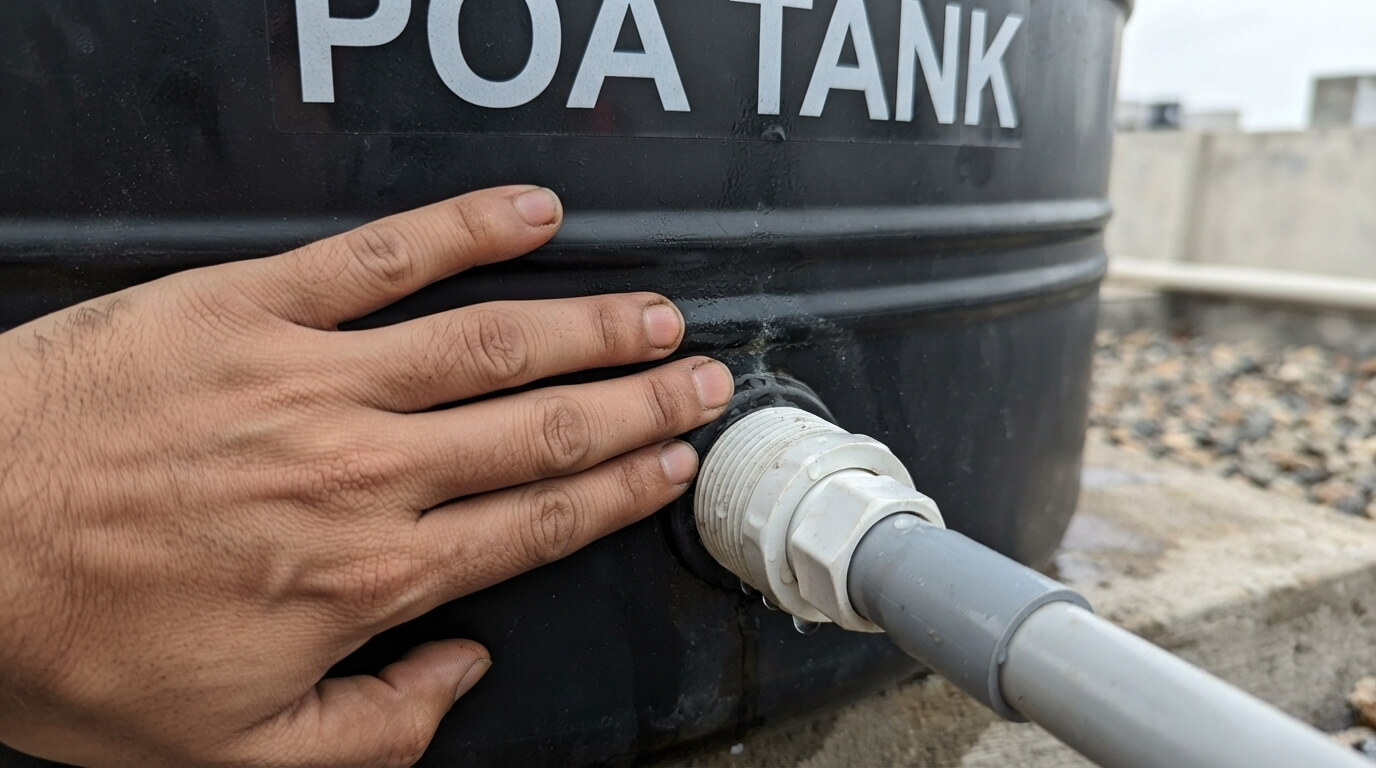
Check the inlet, outlet, and overflow fittings while the tank is empty, this is the easiest time to spot a fitting that’s started to weep rather than waiting until it’s a visible drip running down the side of the tank.
Maintenance Tasks by Frequency
| Task | How often | Who should do it |
|---|---|---|
| Visual check of fittings and base | Monthly | Homeowner |
| Full interior clean | Annually, or sooner if needed | Homeowner or a cleaning service |
| Checking for algae or discolouration | Every few months | Homeowner |
| Fitting replacement or leak repair | As needed | A professional, especially for underground or loft tanks |
Spotting a problem before it gets worse
A rooftop-position loft tank works in your favour here, leaks tend to get noticed quickly because the tank is visible and accessible day to day. Ground-level and underground tanks need a slightly more deliberate check, since a small leak at the base of a ground tank can go unnoticed for a while, and an underground tank hides almost everything from view entirely.
A sudden, unexplained drop in water level between fills is usually the first real sign of a leak worth investigating, worth checking fittings and the base seam before assuming it’s just higher-than-usual household usage.
When to call in help rather than DIY it
Cleaning and basic fitting checks are well within DIY territory. A cracked shell, a persistent leak at a seam, or anything involving an underground tank’s backfill settling unevenly is worth a professional assessment rather than a home fix, both for safety and to avoid voiding the warranty terms. The do’s and don’ts guide is a good starting reference for what counts as normal upkeep versus a repair job.
A step-by-step annual clean
An annual clean sounds like a big job, but it breaks down into simple steps. Choose a day when you have plenty of stored water to spare or when supply is expected soon, so you’re not left without water while the tank is empty.
- Isolate the tank from the supply and open the outlet to drain it as far as it will go.
- Open the lid and, wearing gloves, remove any loose debris, leaves or sediment.
- Scrub the interior walls and base with a soft-to-medium brush and clean water. Avoid harsh chemicals and abrasive tools that could scratch the surface.
- Rinse thoroughly until the water runs clear, then drain again.
- Inspect the inlet, outlet, overflow and any fittings for cracks, loose connections or signs of weeping.
- Close the lid securely, reconnect the supply and refill.
Keeping algae and contamination out
Algae needs light, warmth and nutrients. A properly built polyethylene tank blocks most of the light, which is why tank quality matters, but a badly fitted lid, a gap around a pipe or a translucent section can let enough in to start a problem. Make sure the lid seats properly, seal any gaps around pipe entries, and keep the tank away from overhanging branches that drop leaves and debris onto it.
Insects and small animals are the other route in. A mesh screen on the overflow and any vents keeps them out without restricting flow. If you notice a musty smell, green tinge or slimy film, don’t wait for the annual clean, drain and scrub the tank as soon as you can.
Where water is used for drinking, consider a simple filter at the point of use as well. It adds a layer of protection regardless of how well the tank itself is maintained.
When maintenance becomes a repair, and what your warranty covers
Routine care is different from repair. A slightly loose fitting that needs tightening is maintenance; a crack in the shell, a seam that’s leaking, or an underground tank that’s settled unevenly is a repair, and it’s best handled by someone qualified. Attempting a structural fix yourself can make the damage worse and may affect what the warranty covers.
Keep a simple log of when you cleaned the tank, what you found and any repairs made. It takes a minute and gives you a clear record if you ever need to make a claim. The do’s and don’ts guide is worth reading before you start, and if something looks wrong and you’re not sure whether it’s covered, contact the team with photos before you attempt a fix. Good maintenance is also good value: a tank that’s cleaned and checked regularly should give reliable service for many years.
A yearly maintenance calendar you can follow
Maintenance is easier when it’s tied to a routine. A simple calendar helps. At the start of each year, do the full clean and check the base. Before the long rains, check the gutters, overflow and inlet screens. Midway through the year, look at every fitting for weeping and confirm the lid still seals. Before the dry season, check the water level pattern so you know how much buffer you’re carrying into it.
Put reminders in your phone, and write down anything unusual. Small notes like “slight dampness at outlet” are useful when you compare them a few months later. If you rent out a property or manage a compound, share the calendar with whoever looks after it so the job doesn’t depend on one person’s memory. Finally, keep your purchase receipt and the warranty terms together with the log, since a well-documented tank is much easier to support if something ever needs to be claimed. The do’s and don’ts guide is worth rereading once a year as part of the routine.
Related Reading
Thinking of replacing an old tank? Have a look at quality water tanks in Kenya and cylindrical water tanks in Kenya.
FAQs
How often should I clean my water tank?
Once a year is standard for most households, sooner if you notice sediment build-up, discolouration, or a change in taste.
Can I use bleach or chemicals to clean my tank?
Stick to a stiff brush and clean water for routine cleaning. Harsh chemicals aren’t necessary for a well-sealed polyethylene tank and can affect water taste.
What’s the first sign of a leak I should look for?
An unexplained drop in water level between fills, or visible dampness around a fitting. Check the base seam and fittings before assuming it’s just usage.
Does regular maintenance affect my warranty?
Basic cleaning and checks don’t affect warranty cover. Attempting a structural repair yourself on a damaged tank might, so check the warranty terms first.
Keep Your Tank in Good Shape
Check the do’s and don’ts guide for a full breakdown of routine care versus when to call for help.
This guide is general maintenance advice. For structural damage or persistent leaks, consult a professional and check current warranty terms.