
Most homes in Kenya need some water stored on site. The harder question is where. A tank on the ground, one in the roof space, or one buried in the yard each solves a different problem.
This guide compares the three so you can match domestic water storage to your plot, your budget and the water pressure you want.
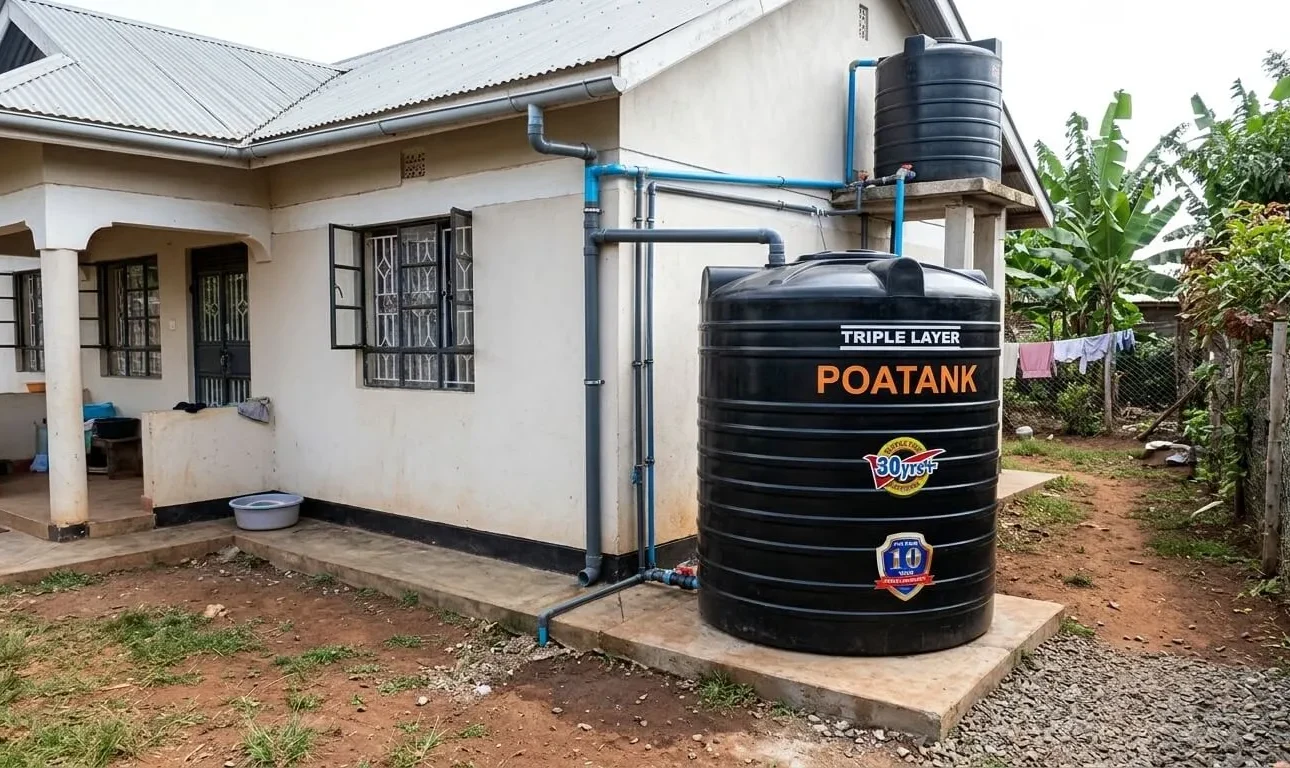
Above-Ground Tanks
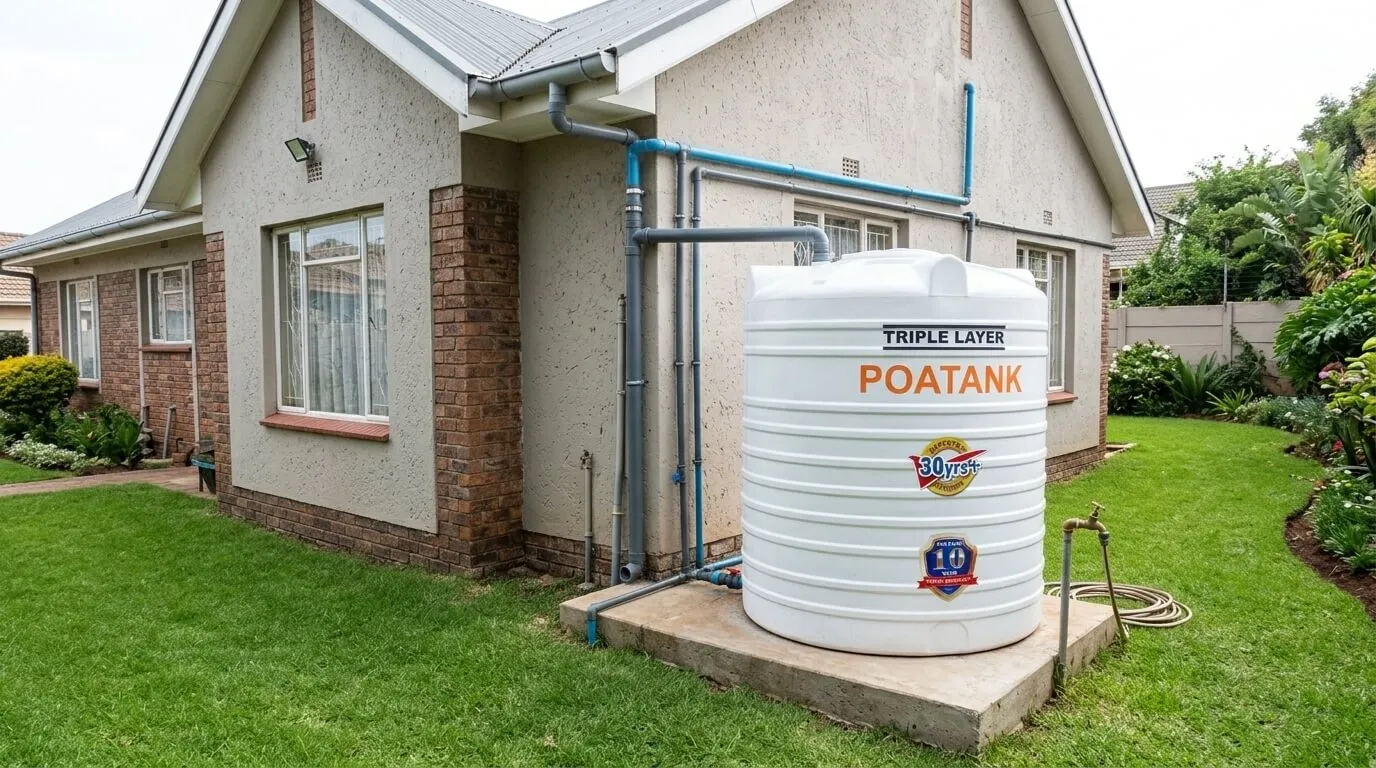
The standard choice. A vertical tank on a level pad is easy to install, easy to inspect and easy to replace. Most households start here, and the cylindrical range covers a wide spread of sizes.
The trade-off is pressure. Unless the tank sits high, you will usually need a pump.
Loft Tanks
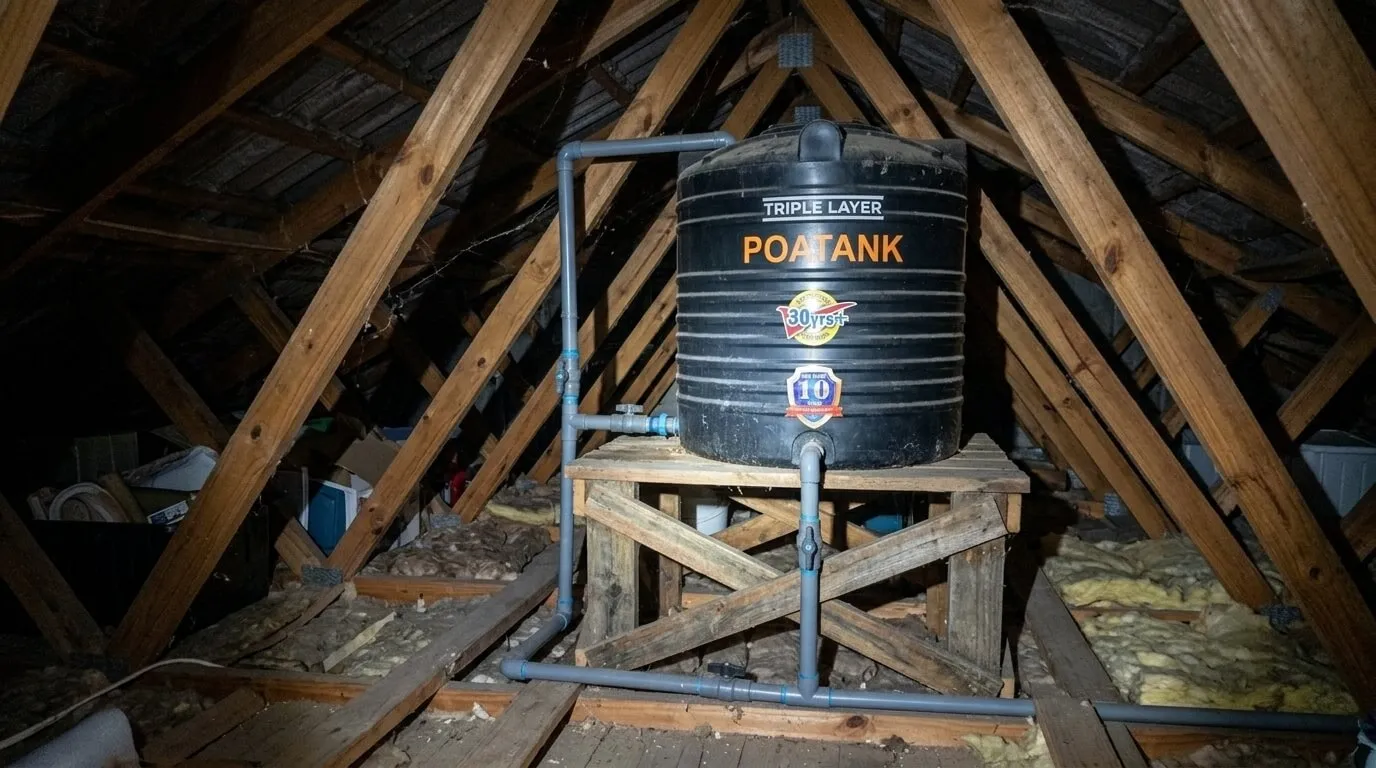
Loft tanks sit in the roof space or on a high stand and feed the house by gravity. No pump, steady pressure, and they keep working when the power is off. They are small, so they are often a daily buffer rather than the main store.
See the loft tanks on our shop.
Underground Tanks
Buried tanks save surface space and keep the water cooler. They suit tight plots and buildings, but need digging, a strong cover and a plan for groundwater.
Poa lists underground tanks if you want to compare sizes.
Above Ground, Loft and Underground Compared
| Factor | Above ground | Loft | Underground |
|---|---|---|---|
| Best for | Most homes with a yard | Gravity-fed taps | Tight plots, large stores |
| Pressure | Needs a pump | Gravity pressure | Needs a pump |
| Space | Needs a pad | Uses roof space | Frees the surface |
| Installation | Simple | Needs a strong stand | Excavation and cover |
Choosing for Your Plot
Start with space, then pressure, then budget. If you have a yard, an above-ground tank is simplest. If you want gravity pressure, add a loft tank. If space is tight, consider underground.
Our guide to choosing a tank has more on matching a tank to your home.
Planning Domestic Water Storage Around Your Daily Routine
Think about when you use the most water. Mornings and evenings are usually the peaks, and a small tank can run low at those times even if it holds enough for the whole day. A larger store smooths the peaks.
Also think about who looks after the system. A tank on the ground is easy to check. A tank in the roof space is harder, so a cleaning routine matters more. Choose the layout you will actually maintain.
Mixing Storage Types in One Home
There is no rule that a home must pick one type. Many homes combine a ground tank for bulk storage with a small loft tank for steady pressure. Underground tanks can add capacity where the surface is limited.
The key is to connect the tanks properly and to keep each one accessible for cleaning. Good domestic water storage is a system, not a single tank, and our FAQ page answers common questions about combining them.
A Worked Example: A Three-Bedroom Home
Take a three-bedroom home with five residents and a small garden. Daily use is about 250 litres, plus perhaps 50 for the garden. A 3,000 litre ground tank gives about ten days. A 500 litre loft tank would give about two days on its own, but it gives steady gravity pressure to the taps and the shower.
Together, the two tanks give bulk storage and steady pressure. A pump moves water from the ground tank to the loft tank when needed. The home stays supplied during short outages and the taps keep working during power cuts. That is how domestic water storage can solve two problems at once.
If space is tight, an underground tank can replace the ground tank and free the yard.
Key Takeaways
Above-ground tanks suit most yards, loft tanks give gravity pressure and underground tanks save space. Match domestic water storage to your plot, your pressure needs and your budget. Check the warranty terms, prepare the base and measure the site before delivery day, and ask us if you are unsure.
Frequently Asked Questions
Do I need a pump with an above-ground tank?
Usually yes, unless the tank sits high enough for gravity to give acceptable pressure.
Can a loft tank be the only tank?
For a small household it can be. Many homes use a ground tank as the main store and a loft tank to feed the taps.
Is underground storage worth the extra work?
If surface space is limited, yes. Otherwise an above-ground tank is simpler and cheaper to maintain.
Sort Your Domestic Water Storage With the Right Tank
Tell us your plot size and water needs and we will help you choose between a ground, loft or underground tank.
This guide gives general planning figures. Actual needs depend on how many people use the water, how they use it, and the site.