

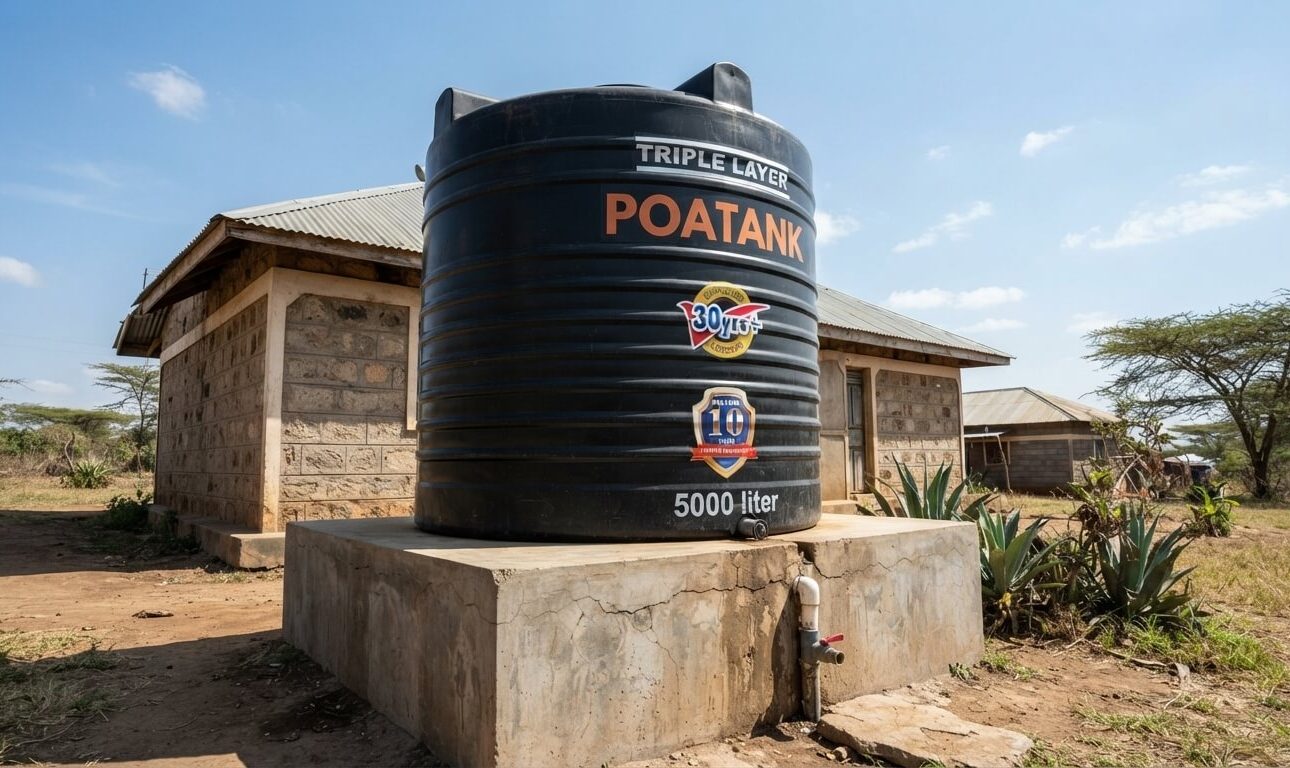
Five thousand litres is where a lot of households stop treating a water tank as a backup and start treating it as the main supply. Before deciding it’s the right size for your compound, it helps to know the actual 5000 litre water tank price in Kenya, not just a number remembered from a neighbour’s tank bought two years ago.
What a 5000 litre tank costs right now
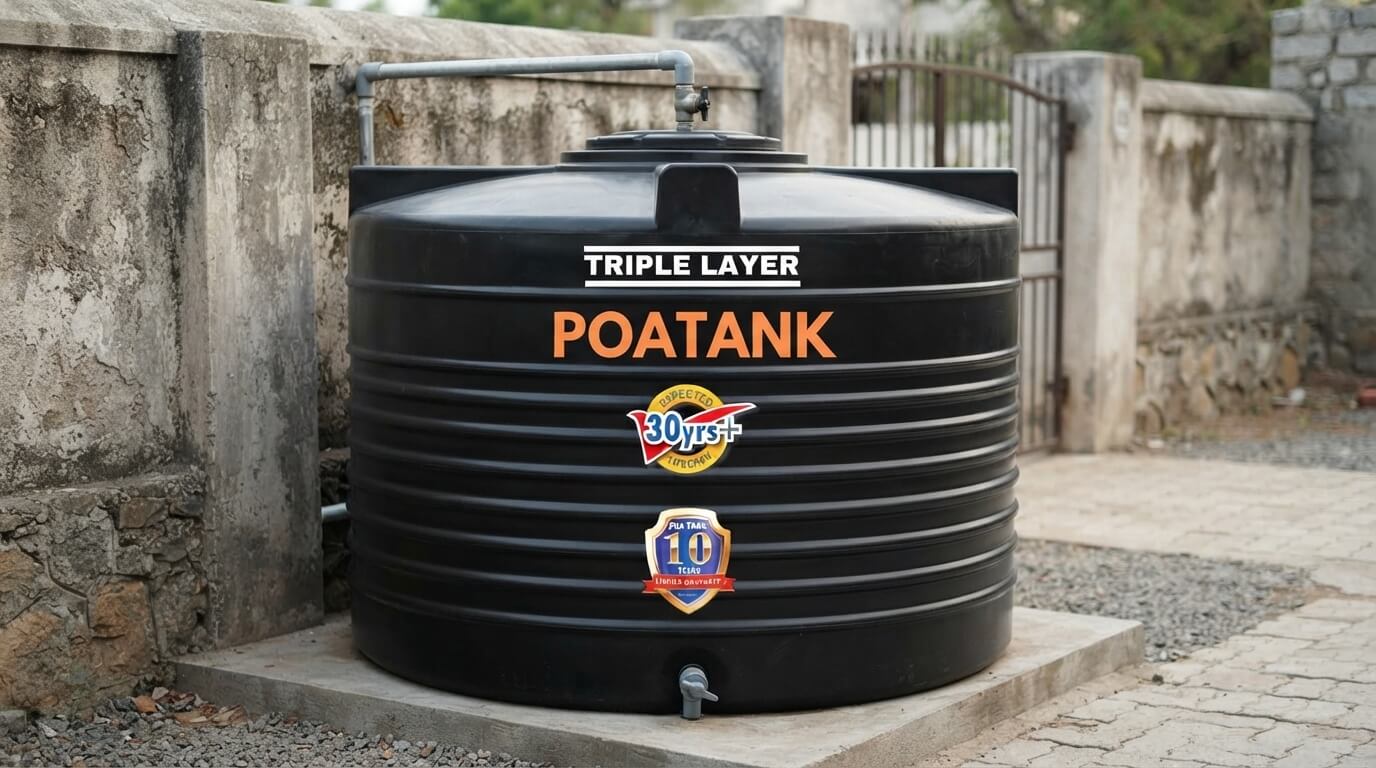
Poa Tanks currently lists the Short 5000 LT Cylindrical Vertical Tank at KSh 47,385.00, down from KSh 72,900. The “Short” designation refers to the footprint, a wider, lower profile rather than a tall one, which matters if the spot you’re installing it in has a height restriction but room to spread out.
That price sits on the same cylindrical tanks range as the rest of Poa Tanks’ sizes, triple-layer construction, UV-stabilised, food-grade polyethylene throughout.
How 5000 litres compares either side
Whether 5000 litres is the right call often comes down to comparing it directly against the sizes just above and below, rather than picking a number that sounds reasonable in isolation.
5000 Litre Tank vs Nearby Capacities
| Capacity | Current price (KSh) | Typical fit |
|---|---|---|
| 4000L | 38,143.95 | Large family with fairly reliable mains supply |
| 5000L | 47,385.00 | Household wanting several days of genuine buffer |
| 6000L | 58,279.65 | Larger compound or a second unit sharing the tank |
| 7500L | 78,063.70 | Multi-unit property or a business premises |
What’s driving the cost at this size
Material is the obvious driver, more litres means more polyethylene, so the jump from 4000L to 5000L costs roughly what you’d expect for the extra capacity. What’s less obvious is the base. A full 5000 litre tank weighs about 5 tonnes, and that number should shape your decision on where the tank sits, not the tank price itself.
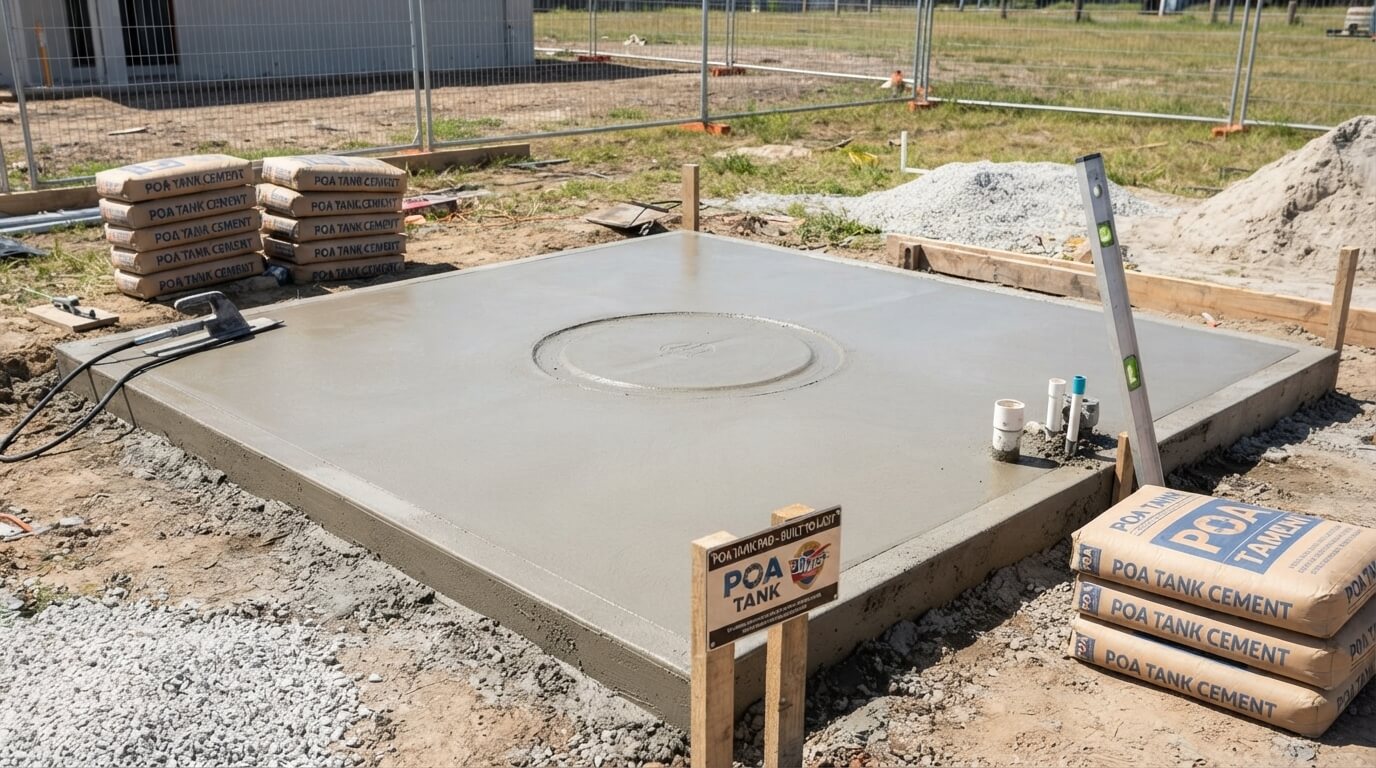
A compacted earth pad might hold an empty tank steady for the delivery photo, but it’s not a foundation for 5 tonnes sitting there for years. Read the installation guide and get the base sorted before delivery day, particularly if you’re raising the tank on a stand for gravity-fed pressure.
When 5000 litres isn’t quite enough
If you’re running a small apartment block, a school, or anywhere that can’t be caught short mid-day, it’s worth checking the numbers against a bigger tank before committing. Our guide to the 10,000 litre water tank price in Kenya breaks down what the next size up costs and who it tends to suit.
Is the Short profile the right shape for your site?
The 5000 litre tank on the Poa Tanks range is the Short variant, which trades height for a wider footprint. That’s a genuine advantage in some places and a genuine constraint in others, so it’s worth thinking through before you fall for the price alone.
A wide, low tank suits a compound where there’s room to spread out but an overhead restriction, such as a tank tucked under a roofline, near a boundary wall with a height limit, or beside a building where you don’t want it towering over a window. It also puts the centre of gravity lower, which some owners find reassuring for such a large volume of water. On the other hand, if your available ground is narrow, for instance a tight strip between a house and a wall, a wider base can be harder to fit than a taller, slimmer tank would have been. Measure the width first, then compare it to the tank dimensions listed on the product page.
Planning the base for roughly five tonnes of water
Water weighs about one kilogram per litre, so a full 5000 litre tank carries around five tonnes of water on top of the weight of the tank itself. That load is concentrated on the ring where the tank meets the ground, which is exactly why the base matters more than the tank price when you’re budgeting.
A properly built concrete slab, level and cured before delivery, is the safest foundation. It needs to be wider than the tank’s footprint so the edges of the tank aren’t hanging off the slab, and it should be flat enough that the tank sits on its entire base rather than rocking on high spots. Soft soil, loose fill, or a slab poured the day before delivery are the usual causes of trouble. The installation guide sets out what the base needs to be, and it’s the document to hand to whoever you hire to build it.
If you’re planning to raise the tank on a stand for gravity pressure, treat that as a structural project in its own right. A stand for five tonnes needs to be engineered for that load, not improvised from whatever timber or steel happens to be available.
Running costs and long-term value
A tank has almost no running cost in the way a pump does, but it isn’t entirely maintenance-free. An annual clean, a check of the fittings, and a look at the base for any settling are enough for most households, and the do’s and don’ts guide covers what counts as normal upkeep.
Where the value shows up is in what the tank replaces. A household that regularly buys water by the bowser during dry spells can find that a 5000 litre tank, filled while supply is available, pays for itself in avoided emergency purchases within a few seasons. That isn’t a guaranteed saving for everyone, and it depends on how often your supply fails and what you currently pay for alternatives, but it’s a more useful way to think about a KSh 47,385.00 purchase than comparing it purely against a smaller tank’s price.
Finally, the tank comes with a stated warranty and an expected lifespan measured in decades rather than years, so the cost is spread across a long period of use. If you’re weighing this size against a smaller one on price alone, factor that longevity in. And if the household is likely to grow, or you might add a second dwelling on the plot, the extra capacity now is usually cheaper than adding a second tank later.
How to compare quotes and listings sensibly
When you’re comparing a 5000 litre tank against offers from other suppliers, the headline price is only one line of the comparison. Ask what the tank is made from, how many layers the wall has, whether the material is UV-stabilised, how long the warranty runs, and whether delivery is included. Two tanks of the same capacity can differ a great deal in wall thickness and durability, and the cheaper one often turns out to cost more once you count an early replacement.
Write the answers down side by side. If a supplier is vague about the warranty or can’t tell you the exact model, treat that as information. A clear, documented offer, such as the one on the 5000 litre product page, is easier to rely on than a verbal promise. It’s also sensible to read the warranty terms and the delivery information before you decide, so nothing about the deal is a surprise on the day the tank arrives.
Related Reading
Weighing this size against others? Browse cylindrical water tanks in Kenya or see the wider range of quality water tanks in Kenya.
FAQs
How much does a 5000 litre water tank cost in Kenya right now?
KSh 47,385.00 at Poa Tanks for the Short cylindrical vertical tank, down from KSh 72,900. Confirm the live price before ordering.
Is the 5000 litre tank only available in a Short variant?
Currently, yes, on the Poa Tanks range. The Short build is wider and lower, useful where height is limited but floor space isn’t.
How much water weight does a full 5000 litre tank add?
Roughly 5 tonnes once full, on top of the tank’s own weight. That’s the number to size your base or stand against, not the empty tank.
What if 5000 litres turns out to be too small?
Sizing up to 6000L or 7500L is a fairly small jump in relative cost. For a much larger household or premises, the 10,000 litre range is worth comparing directly.
Ready to Order Your 5000 Litre Tank?
KSh 47,385.00 for the Short 5000 litre cylindrical tank, backed by Poa Tanks’ warranty and nationwide delivery.
Prices shown are correct as of the publish date and are subject to change. Confirm current pricing and stock directly with Poa Tanks before ordering.