

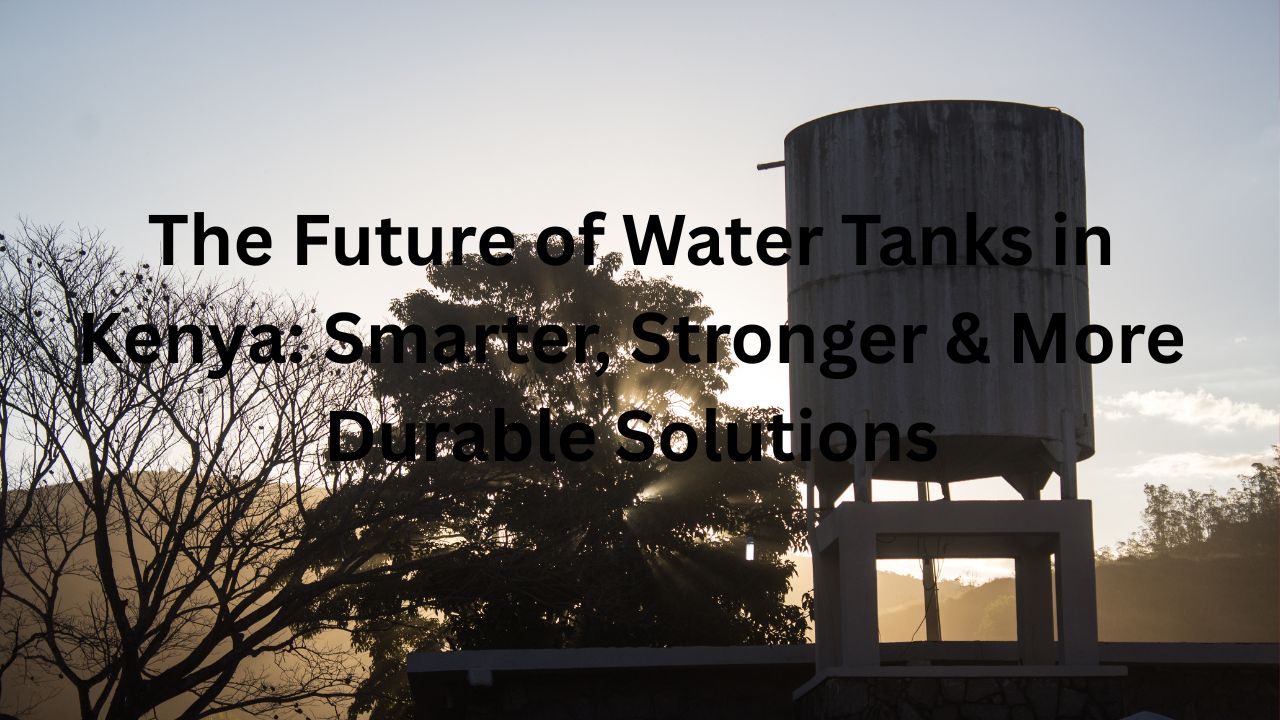
Water storage in Kenya is not a luxury. For millions of households, it is the difference between getting through a dry month comfortably and scrambling to find clean water every other day. Yet for years, many people have bought whatever tank was available at the lowest price — and then replaced it within five years when cracks appeared, the colour faded, or the water started tasting off.
That pattern is changing. Awareness around build quality, food-grade materials, and long-term value is growing fast. People are asking better questions before they buy, and the market for the best water tanks in Kenya is responding.
What Most Tanks Get Wrong From the Start
The problem with cheap tanks is rarely visible on day one. The issues show up after 18 months of Kenyan sun, temperature swings, and constant fill-and-drain cycles.
Common failures include:
- UV degradation — low-grade polyethylene breaks down under direct sunlight, causing discolouration and micro-cracks
- Wall thinning — tanks made with insufficient material thickness flex under pressure and collapse inward over time
- Non-food-grade linings — some tanks leach chemicals into stored water, particularly in high-heat conditions
- Poor lid and inlet seals — gaps allow insects, dust, and light inside, which accelerates algae growth
None of these are minor inconveniences. When your tank fails, it rarely fails slowly.
The Real Differences in Quality Water Tanks in Kenya
Not all water tanks in Kenya are manufactured to the same standard. The gap between a budget tank and a properly engineered one comes down to a few specific things.
Material Grade
The best tanks use virgin, food-grade polyethylene — not recycled or blended material. Virgin poly holds its structural integrity longer and does not introduce odour or contamination into the water. If a supplier cannot confirm the material grade, that tells you something.
Wall Thickness and Layer Construction
Higher-quality tanks are built with layered walls — often three to five layers — where each layer plays a role. An outer UV-stabilised layer protects against solar radiation. An inner food-safe layer keeps the water clean. Middle layers add rigidity.
Single-wall tanks cut costs during manufacturing. They also cut years off the tank’s lifespan.
UV Stabilisation
Kenya sits near the equator. UV exposure here is not a gentle European drizzle of sunlight — it is intense, year-round, and relentless in counties like Turkana, Machakos, or along the coast. A tank that is not properly UV-stabilised will show visible damage within two to three years.
How to Choose the Right Capacity for Your Needs
Capacity is one of the first decisions to get right. Going too small means constant refilling. Going too large means water sitting stagnant for weeks, which has its own hygiene implications.
A rough guide for Kenyan households:
- 500–1,000 litres — suitable for a small household with reliable water supply
- 2,000–5,000 litres — typical for a medium-sized home relying partly on rainwater harvesting or borehole supply
- 10,000 litres and above — farms, schools, commercial premises, and properties in water-scarce regions
For homes in Nairobi suburbs with relatively consistent municipal supply, a 2,000-litre tank as a backup is often enough. For a smallholder farm in Kitui or Makueni, you want to think much larger.
If you are sizing up for the first time, Jumbo Quality carries a range of capacities with guidance on what suits different property types and usage patterns.
Smarter Installation Makes a Difference
Even the best tanks in Kenya underperform when installed poorly. A few things worth knowing before you commit:
- Elevation matters — tanks mounted higher allow gravity to improve pressure without a pump
- Direct ground contact is a mistake — always use a raised platform or a proper tank stand to prevent base damage and moisture trapping
- Shade where possible — even UV-stabilised tanks last longer when not in direct sunlight all day
- First flush diverters — if you are harvesting rainwater, a diverter stops the first dirty run-off from your roof entering the tank
These are not complicated changes. But skipping them shortens the working life of any tank, regardless of brand.
What to Expect From a Tank That Actually Lasts
A well-made water tank in Kenya should give you 15 to 20 years of reliable service. Not five. Not ten if you are lucky — fifteen to twenty, with minimal maintenance beyond an annual clean-out.
The markers of a tank built to that standard:
- Manufacturer warranty of at least 10 years
- Clearly stated food-grade material certification
- Visible layer construction (ask to see a cross-section sample or product spec sheet)
- UV additive concentration listed in product specifications
If a supplier cannot answer those questions directly, it is worth asking why.
Jumbo Quality stocks tanks built to these standards, with sizing options across residential, agricultural, and commercial needs — and staff who will give you a straight answer on specifications rather than a sales pitch.