

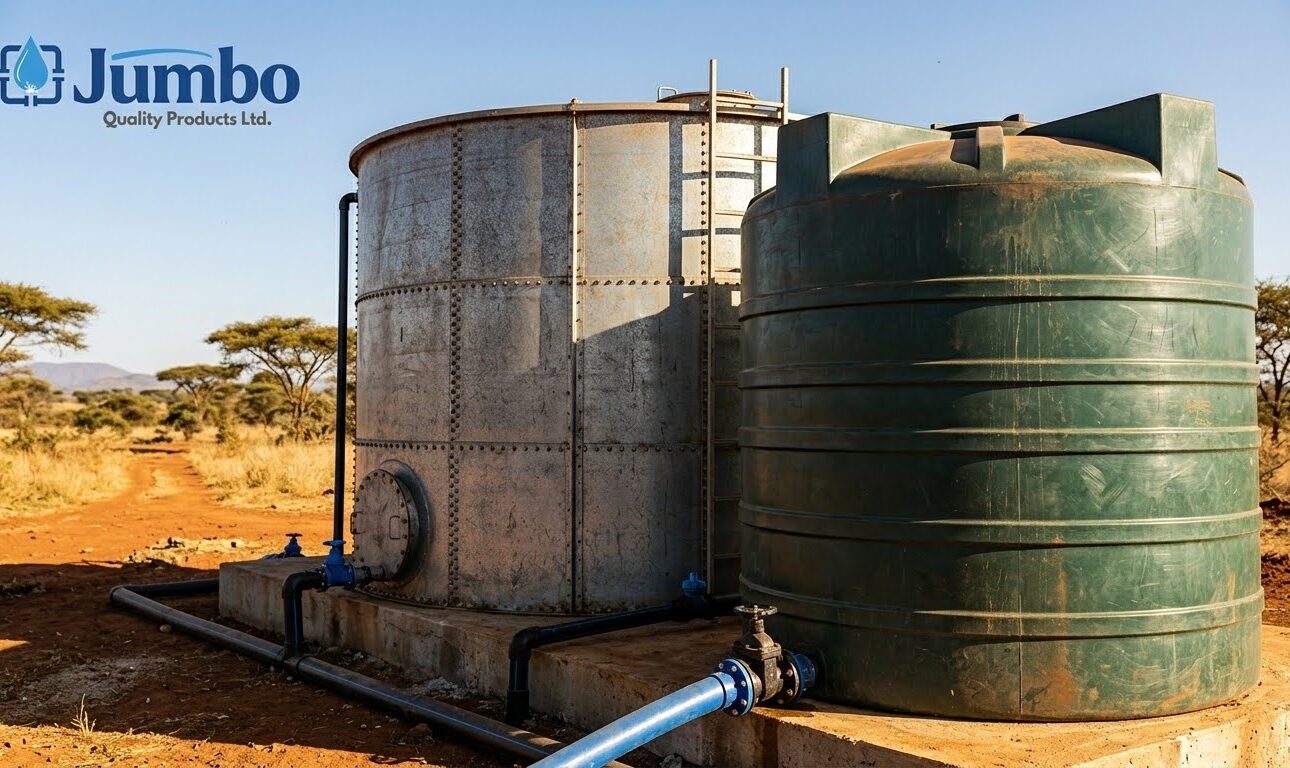
A hotel along the Mombasa coast switched from steel to plastic tanks three years ago after replacing rusted units twice within a decade. Salt air off the ocean had been eating through the galvanised coating faster than anyone expected. That kind of regional mismatch shows up constantly across Kenya, and it’s exactly why choosing among Tanks In Kenya means thinking about climate first, not just size or price.
Why plastic dominates the market
Polyethylene tanks make up the vast majority of what’s sold across the country, and the reason comes down to how well the material copes with Kenya’s conditions. It doesn’t rust, doesn’t corrode near the coast, and resists the intense equatorial sun far better than untreated materials, provided it’s been properly UV-stabilised during manufacture. Rotational moulding, the process most reputable manufacturers use, produces a seamless tank wall with no weak joints, which matters enormously in a country where tanks often sit outdoors year-round with no shelter.
Where steel and concrete still make sense
Steel hasn’t disappeared entirely. Large agricultural operations sometimes still use galvanised steel tanks for very high-capacity storage, though coastal regions like Mombasa and Malindi see faster corrosion thanks to salt-laden air, shortening their working life considerably compared to inland use. Concrete tanks, usually built in place rather than delivered, suit large-scale institutional or gravity-fed systems where the tank itself is essentially part of the building. For most households and small businesses though, neither offers a real advantage over a well-made plastic tank at a fraction of the cost.
How Kenya’s regional climate affects the choice
A tank performing well in Nairobi’s relatively mild climate might struggle differently in Garissa’s extreme heat or Eldoret’s cooler highland temperatures. Intense, sustained sun exposure in arid regions accelerates degradation in tanks without proper UV stabilisers, leading to brittleness and cracking years before a comparable tank would fail elsewhere. Coastal humidity brings its own challenges, mainly around material corrosion for anything metal-based, while highland areas see less UV stress but more temperature swings between day and night. Buyers researching Water tanks for sale in Kenya rarely think to ask about this regional detail, yet it affects lifespan more than almost anything else.
Sizing still depends on actual use
Material choice solves half the problem, size solves the other half. Our guide to choosing the right cylindrical tank capacity walks through matching household or business consumption to an appropriate size, which matters just as much for a plastic tank in Nakuru as it does anywhere else in the country. Farms weighing up large-capacity storage for irrigation or livestock face a slightly different set of considerations, covered in our guide to large-capacity tanks for agriculture.
What to check before buying
Regardless of region, Kenya Bureau of Standards certification remains the clearest signal that a tank’s material has actually been tested rather than just claimed to be food-grade and UV-resistant. Among Best water tanks in Kenya, the ones worth trusting share this certification along with a genuine written warranty, and pricing across sizes, including the widely searched 2000 litre water tank price in Kenya, tends to reflect that quality difference once buyers start comparing properly.
Final thoughts
Choosing among Tanks In Kenya isn’t just about picking a shape and a size off a shelf. Matching material to the actual climate a tank will sit in, coastal, highland, or arid, tends to be the difference between a tank still going strong after fifteen years and one that’s cracked within three.
FAQs
Is plastic better than steel for water tanks in Kenya?
For most households and businesses, yes, plastic resists corrosion and Kenya’s sun far better than steel, especially near the coast.
Does Kenya’s climate affect how long a water tank lasts?
Yes, intense sun in arid regions and salt air near the coast both affect material lifespan differently depending on the tank type.
What does UV stabilisation actually do?
It protects the plastic from cracking, fading, and becoming brittle under prolonged sun exposure, which is essential in Kenya’s climate.
Should I choose a different tank material depending on where I live in Kenya?
It’s worth considering. Coastal areas benefit from corrosion-resistant materials, while arid regions need strong UV protection above all else.