

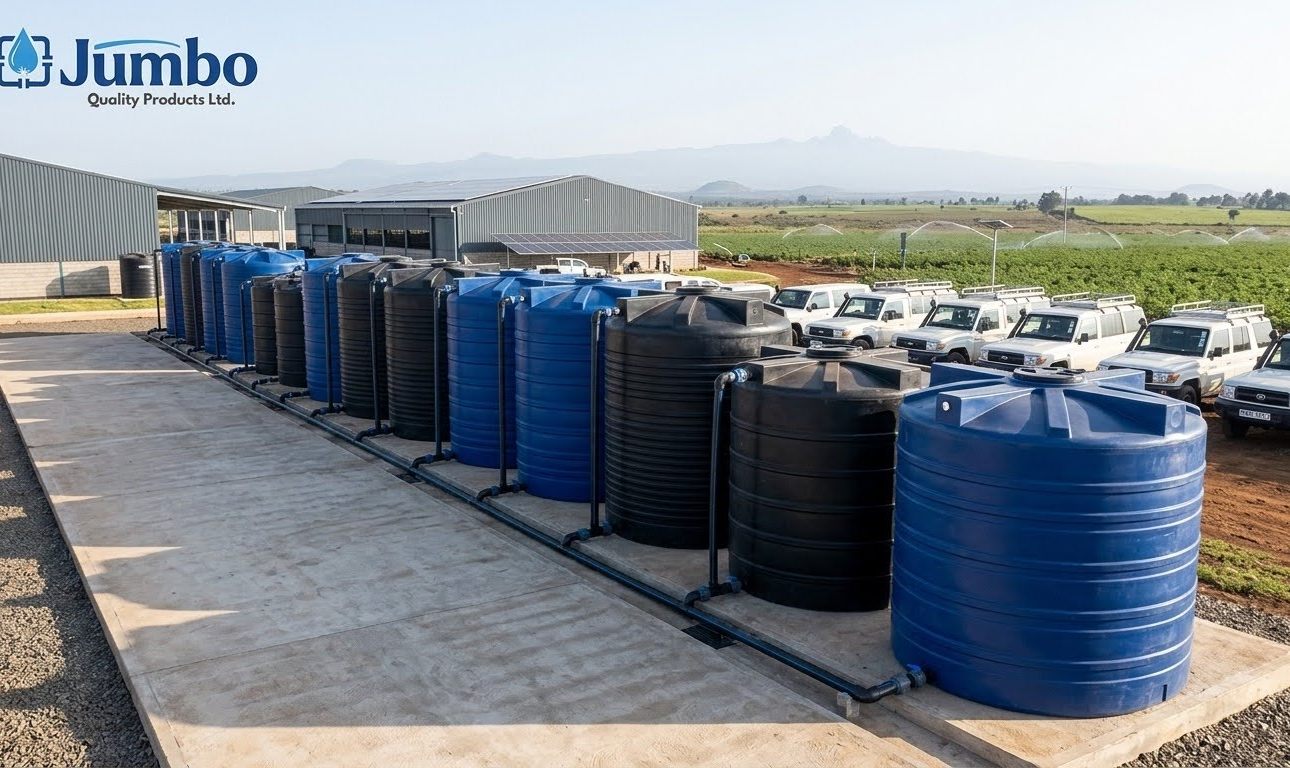
A farmer in Eldoret told us last season he’d bought three cheap tanks in five years, each one cracking or discolouring before its second dry spell was over. That’s the pattern we see constantly across Kenya, buyers chasing the lowest price tag and paying for it twice over within a few seasons. Finding the best water tanks in Kenya isn’t really about price at all, it’s about what happens to that tank after eighteen months in the sun.
Why so many tanks fail early
Kenya’s climate is brutal on plastic that isn’t built for it. Long stretches of direct sun degrade cheap, thin-walled polyethylene fast, causing brittleness, discolouration, and eventually cracks that show up right when water’s needed most. UV-stabilised material resists that breakdown, but plenty of tanks sold as budget options skip this step entirely to keep costs down, which is exactly how a tank meant to last two decades ends up replaced within two years.
What actually separates a good tank from a bad one
Wall thickness and construction method matter more than most buyers realise. Rotationally moulded tanks with a double-layer design tend to hold their shape under pressure and resist cracking far better than single-layer alternatives, and the inner layer being a different colour makes it easy to spot sediment building up before it becomes a hygiene problem. Certification from the Kenya Bureau of Standards is worth checking too, since it confirms the plastic is food-grade and safe for drinking water rather than repurposed industrial-grade material. Anyone comparing Water tanks for sale in Kenya should ask directly whether a tank carries KEBS certification before anything else.
Getting the size right the first time
Undersizing is the most common mistake we see. A household starts with a 1000 or 1500 litre tank, then finds themselves needing more within a year as usage grows. For most Kenyan households, a 2000 litre tank hits the balance between enough reserve and manageable footprint, though the 2000 litre water tank price in Kenya does climb with wall thickness and certification, which is exactly where cutting corners tends to show up later. Farms and commercial premises usually need to think several thousand litres beyond their current use, since retrofitting a bigger tank later almost always costs more than buying right the first time.
Choosing between the options on the market
Among Tanks For Sale Kenya, cylindrical shapes remain the most common choice for good reason, they distribute pressure evenly and hold up well whether installed above or below ground. Loft tanks suit properties with limited outdoor space, while larger cylindrical designs work better for farms managing irrigation or livestock needs. Our guide to choosing the right cylindrical tank capacity breaks down sizing by household and farm use in more detail.
What a proper warranty actually tells you
A tank backed by a genuine written warranty, not just a verbal promise, signals a manufacturer confident in their own material. Ten years is a reasonable benchmark for quality Tanks In Kenya, and a manufacturer offering that kind of guarantee has usually tested their product against the exact conditions Kenyan buyers deal with daily, sun, dust, and long dry seasons.
Final thoughts
The best water tanks in Kenya aren’t the cheapest ones on the lot, they’re the ones still holding clean water without a crack five years after installation. Checking wall construction, KEBS certification, and warranty length before buying saves far more than it costs upfront.
FAQs
What size water tank do I need for a home in Kenya?
Most households do well with 2000 to 3000 litres, though usage patterns and household size can push that higher.
Are plastic water tanks safe for drinking water in Kenya?
Yes, provided they’re made from food-grade polyethylene and certified by the Kenya Bureau of Standards.
How long should a good quality water tank last?
A well-made, UV-stabilised tank typically lasts between 15 and 30 years with basic maintenance.
What’s the difference between single-layer and double-layer tanks?
Double-layer tanks offer better durability and let you see sediment build-up through the inner wall, making maintenance easier.