

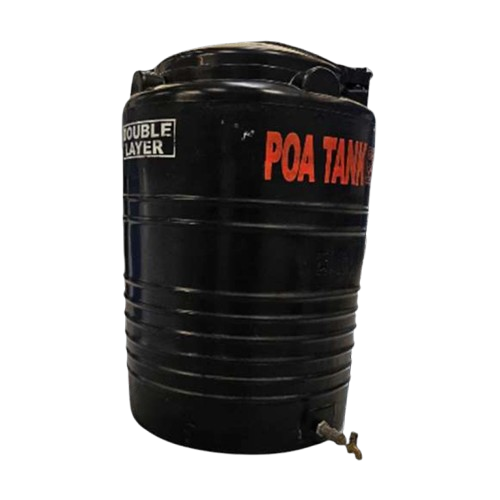
Most people buying a water tank in Kenya make the same mistake — they guess. They walk into a shop, pick what looks big enough, and only realise six months later that they’re rationing water during dry spells or running to the borehole every other week.
Getting the capacity right from the start saves money, saves stress, and saves the back-and-forth of buying a second tank later. Cylindrical water tanks Kenya households and businesses use come in a wide range of sizes — and the right one depends on more than just how many people live under your roof.
Why Tank Capacity Matters More Than the Tank Itself
Here’s something most suppliers won’t tell you upfront: the material and build quality of a tank matters, but so does matching the volume to your actual daily demand. A 500-litre tank sitting on the roof of a busy guesthouse in Nakuru is barely worth having. Equally, a 10,000-litre tank for a family of four in a city with reliable mains supply is overkill – and you’ll pay for every litre whether you use it or not.
The right capacity is the one that covers your daily needs plus a meaningful buffer for supply interruptions. In Kenya, where water cuts can last two to five days depending on your county, that buffer matters enormously.
How to Calculate the Right Tank Size for Your Situation
Before you get a quote or compare prices, work out your daily consumption. Here’s a straightforward way to do it:
- Domestic use: Average Kenyan household uses between 50 and 100 litres per person per day for drinking, cooking, washing, and basic hygiene
- Buffer days: Aim for at least 3–5 days’ worth of stored water, especially in areas with irregular supply
- Livestock or garden use: Add these separately – a kitchen garden in a dry area can use 200–400 litres per week depending on size
- Business or commercial use: Restaurants, schools, clinics, and rental properties all need a dedicated assessment — average consumption per head is higher and more consistent
A simple worked example: A household of 6 people using 80 litres per person daily needs 480 litres per day. Multiply that by 5 buffer days and you need a minimum of 2,400 litres of storage. That puts you squarely in the range where a 2,000-litre tank isn’t quite enough on its own, but two of them would give you solid coverage.
The 2000 Litre Water Tank: Kenya’s Most Popular Mid-Range Option
The 2,000-litre cylindrical tank is probably the most common size across Kenyan homes. It sits in that sweet spot – large enough to carry a family through a short supply interruption, small enough to fit into most compound layouts without needing a reinforced platform.
The 2000 litre water tank price Kenya buyers pay varies depending on the manufacturer, UV resistance rating, and wall thickness. As a general guide, prices tend to range from KSh 12,000 to KSh 18,000 for standard polyethylene tanks from reputable suppliers. Thicker-walled tanks at the upper end of that range are worth the extra spend – especially in direct sunlight, where cheaper tanks degrade faster and can develop cracks within three to four years.
When comparing prices, check:
- Wall thickness: Thinner walls mean shorter lifespan
- UV stabilisation: Tanks stored outside need this, full stop
- Food-grade certification: For drinking water, this is a non-negotiable
- Fitting positions: Inlet, outlet, and overflow positions affect installation flexibility
You can find certified options at Jumbo Quality with full specifications listed, which makes comparison simpler than going from shop to shop.
Industrial Water Tanks Kenya: When Domestic Sizes Simply Won’t Do
For factories, schools, apartment blocks, commercial farms, and institutions, the calculation shifts entirely. Industrial water tanks Kenya suppliers stock typically start at 5,000 litres and go up to 100,000 litres or beyond – some sites use multiple large tanks connected in a manifold system to give them both volume and redundancy.
The key differences between domestic and industrial cylindrical tanks are:
- Material: Industrial tanks are often high-density polyethylene (HDPE) or reinforced fibreglass, both of which handle higher pressures and temperature variation better than standard domestic-grade poly
- Inlet/outlet fittings: Industrial tanks come with larger-diameter connections to allow for faster fill rates and higher-flow distribution
- Footprint and installation: A 50,000-litre cylindrical tank needs serious groundwork – proper concrete slabs, correct soil assessment, and in some cases structural engineering sign-off
- Regulatory compliance: Certain sectors – food processing, healthcare, schools – must meet Kenya Bureau of Standards (KEBS) requirements for water storage
If you’re speccing a tank for a project that goes above 10,000 litres, it’s worth speaking to a supplier who handles industrial water tanks Kenya-wide and can advise on configuration, not just sell you a product off the shelf.
Installation: The Part People Rush and Later Regret
The tank itself is only part of the cost. Installation done right means:
- A level, load-bearing base (concrete preferred – soil-only platforms shift and crack over time)
- Correct inlet and outlet piping with proper shut-off valves
- An overflow pipe directed away from the building’s foundations
- A first-flush diverter if you’re collecting rainwater
- Secure anchoring in areas prone to strong winds
Cutting corners on installation is false economy. A tank that tips or cracks due to a poor base, costs far more to deal with than the few thousand shillings saved on proper groundwork.