

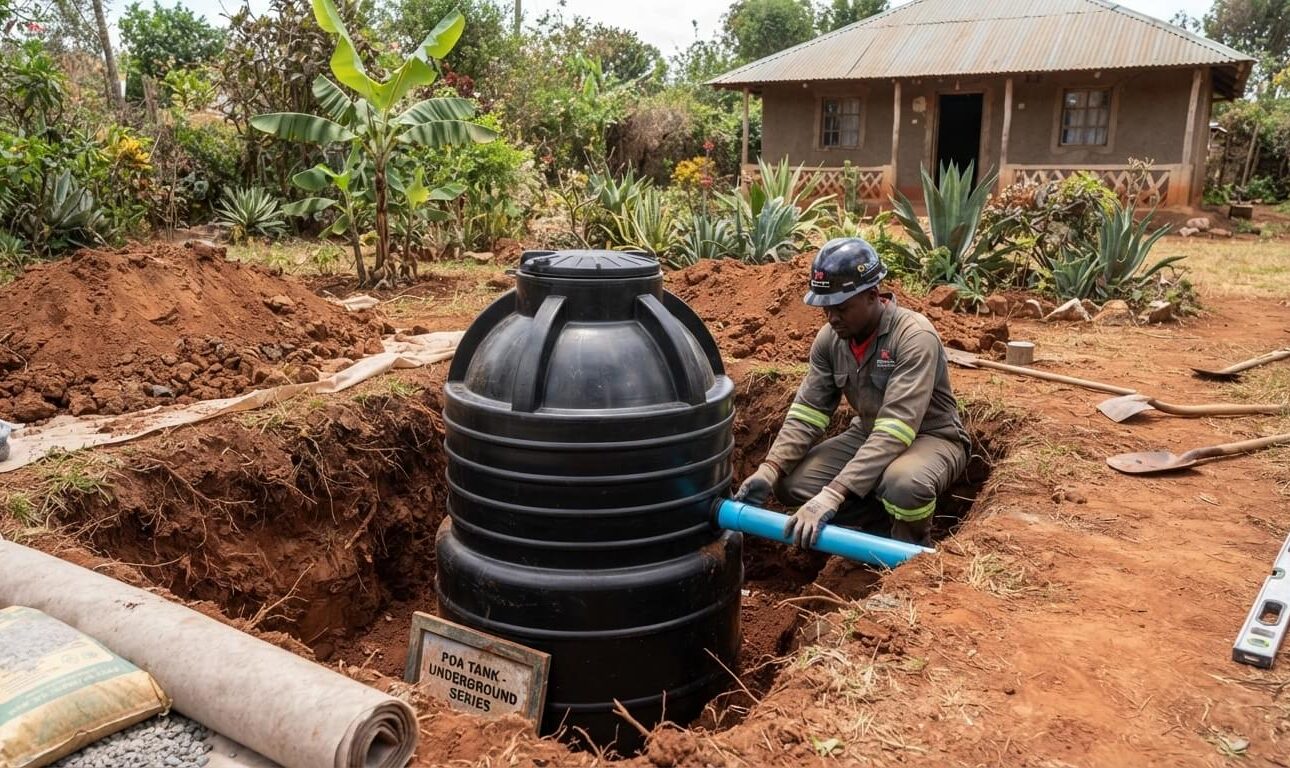
Burying a tank instead of standing it in the yard isn’t just about aesthetics, though that’s usually the first reason people mention. Underground water tanks in Kenya solve a specific set of problems that ground-level tanks don’t, and it’s worth understanding both the benefits and the extra installation work before choosing one.
Why people choose underground over ground-level
The most obvious benefit is space, an underground tank frees up yard area a ground-level cylindrical tank would otherwise occupy, which matters on a smaller plot. Water stored underground also stays noticeably cooler, since it’s shielded from direct equatorial sun, and it’s less exposed to algae growth that comes with light exposure on an above-ground tank.
There’s also a visual argument, some homeowners don’t want a large tank as the first thing visitors see on the compound, and burying it solves that without needing to build a screen or enclosure around a standing tank.
Poa Tanks Underground (BELL) Range
| Capacity | Current price (KSh) | Typical fit |
|---|---|---|
| 1000L | 26,042.90 | Small household or supplementary storage |
| 2300L | 53,266.85 | Family home, moderate usage |
| 3500L | 80,556.45 | Larger household or shared compound |
| 4500L | 103,320.10 | Largest plastic underground option currently listed |
What installation involves
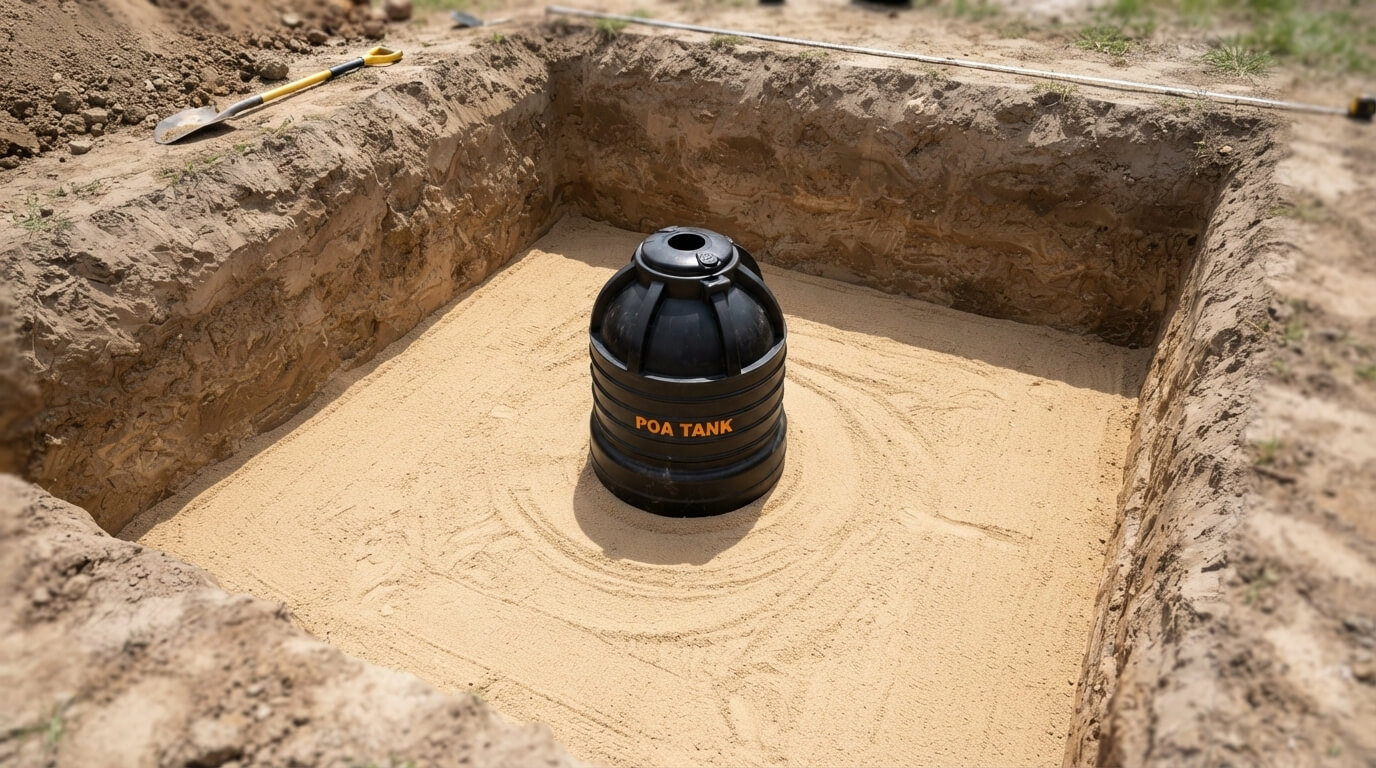
Unlike a ground-level tank that arrives and sits on a prepared base, an underground tank needs a pit excavated to the tank’s dimensions plus working room around it, a firm, level base at the bottom, usually a layer of sand or a thin concrete bed, and careful backfilling once the tank is in place so it isn’t crushed or shifted unevenly by the surrounding soil.
Groundwater is the detail people miss most often. In areas with a high water table, an empty tank can float or shift before it’s filled and backfilled properly, which is why sequencing matters as much as the tank itself.
Read the groundwork requirements first
The installation guide covers the excavation and backfilling sequence in more detail, worth reading in full before excavation starts rather than partway through. It’s also worth checking the warranty terms, since improper installation can affect what’s covered if a problem shows up later.
A step-by-step view of the installation
The specifics depend on your site and the tank size, but the sequence is broadly the same. Understanding it helps you judge whether a contractor’s quote and timeline are realistic.
- Survey the site: check for underground pipes, cables, tree roots and the depth of the water table before any digging begins.
- Excavate the pit: wider and deeper than the tank so there’s room to work and to backfill evenly around the shell.
- Prepare the base: a level bed of compacted sand or a thin concrete pad so the tank sits evenly and doesn’t settle unevenly.
- Lower the tank into place and check it’s level before anything is connected.
- Connect the inlet, outlet and overflow, and fit the access cover at ground level.
- Fill the tank with water as you backfill, so the pressure inside balances the soil pressure outside.
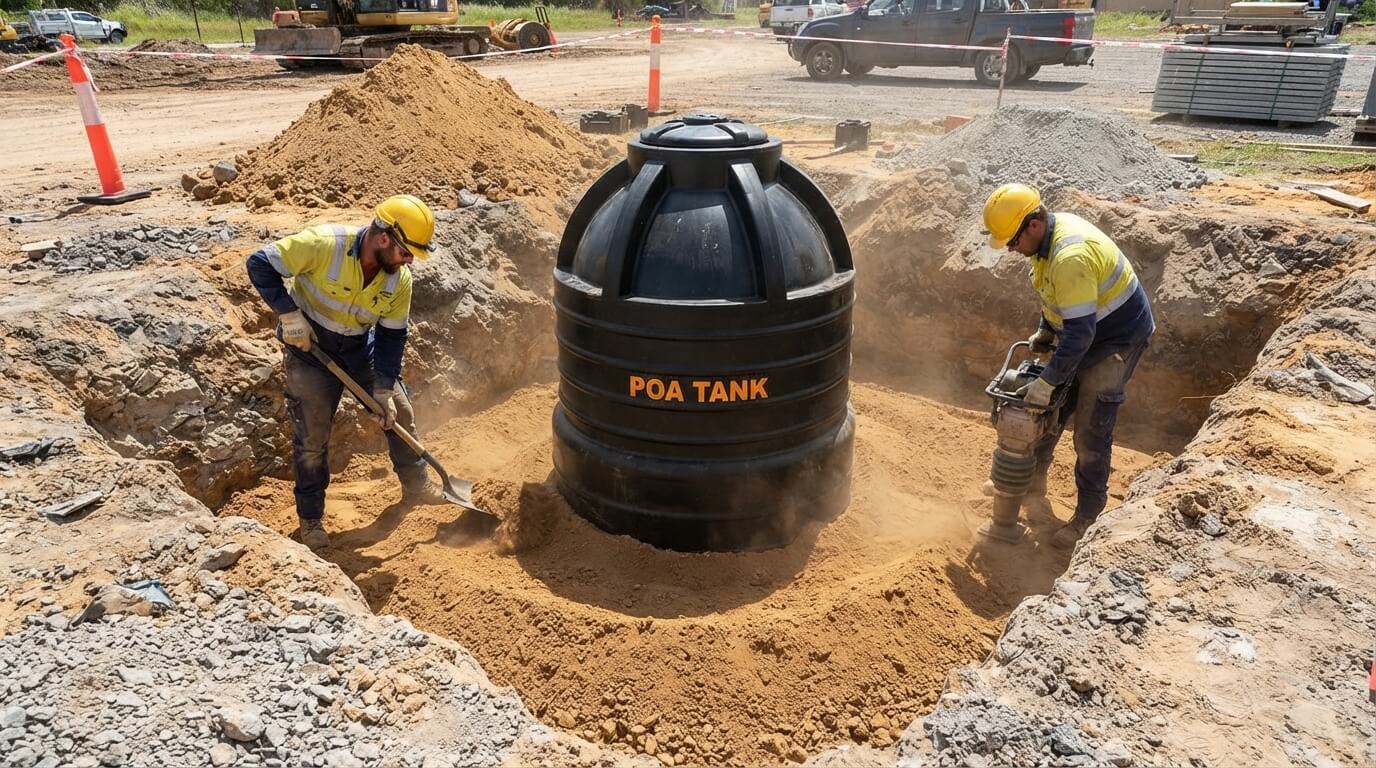
- Backfill in layers and compact each one gently, avoiding heavy machinery close to the tank.
The groundwater question
Groundwater is the single biggest risk with underground tanks, and it’s the one homeowners are least likely to think about. In areas where the water table is high, or where the soil floods after heavy rain, an empty tank can be pushed upwards by the surrounding water, a bit like an upturned bucket floating in a basin. That’s why the sequence of filling and backfilling matters, and why a site assessment is worth doing before you commit.
If your plot has known drainage problems, talk to a professional about additional measures such as extra ballast, a drainage layer around the pit, or a different location on the plot. It’s a much cheaper conversation to have before the excavator arrives than after.
Overground or underground: making the final call
Underground is worth the extra effort when space is at a premium, when you want cooler water, or when appearance matters. It’s less compelling if your plot has a high water table, rocky ground or poor access, since the excavation costs can outweigh the benefits.
If you’re undecided, compare the options side by side. The cylindrical tanks range covers overground needs across a wide range of sizes, and the underground range covers buried ones. For larger volumes than the BELL range offers, read our guide to 10,000 litre underground storage. And before you decide, read the warranty terms so you understand what installation conditions apply to your chosen tank.
Questions to ask any installer before work begins
Whoever you hire, get clear answers before excavation starts. Ask how they will deal with groundwater on your plot, what base and backfill materials they’ll use, how the tank will be filled during backfilling, and where the access cover will sit. Ask for a written quote that separates excavation, materials and labour, and confirm who is responsible if the tank is damaged during installation.
Also ask whether they’ve installed the same kind of tank before, and whether they can show you the results. A contractor who is comfortable with those questions is usually one who has done the job properly before. If you’d like a second opinion on your site, get in touch before you commit.
Costs to plan for beyond the tank price
Underground tanks always involve more than the purchase price. The current BELL range runs from KSh 26,042.90 for 1000 litres to KSh 103,320.10 for 4500 litres, but you should budget separately for excavation, the base bed, backfill material, plumbing, an access cover and a pump if the water needs to come up to the house. Each of those items varies with your plot, and the total can be a substantial multiple of the tank price on difficult ground.
Ask for an itemised quote and compare it line by line, rather than accepting a single lump sum. Check whether soil removal is included, who supplies the sand or concrete, and what happens if the excavation hits rock or water. Add a contingency of around ten to twenty percent for surprises, since underground work rarely goes exactly to plan. That may sound cautious, but it’s far easier to have unused contingency than an unfinished pit. To see the full range and current prices, browse the underground tanks page.
Related Reading
If burying a tank doesn’t suit your plot, compare cylindrical water tanks in Kenya and other water storage tanks in Kenya.
FAQs
What’s the biggest underground water tank Poa Tanks sells?
4,500 litres, currently listed at KSh 103,320.10, in the BELL underground range.
Is underground water cooler than a ground-level tank?
Yes, being shielded from direct sun keeps the water noticeably cooler and reduces the conditions that encourage algae growth.
What’s the biggest installation risk with underground tanks?
Groundwater and improper backfilling. An empty tank in a high water table area can shift before it’s properly settled and filled.
Does an underground tank cost more to install than a ground-level one?
Usually, yes, since excavation and careful backfilling add cost that a ground-level tank on a prepared base doesn’t need.
Considering an Underground Tank?
Browse the full BELL underground range and read the installation guide before you dig.
Prices shown are correct as of the publish date and are subject to change. Confirm current pricing and stock directly with Poa Tanks before ordering.