


Most people size a water tank by picking a number that feels big enough, then hoping. Working out how to choose the right water tank size properly takes maybe ten extra minutes, and it saves you from either running dry mid-week or paying for litres you never use.
Start with actual daily usage, not a guess
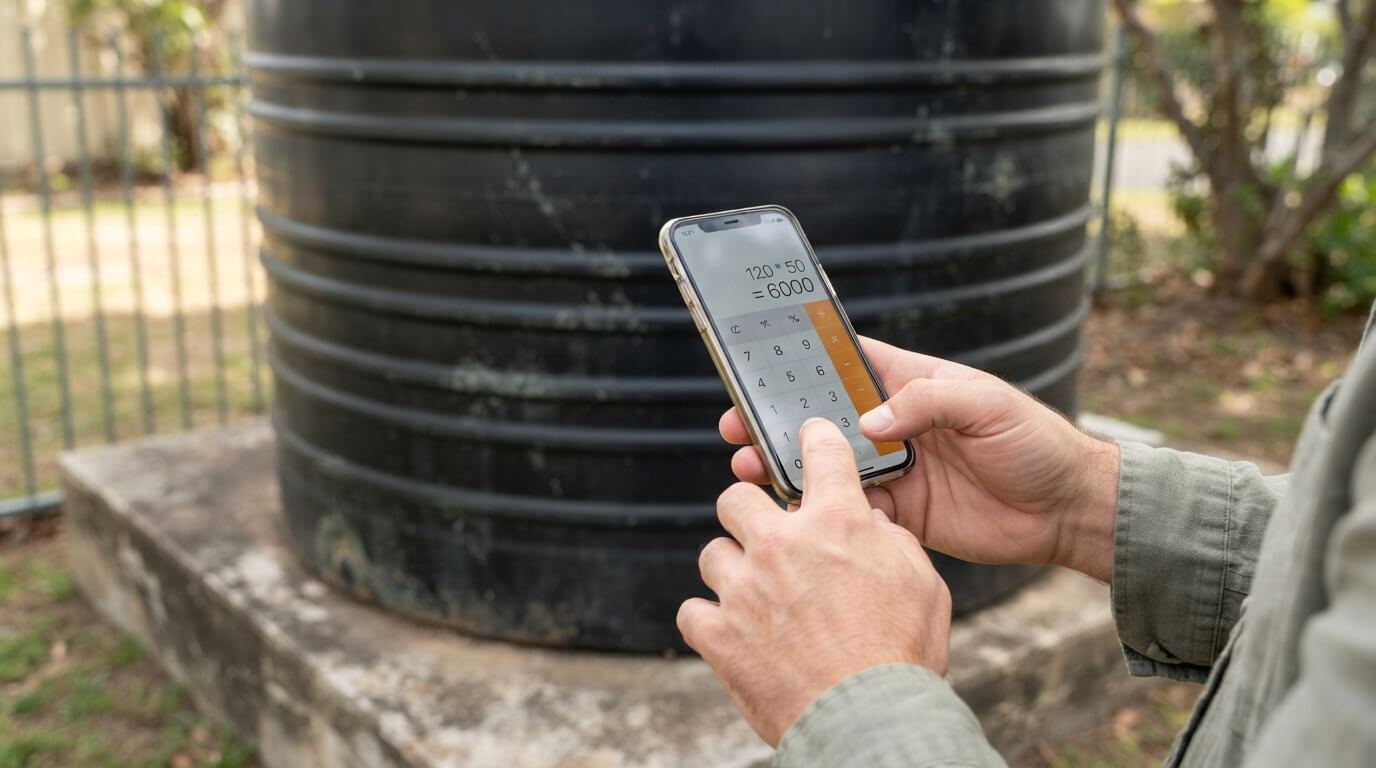
The average person in a Kenyan household uses somewhere in the range of 50 to 100 litres a day depending on habits and fixtures, cooking, laundry, and bathing being the biggest swings. Multiply that by the number of people in the house, then by how many days of buffer you want if supply is interrupted, and you’ve got a real target rather than a guess.
Poa Tanks’ water usage calculator does this arithmetic for you, worth running before you settle on a capacity, particularly if your household has an unusual pattern, a home business, a large garden, or livestock.
Factor in how reliable your supply is
A household on stable mains water can size closer to a few days of buffer. A household relying partly on a borehole that runs intermittently, or an area with regular rationing, should size up meaningfully, since the tank is doing more of the real supply work rather than just covering gaps.
Rough Sizing Guide by Situation
| Situation | Suggested starting size | Why |
|---|---|---|
| 1-2 people, stable mains supply | 1000L-1220L | Covers several days without excess |
| Family of 4-6, occasional interruptions | 2500L-3000L | Comfortable buffer without a large footprint |
| Family with unreliable borehole | 4000L-5000L | Tank is doing more day-to-day supply work |
| Apartment block or shared compound | 10,000L+ | Splits demand across multiple households |
Then check what your space can take
Usage tells you the ideal size, but your plot and roof or stand decide what’s realistic. A ground-level cylindrical tank needs floor space and a solid base; a loft tank needs a structure rated for the filled weight overhead, and an underground tank needs a spot that can be excavated. It’s better to size down slightly to fit a realistic installation than to order a tank that can’t be sited properly.
A worked example: sizing for a family of five
Numbers make this easier, so here’s a worked example. Suppose five people live in a household, using roughly 75 litres each per day. That’s 375 litres a day. If mains supply is interrupted for up to three days at a time, you’d want about 1,125 litres of buffer, just to cover normal use during an outage.
Add a margin for the days the tank hasn’t filled completely, guests, laundry surges and garden watering, and you’re looking at a working requirement of around 2,000 to 2,500 litres. That lands squarely in the range where a 2000 litre tank (KSh 18,782.40) or a 2500 litre tank (KSh 22,373.65) makes sense, and it shows why a 10,000 litre tank would be considerable overkill for this household. The example won’t match every home, but it shows the method: daily use times people times days of buffer, plus a margin.
Special cases that change the maths
Some households don’t fit the standard pattern, and it’s worth flagging the main ones so they don’t catch you out.
- Gardens and small farms: irrigation can use more water than the house itself, so size for the garden separately.
- Home businesses: a salon, a laundry, a small restaurant or a car wash uses far more water than a household of the same size.
- Livestock: animals drink more than most people expect, especially in hot weather.
- Shared compounds: several households drawing from one tank means adding their usage together, not averaging it.
- Intermittent supply: if mains water arrives only a few hours a week, the tank needs to hold what you’ll use between those windows.
Choosing between tank types once you know the size
Once you’ve settled on a capacity, the next decision is the type. A ground-level cylindrical tank is the simplest and covers most needs. A loft tank makes sense if ground space is tight or you want gravity-fed pressure, though the roof or stand has to carry the full weight. An underground tank frees up space and keeps water cooler, at the cost of more groundwork.
Either way, check the current price and the base requirements before ordering, and read the installation guide first. If you’re torn between two sizes, the cheaper mistake is usually to go slightly larger, since a tank that’s a bit too big costs a little more, while a tank that’s too small costs you every time supply is interrupted.
Reviewing your choice after installation
Sizing isn’t a one-time decision. After a few months with the new tank, note how quickly it empties during interruptions and how often it fills completely. If it regularly runs low, your demand is higher than you estimated, and adding a second tank is often simpler than replacing the first. If it’s always full, you may have oversized, though that’s a much cheaper problem to live with.
Households also change: a new baby, a tenant, a garden, a home business. Revisit the numbers whenever your circumstances shift, and use the water usage calculator again. A few minutes of arithmetic now and then keeps your storage matched to your life.
Mistakes to avoid when sizing a tank
The most frequent sizing mistake is copying a neighbour. Their household, supply and habits are different from yours, and a tank that suits them may be far too large or too small for you. The second is sizing purely on budget, choosing the cheapest tank that seems adequate and discovering during the first long outage that it isn’t. The third is forgetting the tank can never be used to its full capacity in practice, since the outlet sits slightly above the base and the last portion is difficult to draw.
Another common error is ignoring how the tank will refill. If your supply is slow, a large tank may take days to fill and spend much of its life half-empty, which defeats the purpose. Finally, people often forget that bigger tanks need bigger bases. A jump from 2000 to 5000 litres more than doubles the load on the ground, so check the installation guide before you commit. Avoiding these mistakes is far cheaper than fixing them, and it’s the difference between a tank that quietly does its job and one that becomes a recurring source of frustration.
Related Reading
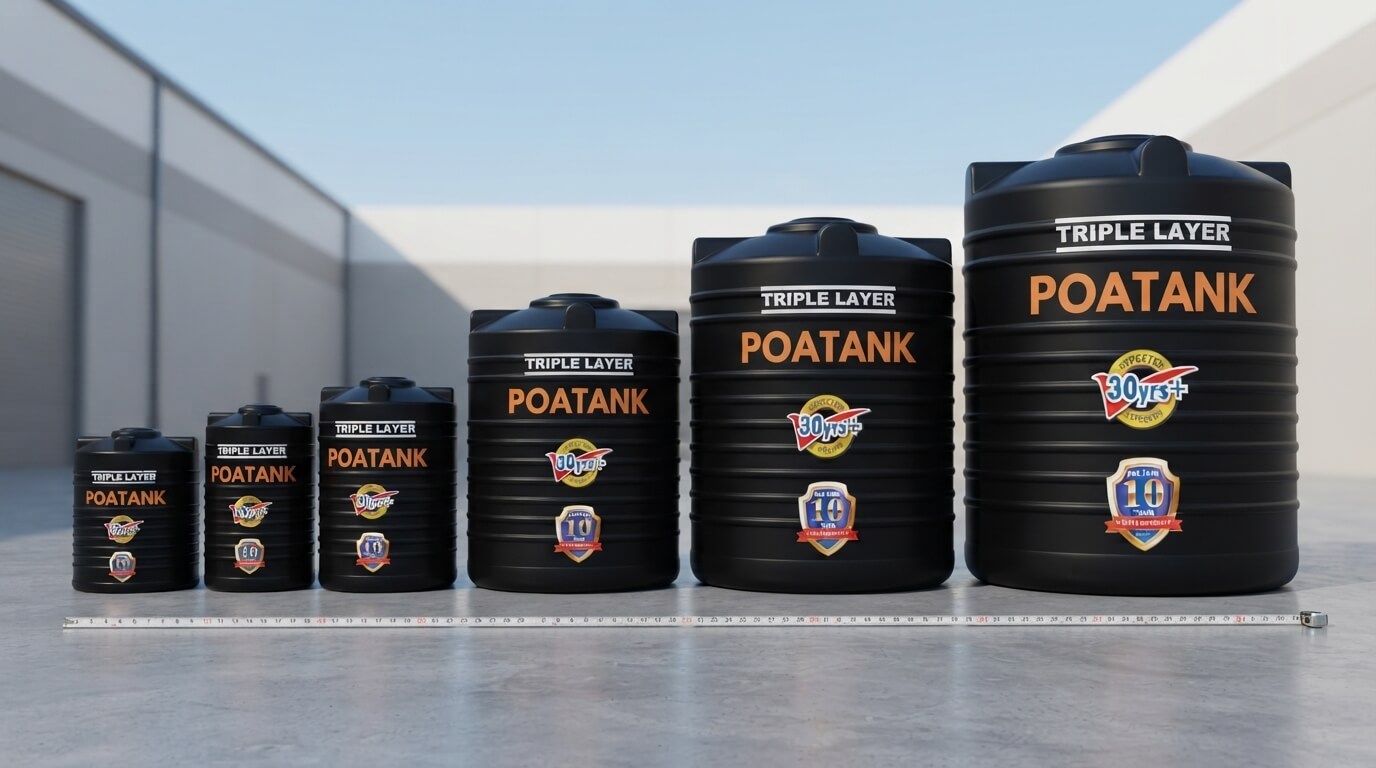
Once you have a size in mind, you can browse cylindrical water tanks in Kenya, loft tanks in Kenya or the wider Poa Tanks range.
FAQs
How much water does an average household use per day in Kenya?
Roughly 50 to 100 litres per person per day, depending on habits and fixtures. Multiply by household size and desired buffer days for a starting target.
Should I size for normal use or worst-case shortages?
A bit of both, size for comfortable daily use, then add a buffer of a few days based on how often your supply is interrupted.
Is it better to oversize or undersize a water tank?
Slight oversizing is usually the safer error, since an undersized tank means running dry during exactly the interruptions it’s meant to cover.
Does tank shape affect how I should size it?
Not the litres you need, but it affects what fits your site. Ground space, roof structure, and excavation potential all narrow down which shape is realistic.
Work Out Your Exact Tank Size
Use the water usage calculator to match your household’s real usage to the right capacity before you order.
Usage figures are general estimates for planning purposes. Actual household consumption varies; confirm current tank pricing directly with Poa Tanks.