

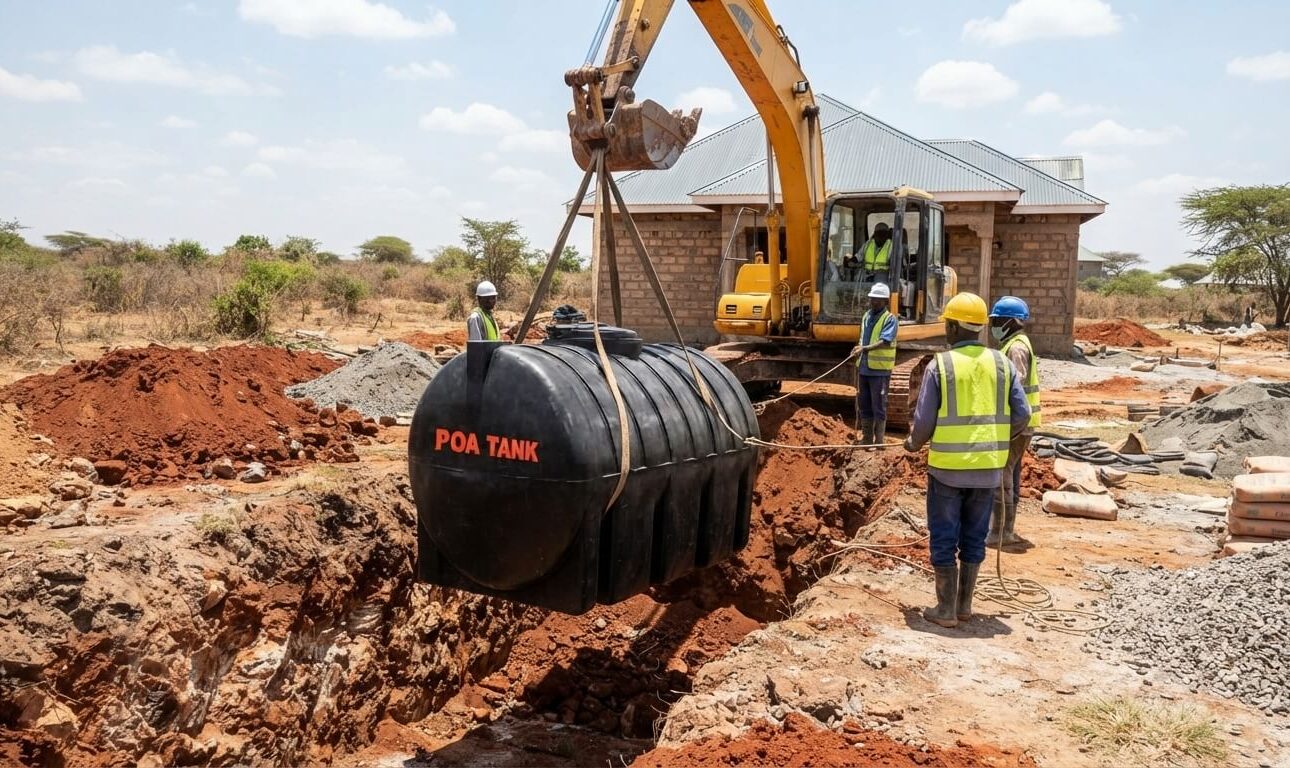
Septic tank shopping tends to happen under a bit of time pressure, usually because a pit latrine or an old tank has just failed. Knowing actual septic tank prices in Kenya before that moment arrives makes the decision a lot less stressful when it does.
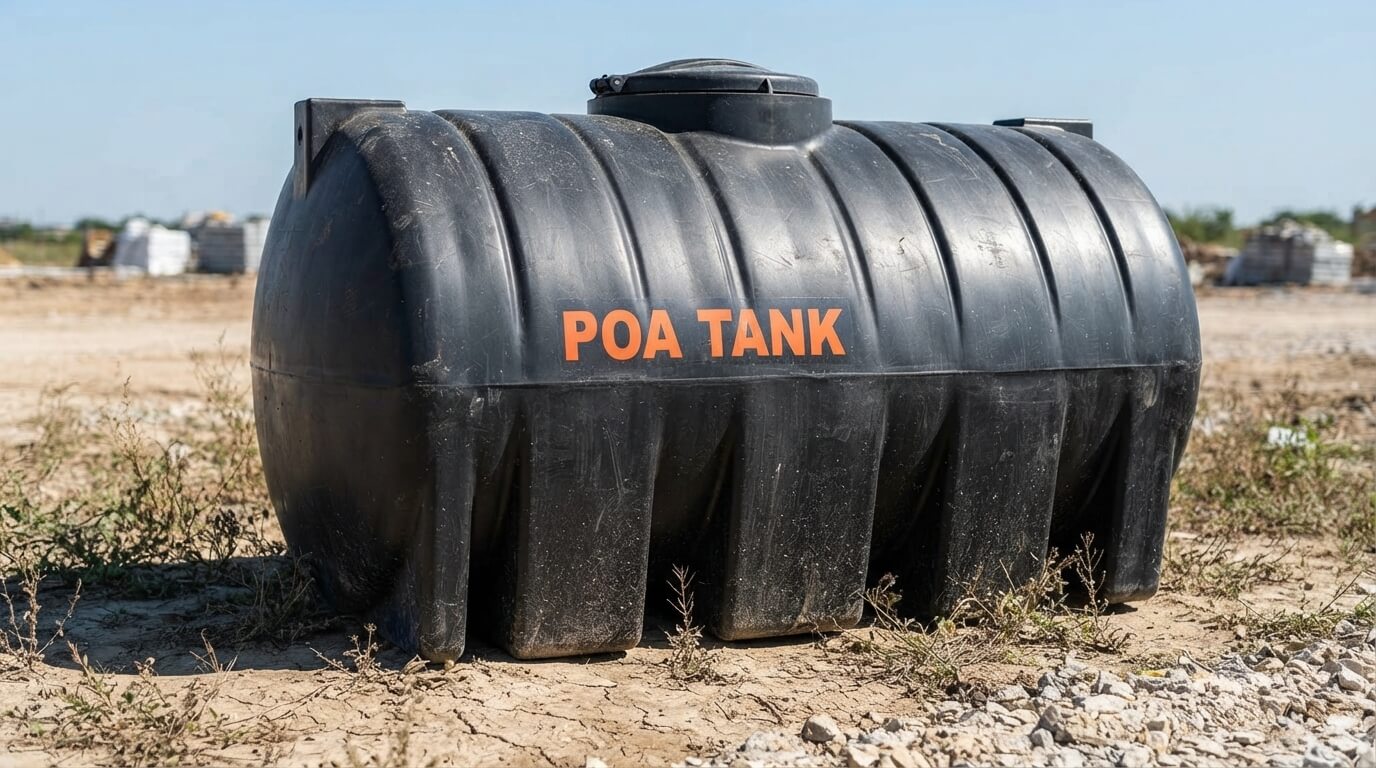
What a septic tank costs right now
Poa Tanks currently lists the 2000 Litre Horizontal Septic Tank at KSh 50,378.25, down from KSh 77,505. It’s built horizontally rather than vertically, a shape that sits low and long underground rather than tall, which suits a septic tank’s role better than a standing cylindrical shape would.
That’s currently the only septic tank size on the Poa Tanks range, so for most residential setups it’s less a question of comparing sizes and more a question of whether one 2000 litre unit covers your household, or whether you need to plan for two.
Is 2000 litres the right size for your household?
A single-family home with a normal number of occupants is usually well served by one 2000 litre septic tank, paired with a properly sized soakaway or drainage field. Where it gets tighter is a larger household, a rental compound with several units, or a property where the water table or soil type limits how well a soakaway drains.
What Typically Suits Different Household Sizes
| Household type | Typical need | Notes |
|---|---|---|
| Single family, 4-6 people | One 2000L tank | Usually sufficient with a properly sized soakaway |
| Larger family or extension | One tank, closer monitoring | May need more frequent emptying rather than a bigger tank |
| Rental compound, multiple units | Two tanks or a larger custom build | Worth getting a professional assessment before installing |
| Commercial premises | Custom-sized system | Usually outside standard residential tank sizing |
What affects the final cost
The tank itself is a fixed, known cost, KSh 50,378.25 at today’s price. What varies a lot more is everything around it, excavation depth and soil type, the size and construction of the soakaway or drainage field, and how far the tank sits from the house, since pipe runs add up in materials and labour.
Soil that’s rocky or has a high water table costs more to excavate and may need a different drainage approach entirely, which is worth having assessed on site before you commit to a specific layout.
Read the full septic tank guide before you buy
For a deeper look at sizing, installation sequencing, and what to check before the tank goes in the ground, the full guide to buying a septic tank in Kenya covers it in more detail than fits here. It’s also worth reading the general installation guide, since underground tanks of any kind have different groundwork requirements from a tank sitting above ground.
How a septic system works
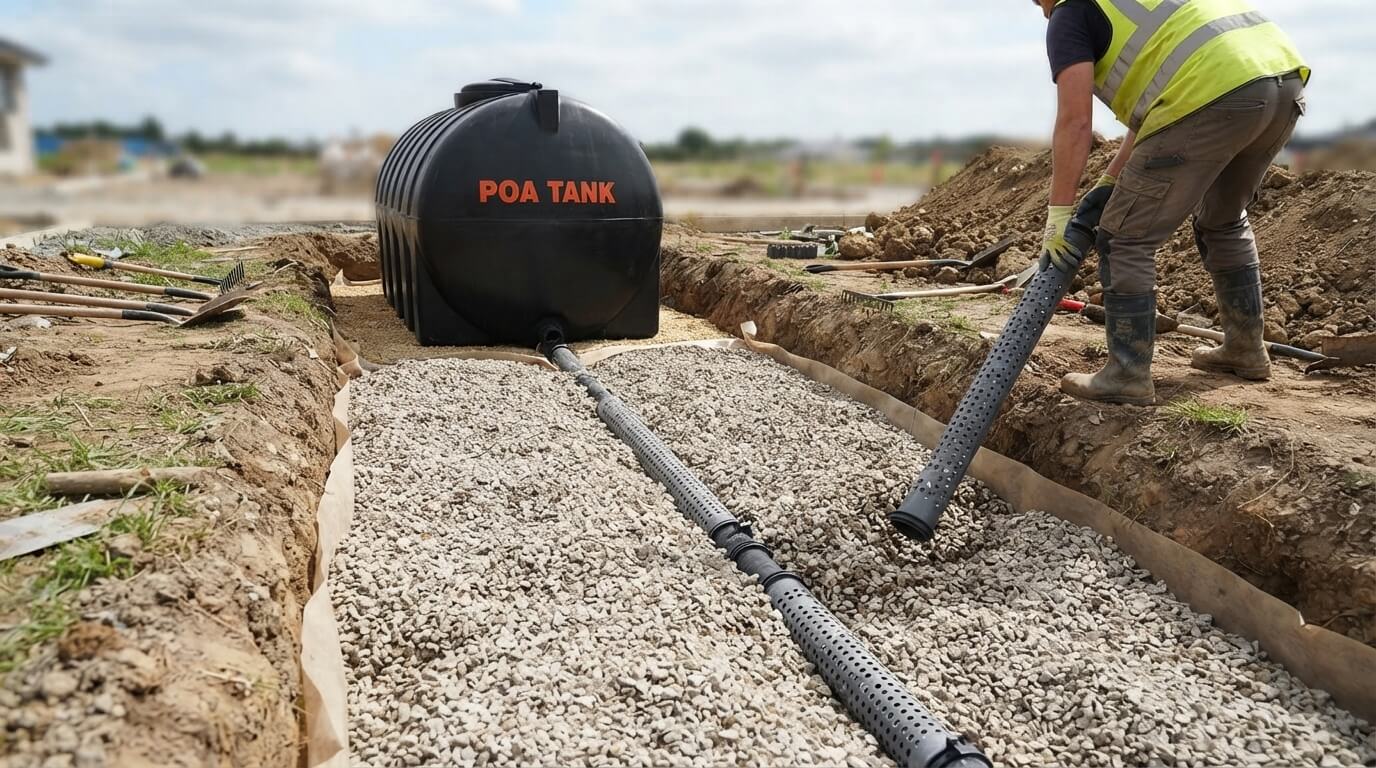
A septic tank isn’t a storage tank for waste so much as a settling chamber. Wastewater flows in, solids sink to the bottom as sludge, oils and lighter material float to the top as scum, and the relatively clear liquid in the middle flows out to a soakaway or drainage field where the soil finishes the treatment. Bacteria inside the tank break down some of the solids over time, but not all of them, which is why a septic tank still needs to be emptied periodically.
That process is why the tank alone doesn’t make a working system. Without a correctly sized soakaway, the liquid has nowhere to go, and the tank backs up. When you budget for septic tank prices in Kenya, you’re really budgeting for three things: the tank, the drainage, and the ongoing emptying.
The hidden costs people forget
The tank price at KSh 50,378.25 is the cost everyone sees. The costs that surprise people are the ones around it.
- Excavation: the pit needs to be deeper and wider than the tank, and the cost depends on soil type and whether machinery can reach the site.
- Soakaway or drainage field: usually the most variable cost, since it depends on how well your soil drains.
- Pipework: the run from the house to the tank, and from the tank to the soakaway, adds materials and labour.
- Inspection and access chambers: you’ll want a way to check and empty the tank without digging it up.
- Permits or approvals: depending on your county and plot, there may be local requirements to check before you dig.
Looking after a septic tank once it’s in
A well-installed septic tank should give years of trouble-free service, but it does depend on how it’s treated. Be careful what goes down the drain: bleach in large quantities, wet wipes, cooking fat and hygiene products can all upset the biological process or clog the outlet. Keep heavy vehicles off the soakaway area, since compacting the soil reduces its ability to drain.
Have the tank emptied when the sludge layer builds up, usually every few years for a typical household, but more often for a larger one. Signs it’s due include slow drains, gurgling, and unpleasant smells around the tank or soakaway. Ignoring those signs is how a manageable job turns into an expensive one.
For the buying side, read the detailed septic tank buying guide and check the warranty terms before installation, so you know what conditions the installation must meet to keep cover valid.
Choosing between one large tank and a two-stage system
Some households and compounds benefit from a two-stage setup, where wastewater flows through one tank and then a second before reaching the soakaway. The first tank captures most of the solids and the second gives further settling time, so cleaner liquid reaches the drainage field and the soil is less likely to clog. It costs more upfront, since you buy and install two tanks, but it can extend the life of the soakaway and reduce how often things need attention.
For a typical single-family home, one correctly sized 2000 litre septic tank at KSh 50,378.25 with a well-built soakaway is usually adequate. For larger households, rental compounds or sites with poor soil drainage, it’s worth asking a qualified installer whether a two-stage design makes sense. Get the recommendation in writing, with the reasoning, and check the warranty conditions for the tank you choose so the installation meets them.
Related Reading
Once the septic side is sorted, you can look at water storage tanks in Kenya for your clean water supply, or compare Poa Tanks products more widely.
FAQs
How much does a septic tank cost in Kenya right now?
KSh 50,378.25 at Poa Tanks for the 2000 litre horizontal septic tank, down from KSh 77,505. Confirm the live price before ordering.
Is a 2000 litre septic tank big enough for a family home?
Usually, yes, for a typical single-family household with a properly sized soakaway. Larger households or shared compounds may need more than one unit.
Does the septic tank price include installation?
No, the listed price covers the tank itself. Excavation, the soakaway or drainage field, and pipe runs are a separate cost that varies by site.
What affects septic tank installation cost the most?
Soil type and excavation depth, plus the size of the drainage field needed. Rocky ground or a high water table both push the cost up.
Ready to Order Your Septic Tank?
KSh 50,378.25 for the 2000 litre horizontal septic tank, backed by Poa Tanks’ warranty and nationwide delivery.
Prices shown are correct as of the publish date and are subject to change. Confirm current pricing and stock directly with Poa Tanks before ordering.