

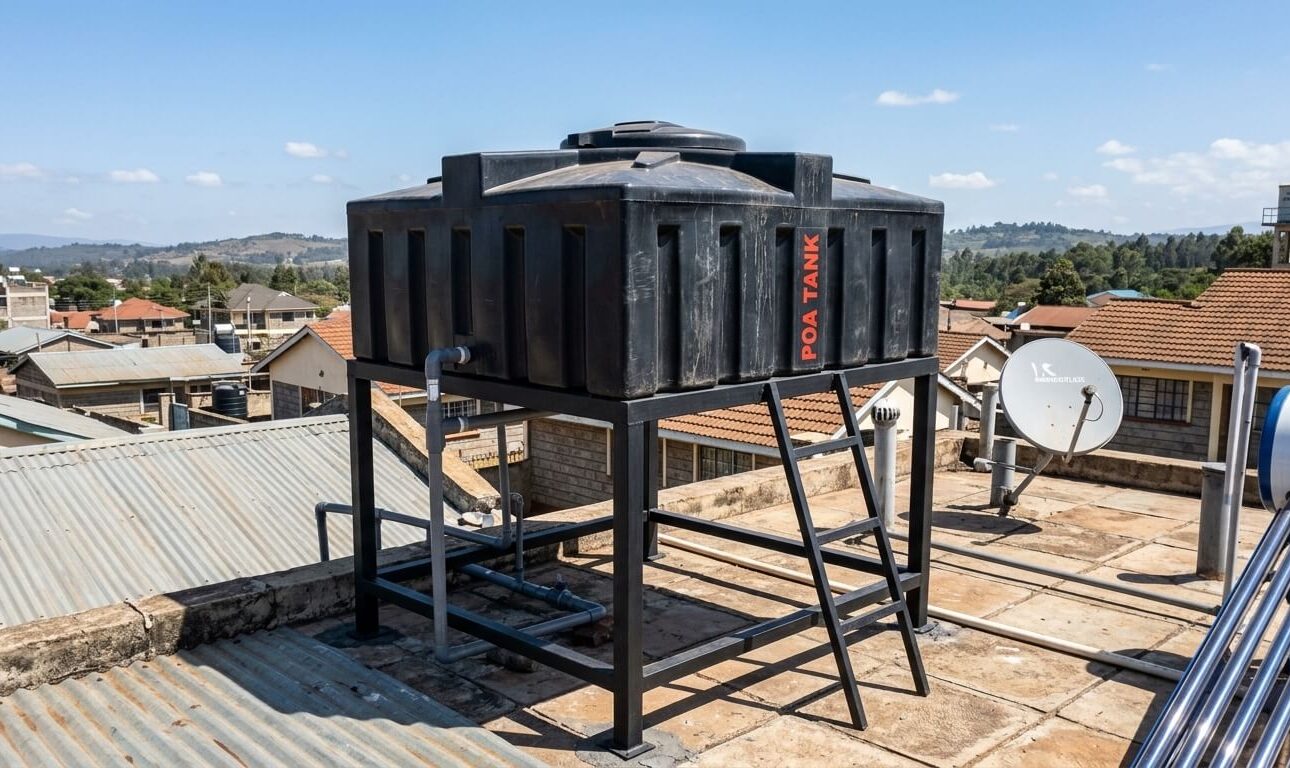
A customer once asked us to fit a loft tank on a roof that, once full, would have added over a tonne of extra weight to a structure that was never built for it. He wasn’t wrong to want one, he just hadn’t thought through what a full tank actually weighs. Loft tanks in Kenya solve a genuine problem for a lot of homes, but they’re not automatically the right fit for every roof, and it’s worth understanding exactly what they need before you commit to one.
What a Loft Tank Actually Gives You
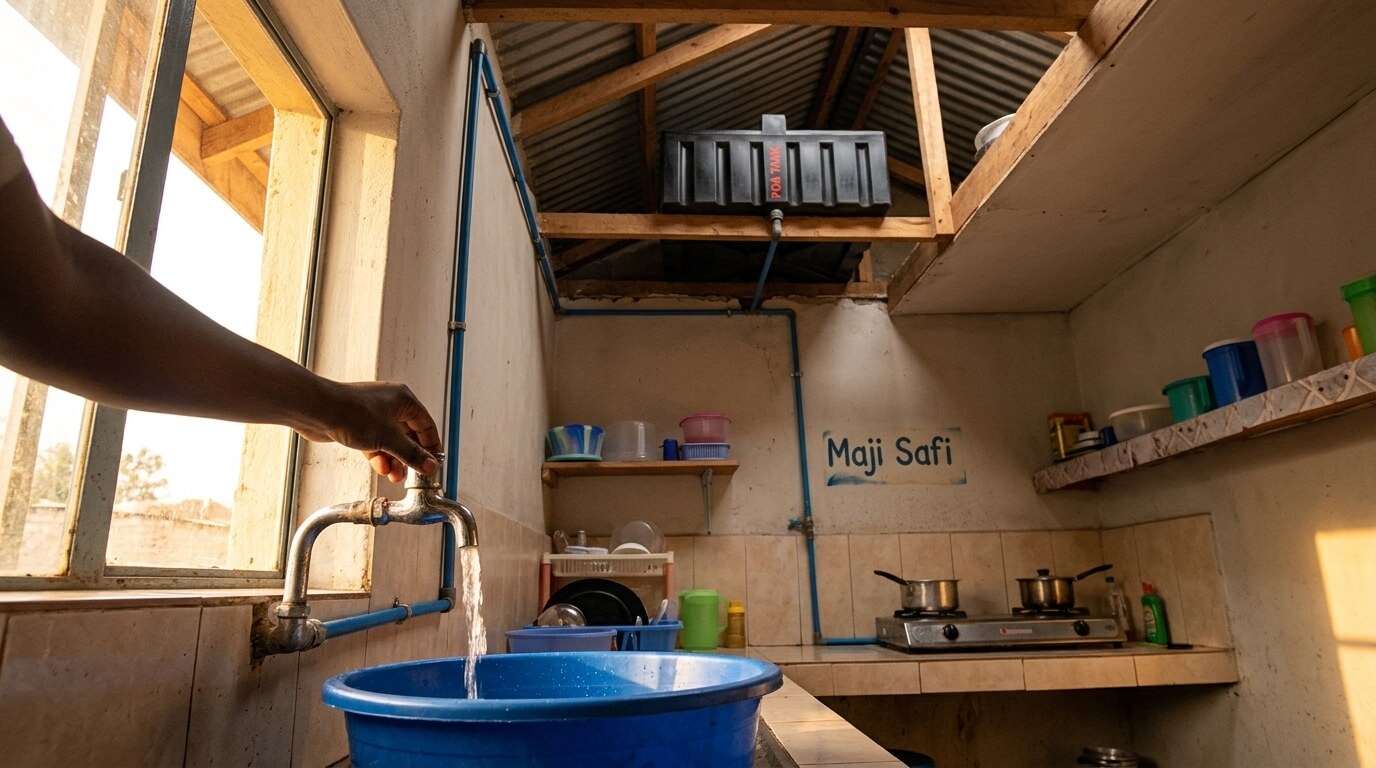
A loft tank sits raised, either on a rooftop platform or an elevated stand, and uses gravity to push water down to your taps under its own pressure. That’s a genuine practical advantage if your area experiences frequent power interruptions and you’d rather not depend on an electric pump just to get water out of the tap at a reasonable pressure.
Current Loft Tank Prices
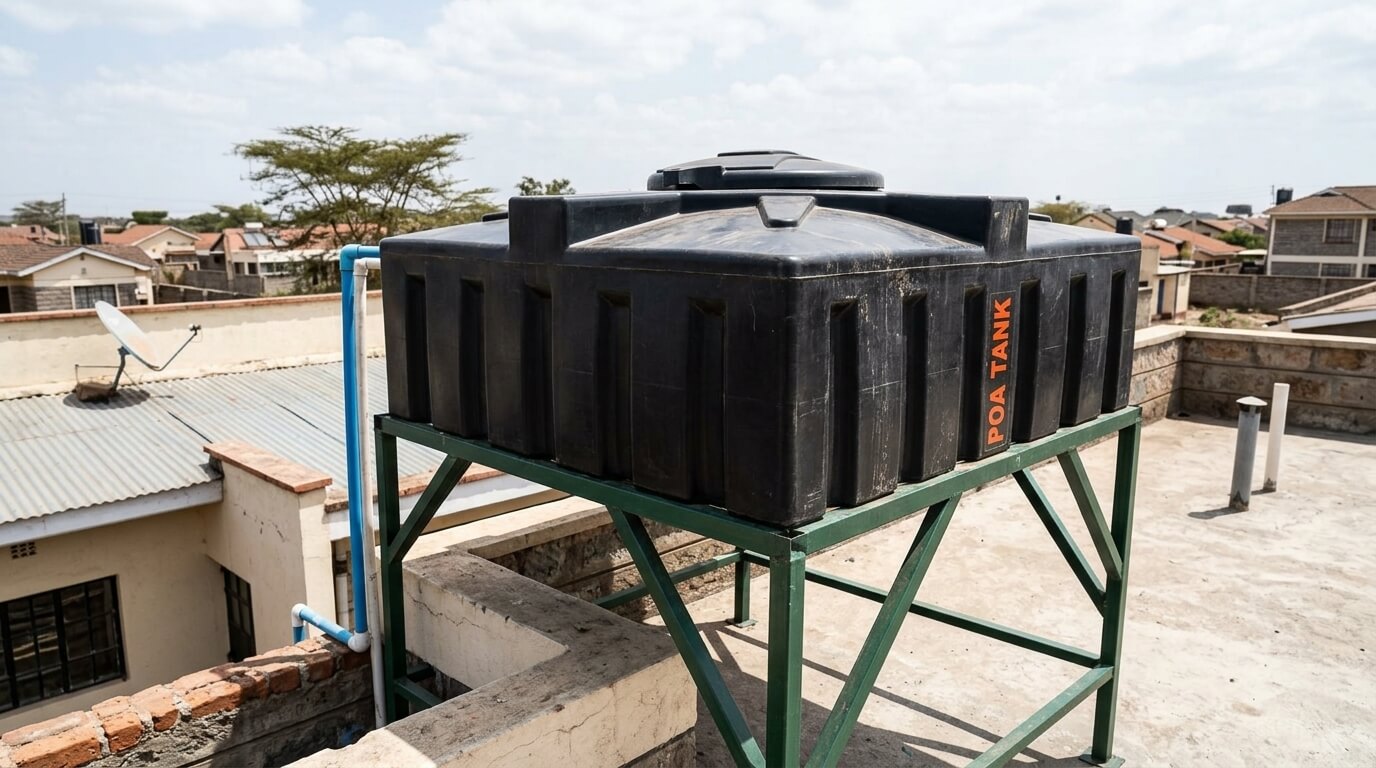
Loft tanks generally run at smaller capacities than ground-level cylindrical tanks, since the structure holding them up limits how much weight is practical. Checking the full water tank price Kenya range, here’s what loft capacities currently cost on the Poa Tanks range.
| Capacity | Current Price |
|---|---|
| 250L | KSh 7,051.20 |
| 450L | KSh 11,629.15 |
| 700L | KSh 14,682.85 |
| 1,000L | KSh 18,027.10 |
The Structural Question You Cannot Skip
This is the single most important thing to get right before buying a loft tank. A 1,000-litre tank weighs a full tonne once filled, and a roof or stand that comfortably holds an empty tank can fail entirely under that load if it wasn’t built or reinforced for it. A proper structural assessment before installation isn’t optional caution, it’s the difference between a tank that sits safely for decades and a genuine safety hazard.
Who a Loft Tank Suits Best
- Homes in areas with frequent power interruptions where gravity-fed pressure matters
- Households with a roof or existing stand already rated for the additional weight
- Smaller households where 250 to 1,000 litres of storage is genuinely enough
- Anyone who wants water pressure without running or maintaining a pump
How Loft Tanks Handle Kenya’s Two Rainy Seasons
A loft tank plumbed to catch roof run-off during the long and short rains can top itself up naturally between mains supply cycles, which is a genuine bonus given how directly a rooftop tank sits beneath the gutters. The trade-off is that it fills and refills more often than a ground-level tank of the same size might, simply because it’s smaller in capacity, so it’s worth checking your guttering and inlet filtering are in good condition heading into each rainy season.
What a Structural Assessment Actually Involves
This doesn’t need to be an expensive process. In most cases, it means having someone competent check the roof trusses or the stand’s frame, confirm what load they were originally designed for, and compare that against the filled weight of the tank you’re planning to install. For an existing stand built specifically for a loft tank, this is often a quick confirmation. For a roof that was never designed with a tank in mind, it may mean adding reinforcement before installation, which is a cost worth budgeting for upfront rather than discovering it’s needed after the tank is already in place.
Who Should Consider a Different Option
If your roof can’t take the load without expensive reinforcement, or your household needs more than 1,000 litres of storage, a ground-level best quality water tanks in Kenya option like a cylindrical tank avoids the structural question entirely and scales to much larger capacities. Tight urban plots with genuinely no ground space to spare might instead suit an underground tank, which trades the structural requirement for an excavation cost instead.
Build Quality Still Matters at Loft Scale
A smaller tank doesn’t mean lower standards. Poa Tanks’ loft range is built with the same UV-stabilised construction as the rest of the range and carries the same 10-year peace-of-mind warranty, which matters given that a loft tank sits exposed to direct sun on a roof or stand with no shade, often more so than a ground-level tank tucked beside a wall.
Getting the Installation Right
Beyond the structural check, correct installation for a loft tank means a properly fitted overflow, secure connections that won’t work loose under the vibration of a rooftop location, and a stand or platform that’s been checked, not just eyeballed, for the tank’s full filled weight. Our installation guide sets out the specifics, and it’s worth having whoever fits your tank follow it directly.
A Quick Word on Combining Loft With Ground Storage
Plenty of households don’t choose exclusively between loft and ground-level storage, they use both. A smaller loft tank feeding taps directly by gravity, backed by a larger cylindrical tank at ground level that refills it, gives you the pressure benefit of a loft system without limiting your total storage to what a single roof structure can safely hold. It’s a slightly more involved setup, but it’s worth considering if you like the idea of gravity-fed pressure without giving up on larger overall capacity.
Is a Loft Tank Right for Your Home?
Loft tanks in Kenya are a genuinely good fit when your roof or stand can safely take the weight and your household’s storage needs sit within the 250 to 1,000-litre range. Comparing water storage tank brands in Kenya before you buy is worth the extra ten minutes. Get the structural check done first, size the water storage tank in Kenya to your actual usage rather than what looks convenient, and it’s one of the simpler ways to get reliable water pressure without depending on a pump.
FAQs
How much does a loft tank cost in Kenya?
Prices range from KSh 7,051.20 for a 250-litre tank up to KSh 18,027.10 for a 1,000-litre tank on the current Poa Tanks range.
Can any roof support a loft tank?
No. The roof or stand must be assessed by a qualified person for the tank’s full filled weight, not its empty weight, before installation goes ahead.
Why choose a loft tank over a cylindrical tank?
A loft tank delivers water by gravity, giving you pressure without needing an electric pump, which is a genuine advantage in areas with frequent power interruptions.
What is the biggest loft tank size available?
On the Poa Tanks range, the largest loft tank is 1,000 litres, reflecting the practical weight limits of most roof structures and stands.
Do loft tanks need special maintenance?
They need the same general care as any tank, an annual clean and a check of fittings, but their rooftop position means leaks or damage are usually spotted quickly since the tank is visible and accessible.
Considering a Loft Tank for Your Home?
UV-stabilised, roto-moulded loft tanks with free nationwide delivery and a 10-year peace-of-mind warranty.