A neighbour once showed me two tanks side by side, bought a year apart from two different yards, both roughly the same size. One had already gone slightly grey and brittle at the rim. The other looked untouched. Same shape, same use, completely different result. That’s really the whole problem with shopping for the best water tanks in Kenya: from the outside, most tanks look identical, and the differences that actually matter are the ones you can’t see on a showroom floor.
Start With What the Tank Is Made Of
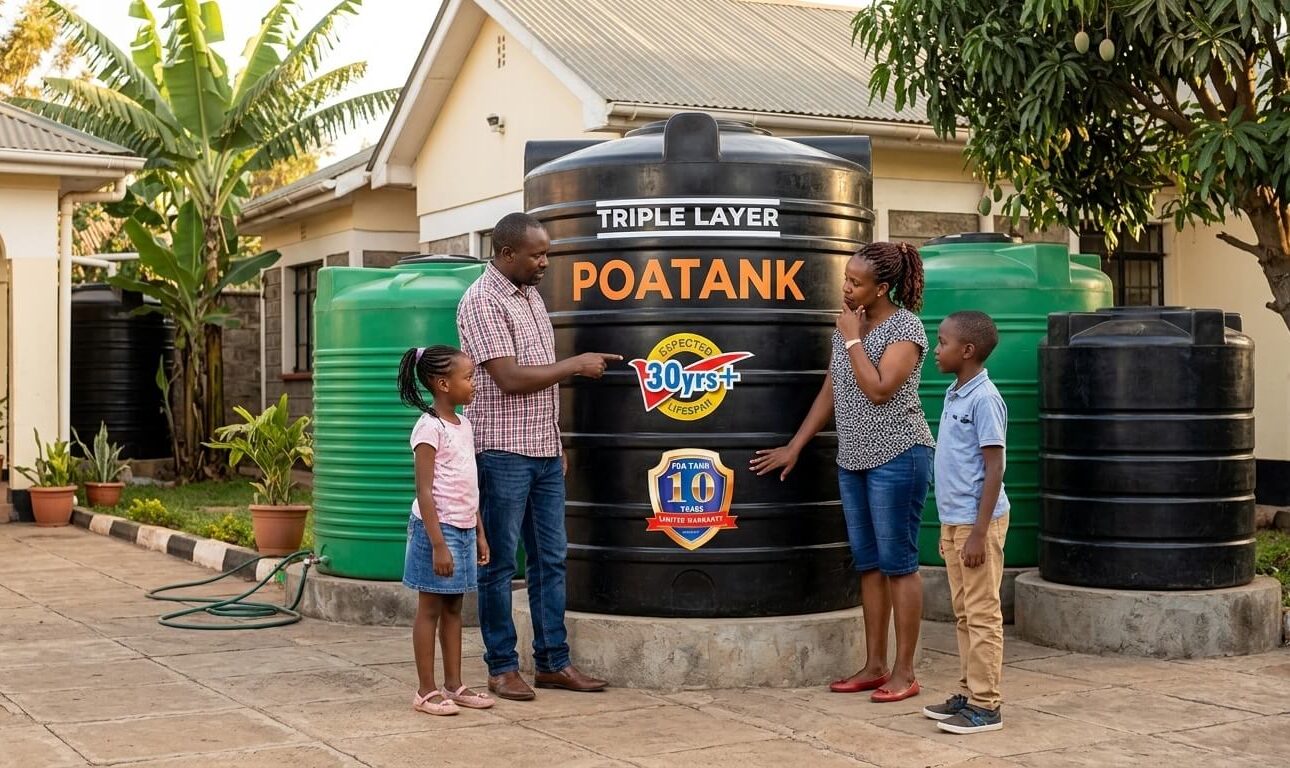
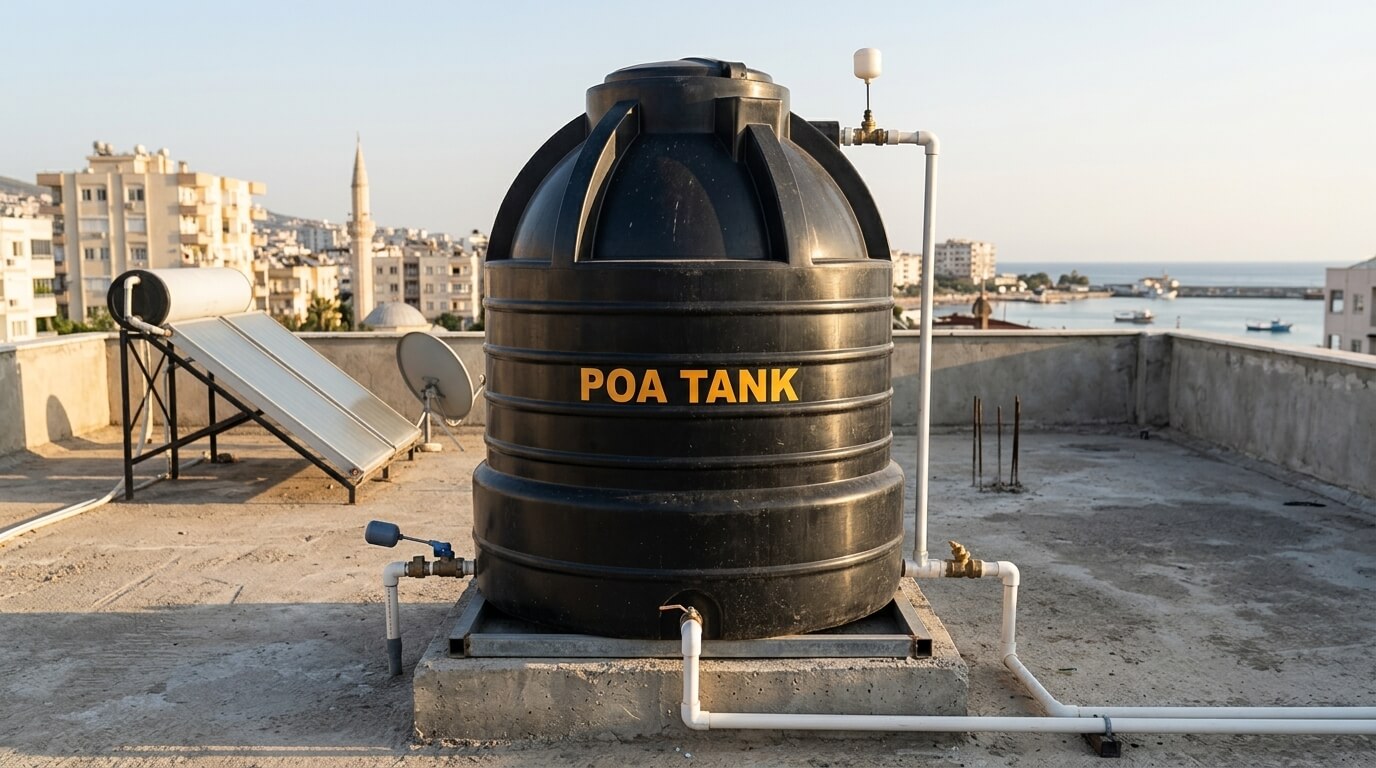
Material is where “best” is decided, long before size or price come into it. A genuine roto-moulded tank is formed as a single seamless piece, which removes the weak joint line you’d get with a cheaper blow-moulded alternative. Not every one of the water tanks manufacturers in Kenya builds to the same standard, and Poa Tanks’ cylindrical range is built with triple-layer construction using food-grade polyethylene, which keeps stored water clean while the UV-resistant outer layer stops the plastic breaking down under direct Kenyan sun. Ask any supplier what layer structure their tank uses. If they can’t answer clearly, that’s usually a sign the tank hasn’t been engineered with UV exposure in mind.

Certification Is Worth Checking, Not Just Trusting
Poa Tanks’ cylindrical range is KEBS-certified, which gives you an independent benchmark for wall thickness and material quality rather than relying purely on a supplier’s word. It isn’t the only thing that makes a tank good, but it’s a useful filter, since a supplier confident enough to seek certification is usually also confident enough to back the tank with a real warranty.
Matching Tank Type to What You Actually Need
“Best” also depends on what you’re solving for. One of the best quality water tanks in Kenya for most households and businesses is a cylindrical tank sitting on a basic concrete or block base, since it needs no structural checks. A loft tank, mounted on a roof or a raised stand, gives you gravity-fed pressure but needs proper structural assessment first. Underground and septic tanks solve space and wastewater problems respectively but bring their own excavation costs.
| Tank Type | Best Suited For | Key Requirement |
|---|---|---|
| Cylindrical | Most households and businesses | Level concrete or block base |
| Loft | Gravity-fed pressure, smaller capacity | Structurally rated stand or roof |
| Underground | Tight urban plots, rainwater harvesting | Excavation and proper bedding |
| Septic | Wastewater management | Correct siting away from water sources |
What “Best” Costs in Practice
Quality doesn’t have to mean expensive once you’re comparing like for like. On the Poa Tanks range, a 1,000-litre cylindrical tank lists from KSh 10,965.50, a 3,000-litre model at KSh 26,354.90, and a 10,000-litre tank at KSh 99,988.85. Loft tanks run smaller and lighter, from KSh 7,051.20 for 250 litres up to KSh 18,027.10 for 1,000 litres. Real numbers like these are more useful than a vague “affordable” claim, because they let you check whether a quote you’ve been given for the same capacity is actually competitive.
Warranty Tells You What the Manufacturer Actually Believes
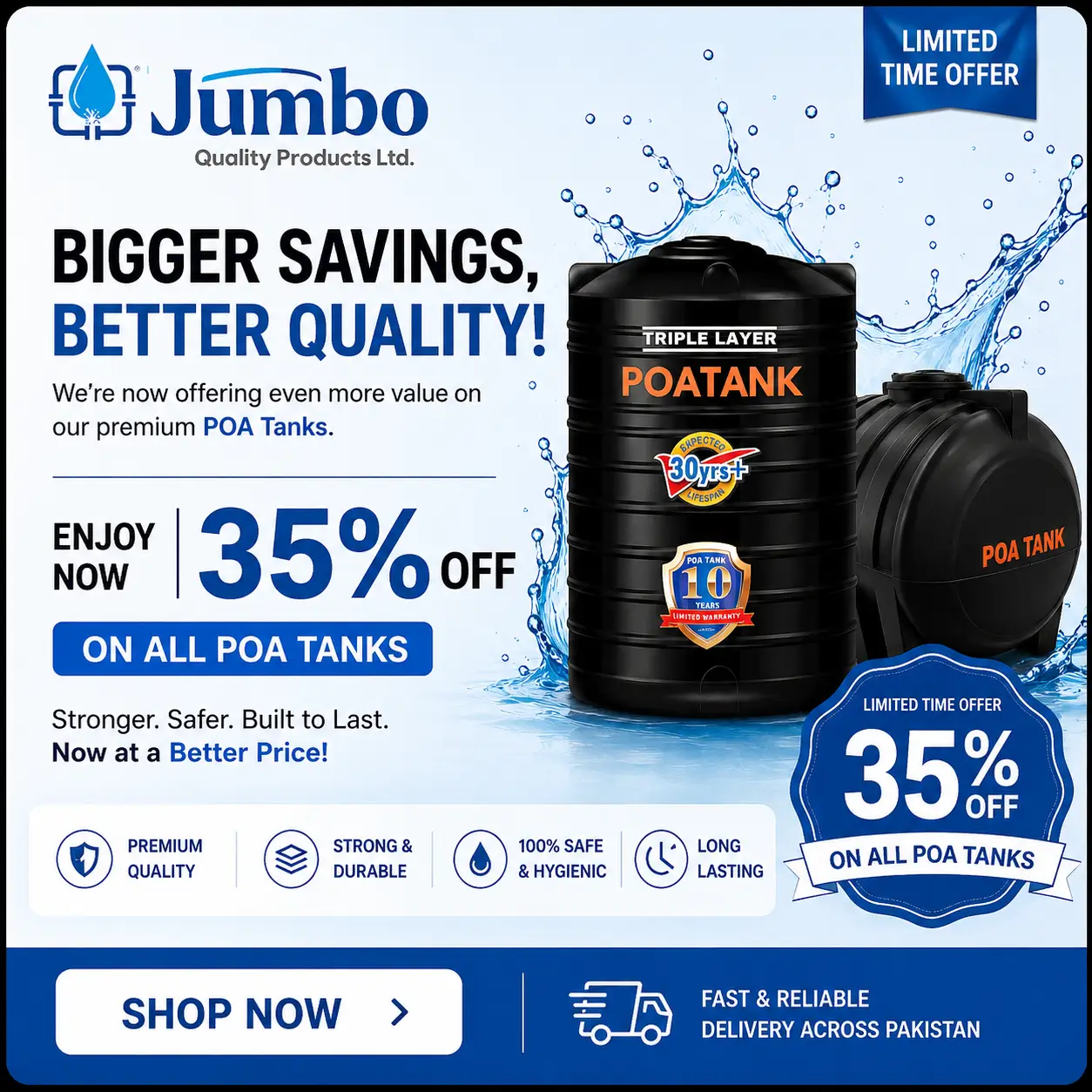
A tank backed by a genuine 10-year warranty is a tank the manufacturer expects to still be working in ten years, not a marketing line. Poa Tanks’ range carries a 10-year peace-of-mind warranty and an expected lifespan of 30 years or more when installed correctly. Compare that against a cheaper alternative with a one-year warranty or none at all, and the price gap usually explains itself once you factor in how many times you’d be replacing the cheaper option over the same period.
Delivery and After-Sales Support Matter More Than People Expect
A tank that arrives cracked from poor transport, or takes three weeks to reach a rural county, isn’t the best choice regardless of how good the plastic is. Poa Tanks offers free nationwide delivery, which removes one of the more unpredictable costs buyers run into when comparing water storage tank brands in Kenya, particularly outside Nairobi where transport charges can otherwise add a meaningful amount to the final bill.
A Simple Checklist Before You Buy
Whichever water storage tank in Kenya you’re leaning towards, run it through this checklist first:
- Confirm the moulding process: roto-moulded, seamless construction, not blow-moulded with a visible seam
- Ask about UV stabiliser content and layer structure, especially for tanks that will sit in direct sun
- Check for KEBS certification or an equivalent independent standard
- Get the warranty length and terms in writing, not a verbal promise
- Confirm whether delivery is included or charged separately
Reading Between the Lines of a Sales Pitch
Almost every supplier will tell you their tank is the best on the market, which makes the claim itself close to meaningless without something concrete behind it. When a salesperson tells you a tank is durable, ask how, specifically: what’s the wall thickness, what percentage is the plastic UV-stabilised, and is there a certificate you can actually see rather than a claim you’re asked to take on trust. A supplier who welcomes that question and answers it clearly is generally the one worth buying from. One who gets vague or changes the subject is telling you something too, just not in words.
Don’t Judge a Tank by Its Colour Alone
A common shortcut people use is assuming a darker tank is automatically better at blocking sunlight than a lighter one. Colour plays a role in how visible algae growth is inside a tank, since darker tanks limit light penetration more effectively, but it says nothing about the UV stabiliser mixed into the plastic itself, which is what actually determines whether the tank’s outer wall stays strong or turns brittle over the years. A pale tank with proper UV stabilisation will outlast a dark tank without it, so treat colour as one small factor rather than the main indicator of quality.
Making a Confident Choice
Finding the best water tanks in Kenya isn’t about hunting for the lowest number on a price list. It’s about checking the material, the certification, the warranty, and the delivery terms side by side, then picking the tank that holds up on every one of those points rather than just the one that looked cheapest at first glance.
FAQs
What is the best type of water tank for a home in Kenya?
For most households, a UV-stabilised, roto-moulded cylindrical tank offers the best balance of cost, durability, and simple installation, since it needs no structural checks beyond a level base.
How do I know if a water tank is good quality?
Check that it’s roto-moulded rather than blow-moulded, confirm UV stabiliser content, look for KEBS certification, and ask for a written warranty of several years rather than a verbal assurance.
Are more expensive water tanks always better?
Not necessarily, but price differences at the same capacity usually reflect wall thickness, UV protection, and warranty length. Comparing these factors is more useful than comparing price alone.
Does a longer warranty mean a better tank?
Generally yes. A manufacturer offering a 10-year warranty is signalling confidence in the material and construction, which is usually backed by better UV stabilisation and thicker walls than a tank with little or no warranty.
Is KEBS certification necessary when buying a water tank?
It isn’t a legal requirement, but it gives you an independent reference point for material quality and wall thickness, which is useful when comparing claims between different suppliers.
Ready to Choose the Best Water Tank for Your Home?
KEBS-certified, UV-stabilised tanks with free nationwide delivery and a 10-year peace-of-mind warranty.