
Plastic Water Tank Cleaning: How Often and How to Do It Safely

A water tank looks after itself right up to the day the water turns cloudy. Regular cleaning is cheaper than a bad surprise, and it does not take long.
This guide covers plastic water tank cleaning: how often to do it, how to do it safely, and how to keep the inside cleaner between jobs.
Why Tanks Need Cleaning
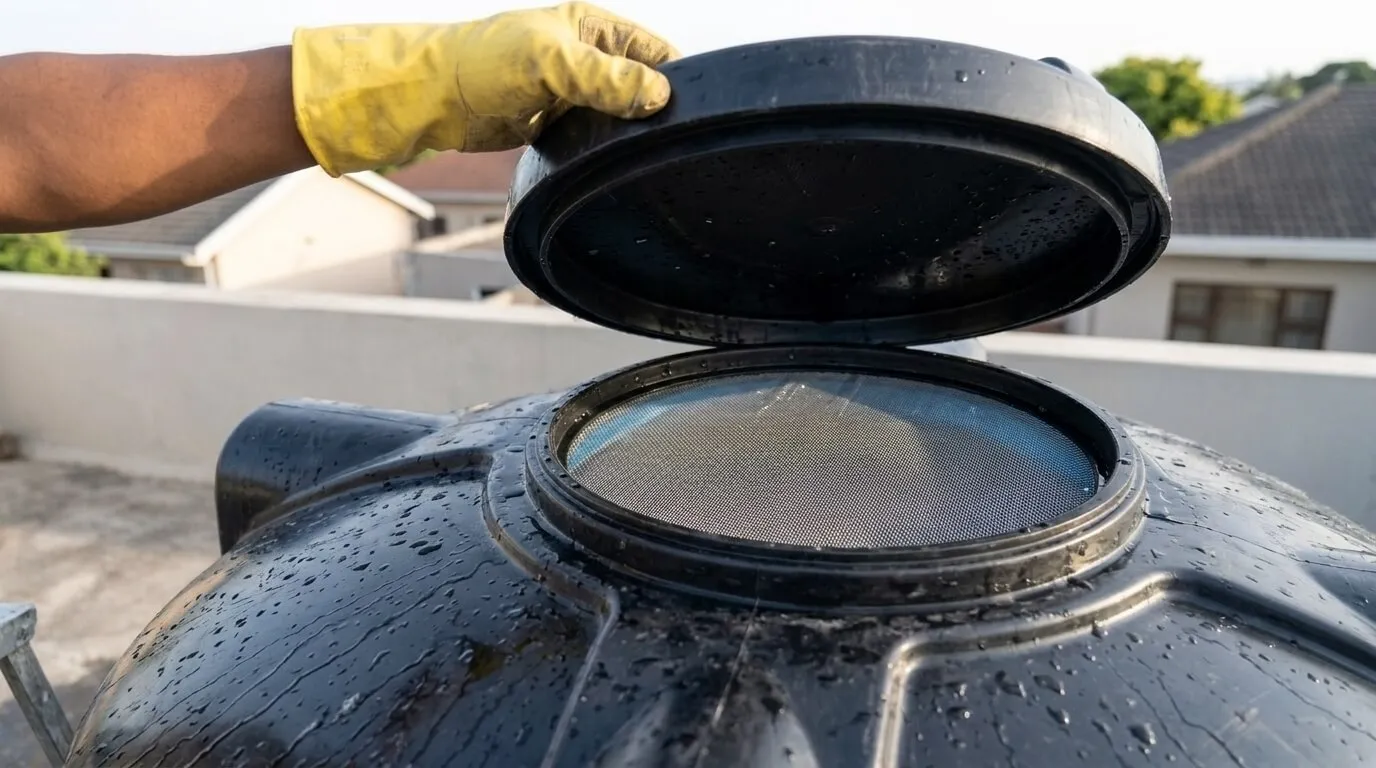
Sediment settles at the bottom over time. Leaves, dust and insects can get in through the inlet or a loose lid. Light that enters the tank encourages algae.
A tank can look fine from the lid and still hold a layer of sediment below.
How Often to Clean
A common routine is once or twice a year. Clean more often if you collect rainwater, live in a dusty area, or notice cloudy water or a change in taste. Our rainwater harvesting guide explains how to reduce what gets in.
Your own conditions decide, so check the tank regularly rather than waiting for a date.
A Safe Cleaning Routine
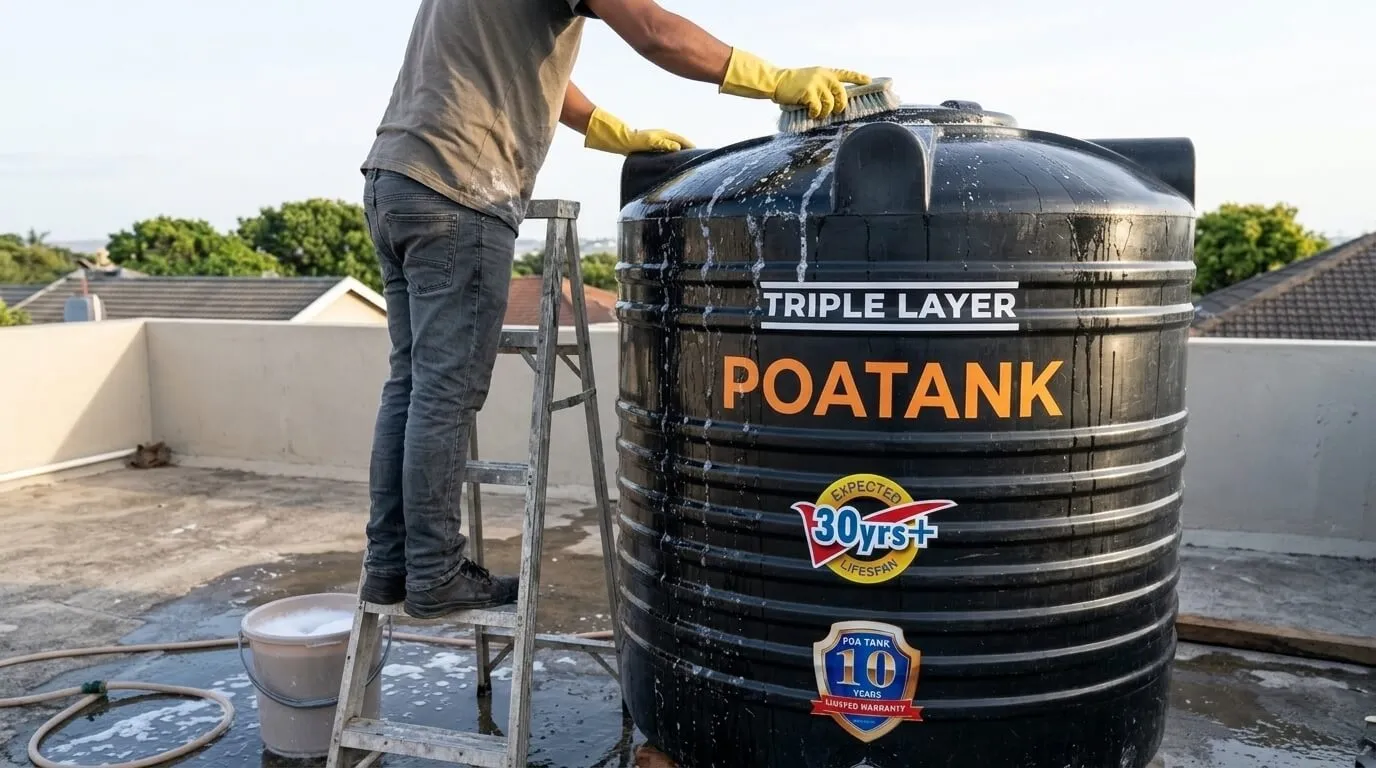
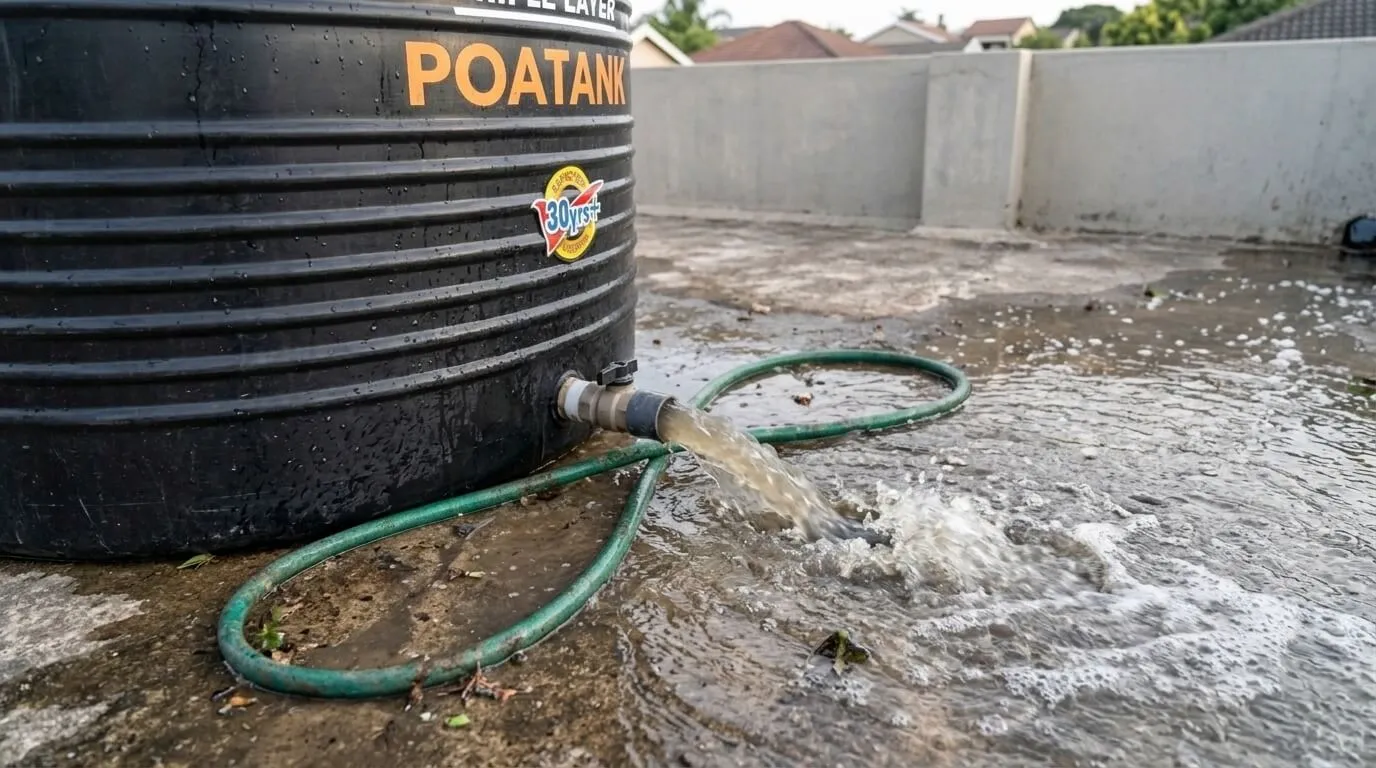
Use up or drain the water. Scrub the inside with a soft brush and clean water, and avoid sharp tools that can scratch the wall. Flush out the loosened sediment and rinse until the water runs clear, then refill.
Never climb into a tank without ventilation and another person nearby. For large tanks, many owners prefer to hire a professional. If you disinfect, follow guidance from your water authority or a qualified person and rinse thoroughly before use. See the do’s and don’ts.
Plastic Water Tank Cleaning Schedule
| Task | How often | Why it matters |
|---|---|---|
| Check lid and inlet mesh | Monthly | Keeps debris and insects out |
| Look for cloudy water or algae | Monthly | Early warning of a problem |
| Drain and scrub the interior | Once or twice a year | Removes sediment |
| Check overflow and outlet | At every clean | Keeps water flowing and draining |
| Inspect fittings and seals | At every clean | Catches small leaks early |
Keeping It Clean Between Jobs
A well-fitted lid, an inlet filter and a first-flush diverter keep most dirt out. Food-grade plastic has a smooth inside wall, which helps stop algae holding on. Our comparison of plastic and concrete tanks covers surface differences in more detail.
Check the warranty terms before you use any cleaning method, so you know what is covered.
Mistakes to Avoid During Plastic Water Tank Cleaning
Do not use sharp tools, wire brushes or harsh abrasives. They can scratch the inside wall, and scratches give algae and sediment places to cling. Do not mix cleaning products, and do not leave cleaning residue in the tank.
Do not skip the rinse. A tank that is scrubbed but not rinsed fully can leave a taste or smell in the water. Rinse until the water runs clear and the smell has gone before you refill.
What to Check After Cleaning
Once the tank is refilled, check the lid seal, the inlet mesh and the overflow. Look for leaks at the outlet and at any fittings you disturbed. Taste the water, and watch it for a day or two for cloudiness.
Write down the date. A short note on the tank or in a notebook makes the next plastic water tank cleaning easy to schedule, and it helps you spot patterns, such as dirtier water after heavy rain.
A Simple Cleaning Plan for a Year
Set two dates a year for a full clean, for example before and after the main rains. Add a monthly reminder to check the lid, the inlet mesh and the overflow. Add a quick check after any heavy storm, since runoff and wind can bring in debris.
Keep a bucket, a soft brush, gloves and a hose in one place so the job is easy to start. Write the date and anything you noticed in a notebook. A routine that takes an hour twice a year is far easier to keep than a big clean after the water has already turned.
Key Takeaways
Clean a plastic tank once or twice a year, check the lid and inlet monthly, and never enter a tank without ventilation and a second person. Regular plastic water tank cleaning is cheaper than a bad surprise. Check the warranty terms, prepare the base and measure the site before delivery day, and ask us if you are unsure.
Frequently Asked Questions
How often should I clean a plastic water tank?
Once or twice a year is common. Clean sooner if the water looks cloudy or you collect rainwater.
Does sunlight cause algae in a tank?
Light entering the tank encourages algae. A sealed lid and an opaque wall help keep it out.
Can I clean a tank myself?
For small tanks, yes, with care. For large tanks or confined spaces, ask a professional and never enter without ventilation and a second person.
Make Plastic Water Tank Cleaning Simple With the Right Tank
Choose a tank with a smooth food-grade interior and a sealed lid, then browse the cylindrical range or ask us about care.
This guide gives general planning figures. Actual needs depend on how many people use the water, how they use it, and the site.