

Why the Vertical Water Tank Is the Default Choice for Kenyan Compounds

Walk through almost any Kenyan compound and you will see a tall, round plastic tank. That shape is not an accident. The vertical water tank earns its place on a small footprint, a simple base and a wide range of sizes.
Here is why it works so well, and what to check before you choose one.
A Small Footprint for the Volume
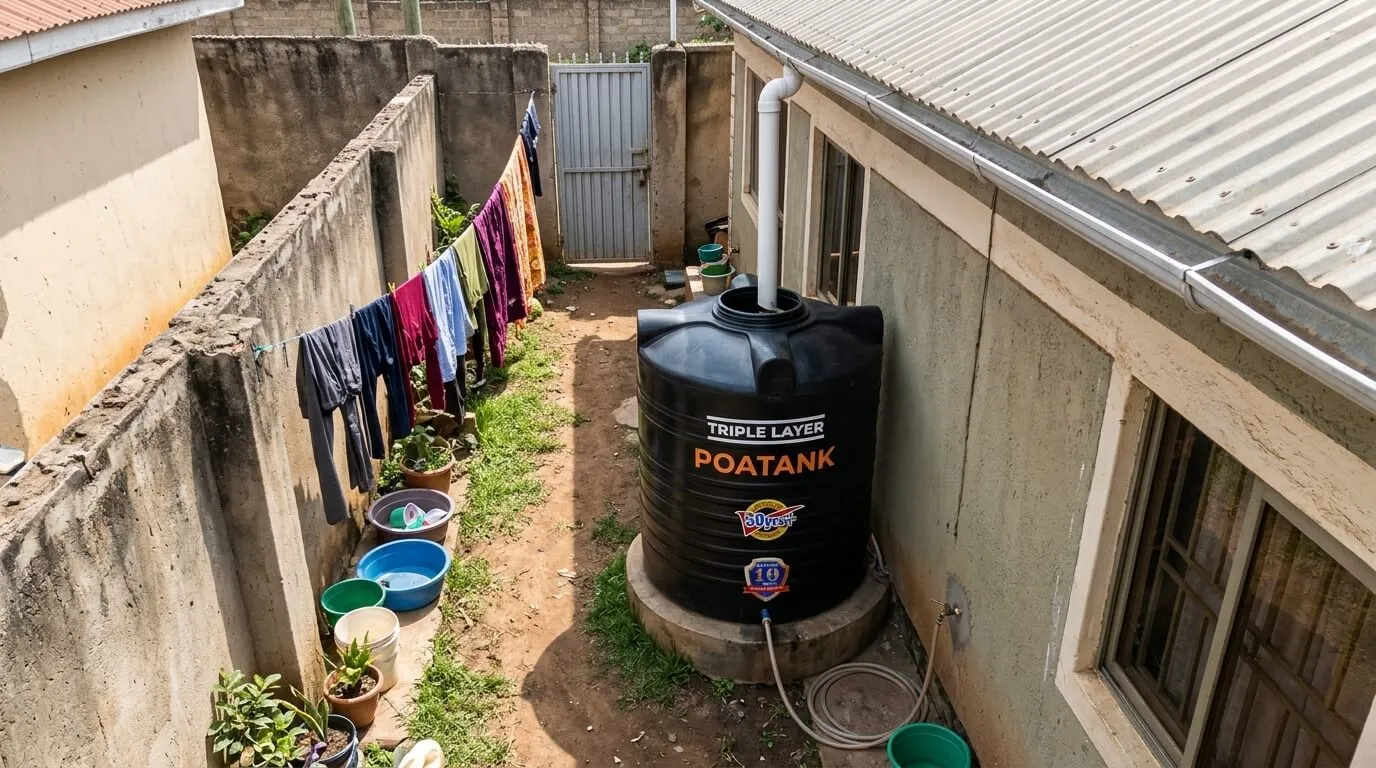
A vertical tank rises instead of spreading out. For the same volume it uses less ground than a flatter shape, which matters on plots where every square metre counts.
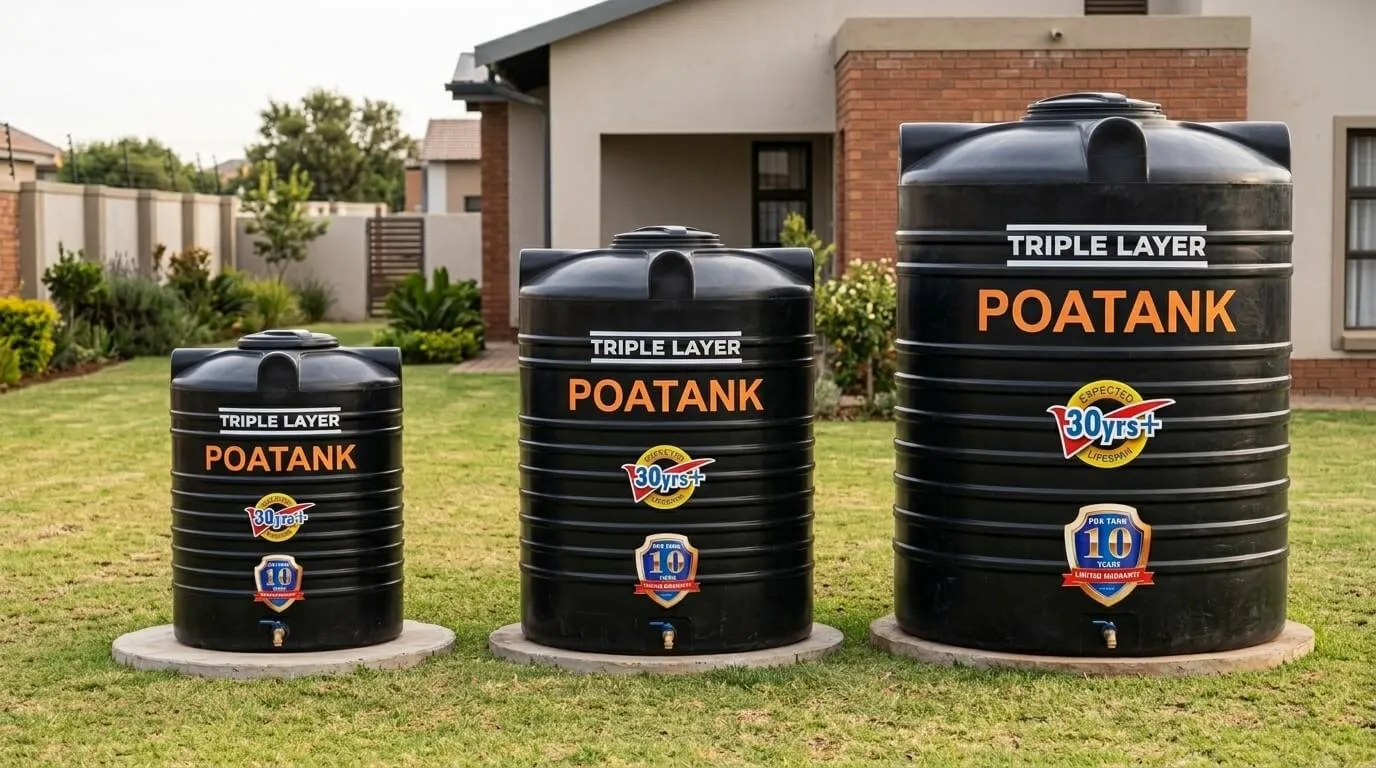
The cylindrical range runs from small domestic sizes up to large tanks, so most households find a fit.
A Round Shape That Handles Load
Water presses outward evenly, and a round wall carries that pressure well. A circular base also spreads the load without sharp corners.
That does not remove the need for a level, firm pad. A full tank is heavy, and the installation guide explains what to prepare.
Vertical Tanks at a Glance
| Feature | What it means in practice | What to check |
|---|---|---|
| Footprint | Small ground area for the volume | Space for the pad and for access |
| Shape | Even load across the wall | Level, firm base |
| Sizes | Wide range from small to large | Match to daily use |
| Material | Plastic, light to move | Food-grade, UV-stabilised |
| Fittings | Outlet near the base | Valve and overflow reachable |
Choosing the Right Size
Match size to daily use and the length of supply gaps. For a family home, 2,000 to 5,000 litres is a common range. For a small flat, less. For a school or clinic, more.
Browse the 3,000 litre tank for an example of a popular mid-size choice. It is listed at KSh 24,328.
Placement Tips
Place the tank where the outlet is easy to reach and the base can drain away from the pad. Keep branches and walls from crowding the lid. Check the do’s and don’ts before delivery day.
Mistakes to Avoid With a Vertical Water Tank
The most common mistake is a base that is not quite level. A vertical tank is tall for its width, so even a small tilt puts uneven load on the wall. Check the base with a level before delivery, not after.
Another mistake is placing the tank under a tree. Falling leaves, branches and droppings end up in the water, and roots can lift the base over time. Keep the area clear and leave space around the tank.
Looking After a Vertical Water Tank
Inspect the lid, the inlet and the outlet every month. Look at the base for cracks or settling. Clean the interior once or twice a year, and check that the overflow still carries water clear of the tank.
A well-sited vertical water tank needs very little attention. Most problems come from a poor base, a loose lid or a blocked overflow, and all three are easy to check.
A Worked Example: Fitting a Tank on a Narrow Plot
Suppose a compound has a strip of ground two metres wide beside the boundary wall. A wide, low tank will not fit, but a vertical tank of a few thousand litres uses a small footprint and rises beside the wall. You still need a level pad that is wider than the tank, space to reach the lid and a clear path for the overflow.
Measure the strip, check the product dimensions and mark the pad on the ground before you order. If the numbers are tight, move to the next smaller size or choose the short version of the same capacity, where one is listed. A small amount of planning makes a vertical water tank fit almost anywhere.
Check overhead lines and eaves too, since a tall tank needs clear space above it.
Key Takeaways
A vertical water tank uses little ground, handles load well and comes in many sizes. Choose the size from your daily use, then give it a level base and room to reach the lid and outlet. Check the warranty terms, prepare the base and measure the site before delivery day, and ask us if you are unsure.
Frequently Asked Questions
Why are most tanks in Kenya vertical?
They use less ground area for the same volume and the round shape handles water pressure well.
What size vertical tank is most popular?
Mid-size tanks around 2,000 to 5,000 litres are common for family homes.
Does a vertical tank need a special base?
It needs a level, firm and properly prepared base, the same as any tank holding heavy water.
Choose a Vertical Water Tank for Your Compound
See sizes in the cylindrical range and ask us to help you match one to your space.
Prices were listed on the Poa Tanks website on 11 November 2026 during a flash sale and may change. Please check the product page for the current price.